South by Southwest (SXSW) is widely known for its arts and music roots — now with big asterisks for its AI and tech-focused conference. But in 2026, the underdog Comedy Festival got a boost from Dropout, a streaming service that is carving out an increasingly influential niche in the national comedy scene.
Dropout presented a slate of shows by its rising improv stars, with four shows in total. And in case anyone's worried that comedy's gotten too soft nowadays, these shows all contained plenty of raunchy humor. Fans who are obsessed with avoiding spoilers should reconsider reading below — if spoilers are even possible in improv.
During a special live performance of Dropout’s game show Dirty Laundry on March 15, cast members Lily Du and Grant O’Brien spilled secrets alongside guests Jake Cornell, Michael Cruz Kayne, Echo Kellum, and Corin Wells. The live show followed the same format as the pre-taped version, where guests have to guess who the anonymous secret belongs to while trying not to expose themselves in the process.
One task was to guess who hooked up in a therapist's office. The performer told a fairly normal story (by Grindr standards, anyway): he decided to meet up with a match at their office, which he later realized meant that person was a therapist. If you guessed that performer was Jake Cornell, take a sip of your drink. Things went fine until Cornell later started going to therapy, recognized the building, and turned right around.
A second Dropout exclusive show, Crowd Control, hosted by Jacquis Neal, also had its SXSW live debut on March 16. Crowd Control sets up what appears to be a regular standup show, but in a hilarious turn from the norm, audience members are used as bait to get the comedians into hot water.
At the SXSW show, audience members were invited to write down funny answers to the prompt, “Ask me about my…” Guest comedians waded through the answers and turned them into the show’s main material. Neal brought fellow comedians Tone Bell, Alex English, and Austin’s own Vanessa Gonzalez out on stage to make gut-busting jokes out of an audience member’s near-death threesome, another’s gay dad, a (white) man’s experience ghostwriting as a Black woman, and much more.
Two improvisational shows rounded out Dropout’s sojourn in the City of Weird. First, regular cast stars Jeremy Culhane, Kurt Maloney, Vic Michaelis, Oscar Montoya, and Jacob Wysocki, plus music director Scott Passarella embarked on a long-form improv showcase for SXSW badgeholders at The Creek and the Cave on March 16.
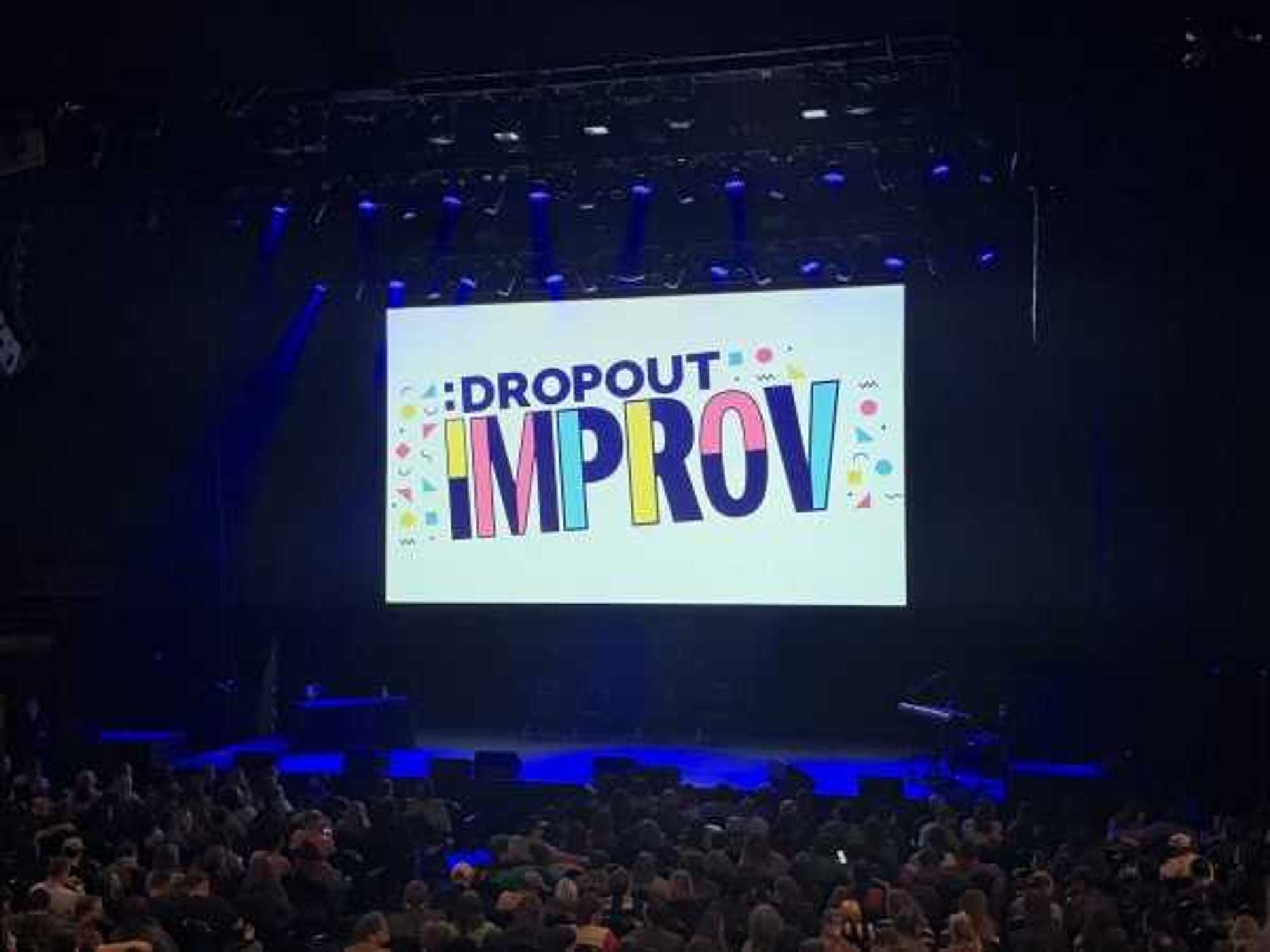
Finally, all three shows led to Dropout’s final, biggest performance at ACL Live at the Moody Theater on March 17. The line for “Dropout Improv” general admission ticket buyers wrapped around the block to fill in the 2,750-seat venue, where the same performers played “minigames” in the style of Make Some Noise, Dropout's signature improv game show.
During the rambunctious show, audience members willingly gave up their phones to have their text messages read out loud during one game; in another, the comedians hid around the theater to yell absurd statements during a “town hall.” The last segment was a day-in-the-life musical based on an audience member's story. The cast closed out their SXSW adventure on an improvised song that the audience learned and joined in on.
If the four SXSW performances were any indication of what lies ahead of Dropout Improv’s upcoming spring tour, fans are in for a hilariously rowdy experience.
Austin's Dropout show attendees certainly won't forget the anthem they are now bound by: Sometimes you win, sometimes you lose. Life is about the horses that you choose.