The crowd at the front of the AMD Stage was mostly still collecting Pokemon cards when the Afghan Whigs released their final album in 1999.
And while the band inspires a fierce loyalty in those who adore their music, they haven't gone become a cult legend whose records have been passed along on burned CDs and external hard drives from teenaged fan to teenaged fan over the past thirteen years, the way that, say, the similarly-timelined At The Drive In has.
For its part, the band has settled into its reunion nicely. After over a decade off, any rust that may have gathered has shaken off well.
So the number of teenagers up front were probably mostly just there to hold a good spot for the closing set from AVICCI, but who really cares about that? The Afghan Whigs are an accessible rock band whose music translates well to listeners who are otherwise stuffed full of pills and waiting for a DJ to emerge.
That's mostly how things seemed to go for the Whigs' set on Friday (er, that is, the Afghan Whigs' set — a band called The Whigs, with no modifier, is on the bill for Saturday, leading to what's sure to be much confusion among fans of relatively straightforward, guitar-based rock bands). The crowd near the front was a mix of place-holding teenagers and die-hard fans in their 30s and 40s, who've been utterly devoted to the band's mix of guitar rock and classic soul since the heyday of Alternative Nation.
For its part, the band has settled into its reunion nicely. After over a decade off, any rust that may have gathered has shaken off well; while the Afghan Whigs have always been a night-time band, they were compelling even during a mid-day performance, loading up the set list with big rock-and-roll stompers like "Uptown Again," "What Jail Is Like," and "Crazy."
The band has also shaken off the reunion-show tendency to focus mostly on the hits (or at least the most beloved songs) in favor of a set that more accurately reflects the experience of seeing the Afghan Whigs in the pre-breakup days.
Back then, the Whigs were known for dropping in covers, both expected and not, throughout their set, interpolating other artists' songs into their own, and generally treating the performance as something of a revue. The ACL performance included pieces of "Who Do You Love" by Bo Diddley, "Little Red Corvette" by Prince, "See and Don't See" by Marie Queenie Lyons, and "Lovecrimes" by Frank Ocean.
In short, the Afghan Whigs' ACL set was a snapshot of what the band has been, and of where they are now (while "Who Do You Love" and "Little Red Corvette" were staples of the band's first run, "See And Don't See" and "Lovecrimes" are exclusive to this incarnation).
All that's really left for the band are some new songs of their own, and until that happens, the ACL set was at least proof that this reunion has their full attention.
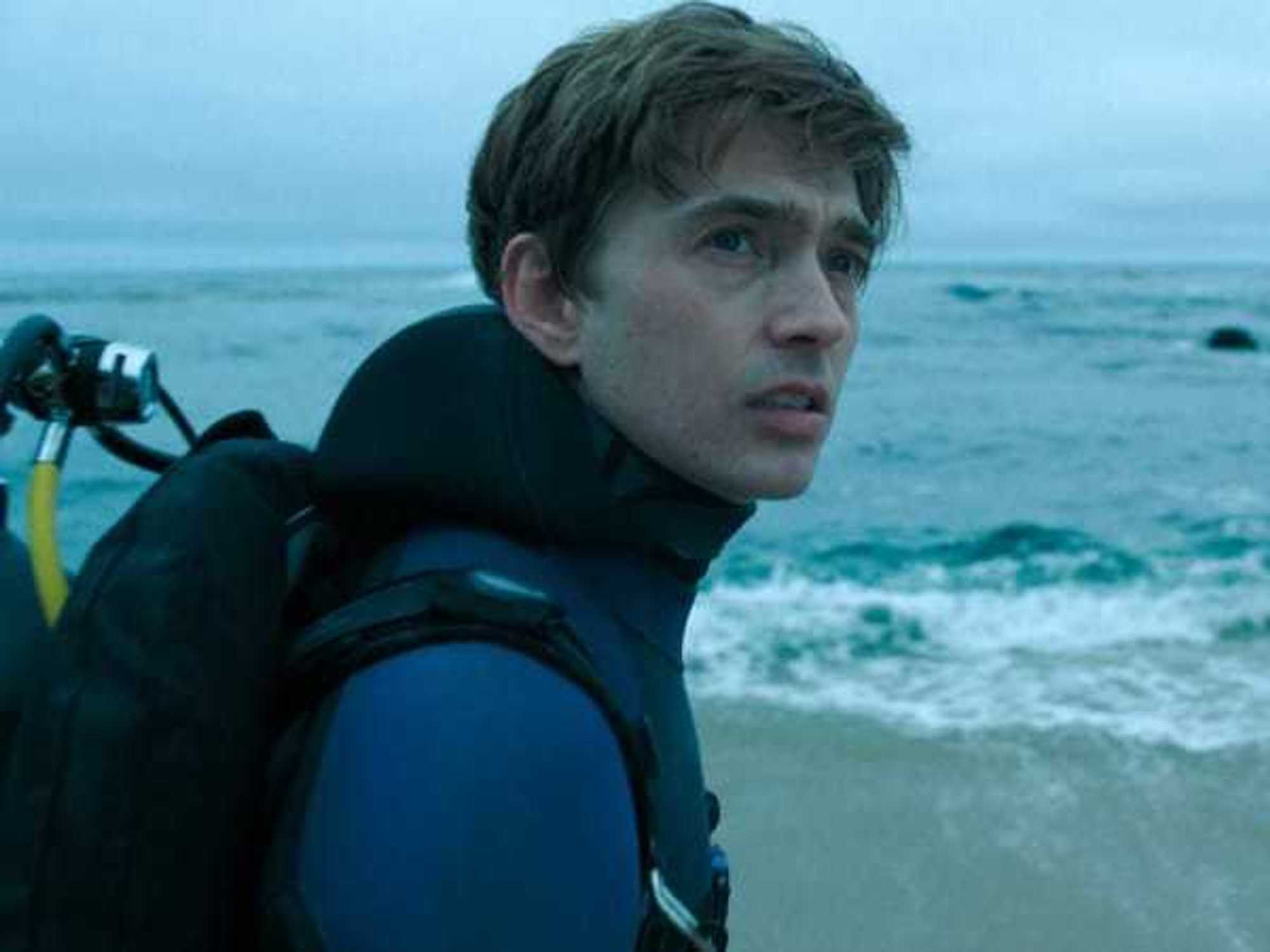
Austin Abrams has been a professional actor for 15 years, but the 30-year-old seems to just now be getting his due. After years of mostly supporting roles in films like Paper Towns, Brad’s Status, and Weapons, he has been charged with leading two films in 2026 where he’s largely acting by himself: First Resident Evil and now Whalefall.
Abrams plays Jay Gardiner, who has returned home to California a year after the death of his hard-ass father, Mitt (Josh Brolin). The two had a tempestuous relationship, and while his mom (Elisabeth Shue) and sisters (Jane Levy and Emily Rudd) reminisce fondly about him, Jay finds it difficult to come up with good memories. The two did share a connection with the ocean, and Jay decides to honor him by going scuba diving.
Ignoring warnings of whale activity in the area, Jay makes his way out into a notoriously dangerous part of the ocean near their home. Soon after he starts swimming, he encounters a sperm whale chasing after a giant squid. Jay inadvertently gets sucked into the enormous creature’s mouth and, ultimately, inside its body. Faced with a seemingly inescapable situation, Jay’s only hope lies in the lessons his father taught him.
Directed by Brian Duffield and adapted by Duffield and Daniel Kraus from Kraus’ book of the same name, the film is at its best when it depicts Jay struggling to survive within the whale. The claustrophobic nature of the setting and the various obstacles (multiple contracting chambers, the squid, and more) he faces make every scene inside the whale feel as intense and cover-your-eyes scary as any great horror movie.
Naturally, the entire movie can’t be about his survival efforts, and so the filmmakers toggle back and forth between Jay’s ordeal in the whale to memories of times with his father. Not so coincidentally, these remembrances come with subtle or overt wisdom from Mitt that would serve Jay well in his current situation. More often than not, these flashback scenes are so on-the-nose that they come off as cheesy instead of inspirational.
It’s also difficult to derive any big emotions from the story other than revulsion at the way Jay’s body is brutalized while he’s inside the whale. None of the characters in the film receive a notable introduction to the audience before big events start happening. It’s next-to-impossible to be invested in their stories when their personalities are being revealed in bits and pieces throughout the movie.
Abrams does well enough in bringing out the terror Jay feels in the whale and the sullenness/anger he has toward his father in other scenes. But whether it’s because his lines in the whale are hard to understand (he’s often talking around a scuba mouthpiece) or the disconnect the character has with father, there’s just something missing in his performance. Brolin’s performance is one-note, and Shue, Levy, Rudd, and John Ortiz don’t appear enough to make a big impact.
With Kraus onboard as the co-writer of the film, it may be the case that Duffield was not given leeway to change the story of Whalefall too much. What might have worked in the book doesn’t seem to translate equally to the film, and while Jay’s nightmare in the whale is effective, the rest of his story doesn’t come across as successfully.

 The Afghan WhigsPhoto by Jessica Pages
 Photo by Jessica Pages
 Photo by Jessica Pages
 Photo by Jessica Pages