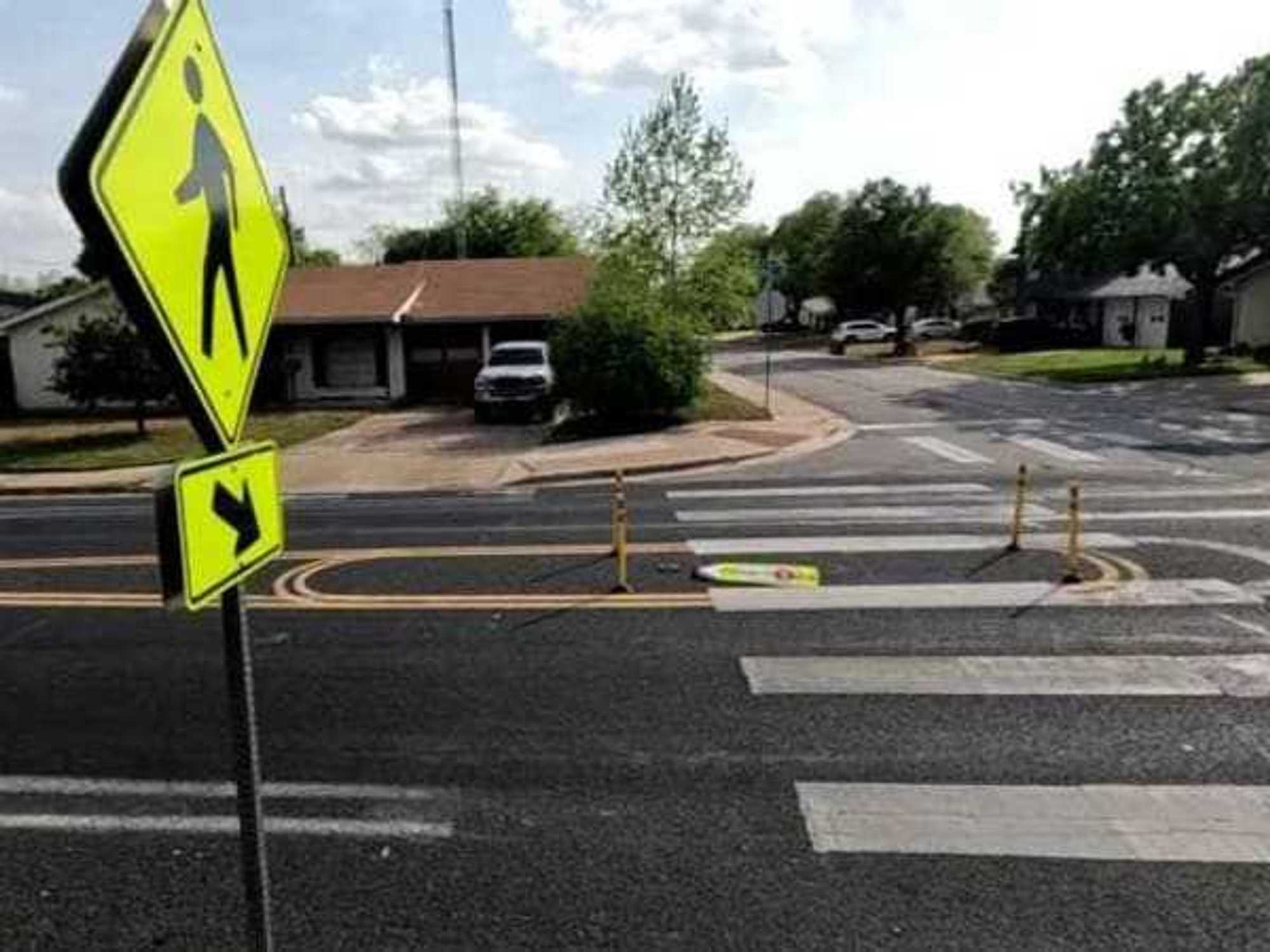
A new audit from the city of Austin says the city has made significant efforts to improve pedestrian safety in recent years, but incomplete crash data, limited funding, and jurisdictional barriers continue to slow progress toward reducing pedestrian deaths and serious injuries.
The May 2026 report, released by the Austin City Auditor’s Office, examined the city’s pedestrian safety programs, infrastructure investments, and crash data trends as Austin continues pursuing its Vision Zero initiative — a long-term effort to eliminate traffic deaths and severe injuries on city streets.
Auditors found that Austin has implemented “several key pedestrian safety initiatives” designed to make streets safer for people walking, including sidewalk expansion projects, pedestrian crossings, traffic signal improvements, and education campaigns. However, the report concluded that the city still faces major obstacles in identifying and prioritizing the most effective safety improvements.
“The City has implemented several key pedestrian safety initiatives to make people safer,” the report states, “but incomplete data, limited funding, and jurisdictional challenges limit further progress.”
One of the audit’s most significant findings involved Austin’s homeless population. According to city data cited in the report, more than two out of every five pedestrian deaths in Austin involve people experiencing homelessness.
Auditors noted that both the city of Austin and the Texas Department of Transportation (TxDOT) have taken steps to reduce deaths near high-speed corridors, including efforts aimed at discouraging camping and unsafe roadway crossings near Interstate 35 and other major roads. Still, the audit said more sustained and targeted interventions are needed to protect vulnerable populations.
The report also highlighted ongoing challenges with crash reporting and data collection. Auditors warned that incomplete or inconsistent crash data limits the city’s ability to accurately identify dangerous locations and deploy the most effective infrastructure improvements.
Austin’s Transportation and Public Works Department oversees several pedestrian-focused programs under the Austin Strategic Mobility Plan, including the Sidewalk Program, Safe Routes to School, Vision Zero, and the Pedestrian Crossing Program. The city has also expanded the use of “Leading Pedestrian Intervals,” which give pedestrians several seconds to begin crossing intersections before vehicles receive a green light.
City planning documents referenced in the audit show pedestrian crashes farther from signalized crossings are significantly more severe. According to the Pedestrian Safety Action Plan, crashes occurring more than a half-mile from a signalized crossing result in serious injury or death 43 percent of the time, compared to 22 percent for crashes occurring within one-eighth of a mile of a crossing signal.
The audit further noted that many of Austin’s highest-risk roadways are owned by the state of Texas, limiting the city’s direct authority to make roadway changes quickly. Officials said coordination with TxDOT remains essential for implementing improvements along major corridors.
--
Read the full story at our news partner KVUE.com.