

On December 6, 1991, four girls were murdered at an I Can't Believe It's Yogurt shop in North Austin. Quickly, the case became known as the "Yogurt Shop Murders," and to this day, has not been solved. The brutality of these murders and the lack of justice has haunted this city — and certainly the girls' families — ever since. A thoughtful new docuseries on HBO and its streaming service will catch viewers up on what we know about the crime and what it meant for Austin's identity.
The series is simply titled The Yogurt Shop Murders, and is directed by Austin resident Margaret Brown. She also had the backing of entertainment company A24 and big name executive producers Emma Stone and Dave McCary (who both produced 2024's A Real Pain). It's coming out in four weekly installments starting Sunday, August 3.
Brown grew up in Mobile, Alabama, but has been in Austin on and off since the late '90s. She can still remember seeing billboards featuring the four girls all over town.
"When I did move to Austin in the late '90s, a lot of my friends were reporters and would talk about [the case]," says Brown. "It was sort of in the mythos of the city."
She adds that being roughly the same age as the girls made the case feel even more present for her.
"I think as women, we can feel aggressed upon and there's just something about the story that I related to. Certainly after talking to the families, even more so," she says.
Each of the series' one-hour episode dives into the complicated web of the case, starting with what actually happened the night Eliza Thomas (17), Jennifer Harbison (17), Sarah Harbison (15), and Amy Ayers (13), were murdered in the back of the shop.
It goes on to talk about who these girls were, showing beautiful and private moments from old home videos; it details the meandering list of suspects over the years, how APD handled — and mishandled — the investigation, and how nearly everyone was just doing the best with what they had.
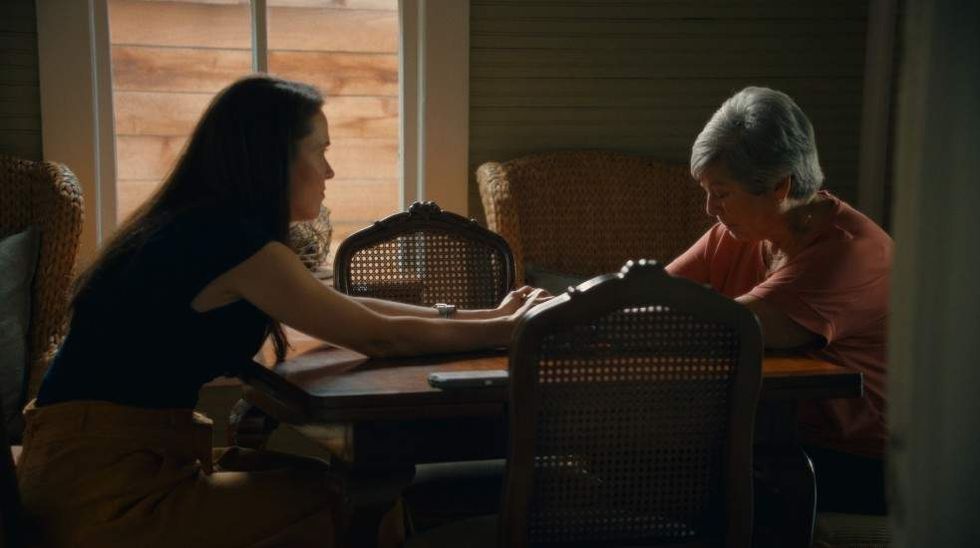 Sonora Thomas and Barbara Ayres-Wilson, sister and mother to Eliza and Amy, respectively. Photo courtesy of HBO
With help from her powerful collaborators, Brown was able to explore this case in minute detail, with access to some truly impressive archival footage and interviews with the families and police today. The resulting style feels real, raw, and heartbreaking. This show begs the viewer not to forget these girls, their families, those who worked the case, and an Austin that once seemed innocent.
"To live in this kind of darkness for three years was very challenging, not just for me but for the whole team," Brown says, adding that A24 paid for the team's therapy sessions during production.
"We really went for it, you know," she says. "We were curious about how people live with trauma; how different people respond to something like this, so we really asked the questions. It was a hard series to make, but I felt like it was worth it."
For Austinites who lived through this case, the series is a must-watch. For those who weren't around then, the series is still a must-watch. Aside from exploring the case, the show tells a story of a changing Austin.
The town we see in '91 through snippets of home videos, news clips, and a soundtrack of early '90s bands like Butthole Surfers is very different from the city we see today. Person after person in the series notes that the Yogurt Shop Murders were the beginning of the end of this innocent small town, and as the introductory credits roll, a mournful and haunting song drives it home.
"I was living in a devil town, didn't know it was a devil town," sings Allegra Krieger, covering "Devil Town" by revered Austin musician Daniel Johnston. "Oh Lord, it really brings me down, about the devil town."
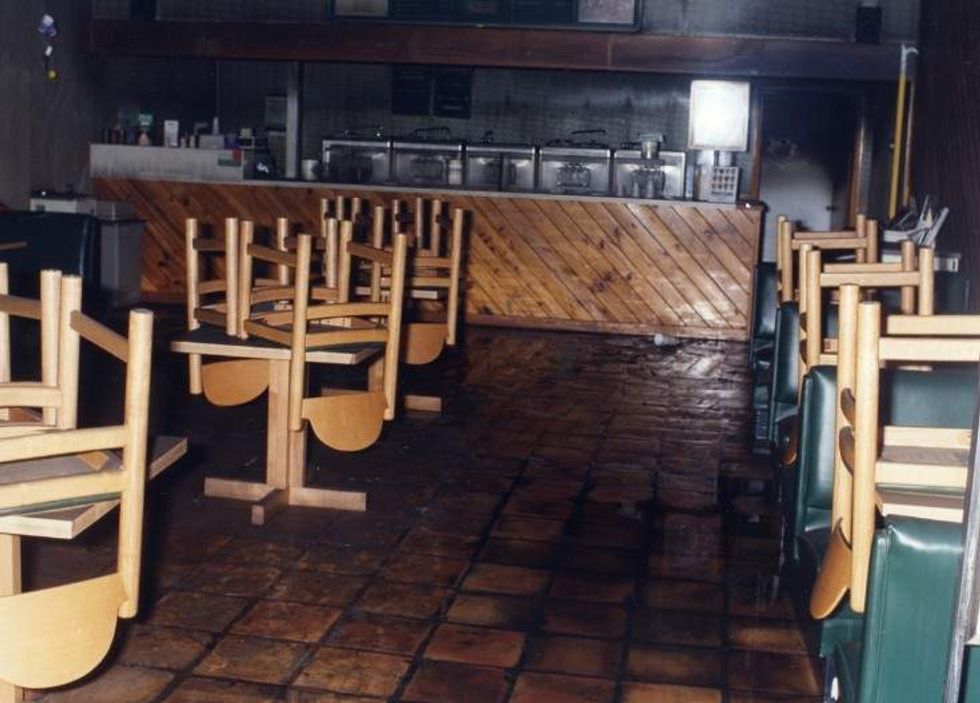 Inside the I Can't Believe It's Yogurt shop, just after the murders. Photo courtesy of HBO
Today we live in a reality where things like murders, bombings, and bad cops can be accessed in the palm of our hand. But this docuseries takes us back to a time before all of this; back to a time when we just didn't know as much.
However, it is only starting to become possible to solve these murders after three decades because we know more, with advancing DNA technology.
"It would be great if this got solved," Brown says, "and I hope the fact that it's showing all over the world will bring light to the case." But she doesn't have any misguided notions of being the person to solve it, or even assume that this documentary will serve that purpose. For her, it was about telling these peoples' stories.
"I just want people to watch it with an open mind," she says. "It's a different breed of true crime, I think."
The Yogurt Shop Murders debuts on HBO on Sunday, August 3, at 9 pm. New episodes will come out the next three Sundays. It will also be available to stream on HBO Max.

