Editor's note: Over the course of a week, we come across dozens of newsy tidbits and interesting links that we want to share with you. For this weekly roundup, we gather all the news we found fascinating, horrifying, important and hilarious.
1. Via 313 to host pop up at Bufalina.Why they didn't just call this event "Heaven on Earth" is beyond us. According to Eater Austin, pizza powerhouses Via 313 and Bufalina will be joining forces for one night of epic deliciousness.
2. Frank Bruni criticizes Austin City Limits Music Festival.The New York Times columnist Frank Bruni penned a pretty critical op-ed about capitalism and music festivals. While interesting, we can't help but be reminded of the many pieces that have come before it, including the abundance of editorials published last spring after SXSW's Gaga Doritos disaster.
3. Photographer takes beautiful portraits of shelter dogs before euthanasia. And now for your daily cry. On Friday, Mashable ran a photo essay from a Taiwanese photographer who shoots moving photos of dogs about to be put down. In a no-kill city like ours, these photos have a particular resonance.
5.5 reasons Texas isn't turning blue anytime soon.Texas Monthly has a very interesting infographic illustrating why the Lone Star State is going to stay a Republican stronghold for the foreseeable future. Apparently, it all comes down to the suburbs.
New York Times takes ACL Music Fest to task for corporate sponsorship.
Photo by Shelley Neuman
New York Times takes ACL Music Fest to task for corporate sponsorship.
Blumhouse Productions first made their name with the Paranormal Activity series, establishing themselves as a leader in the horror genre thanks to their relatively cheap yet effective movies. In recent years, they’ve added on “soft” horror films like M3GAN and Five Nights at Freddy’s to draw in a younger audience, with both films becoming so successful that each was quickly given a sequel.
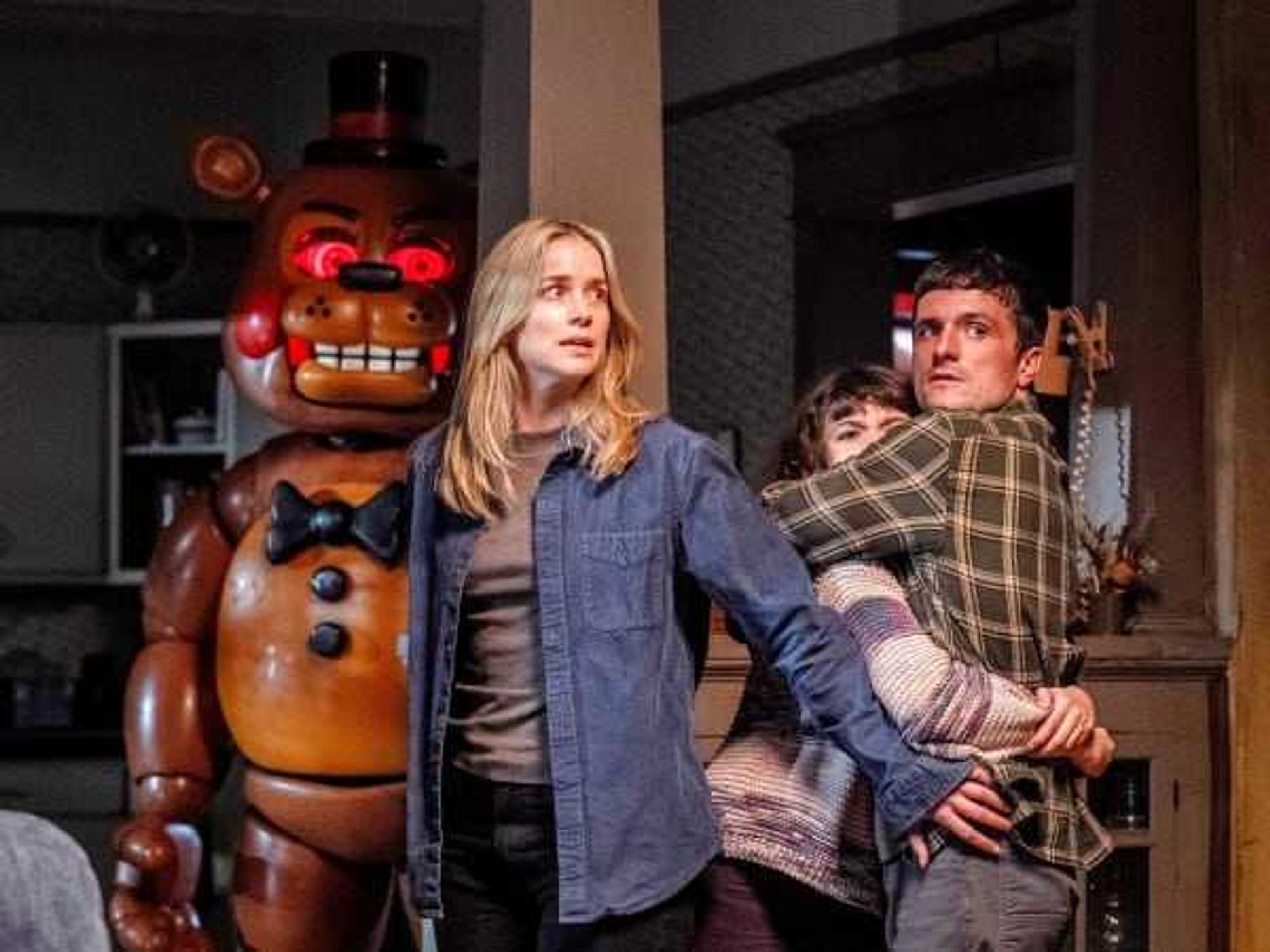
Five Nights at Freddy’s 2 finds Mike (Josh Hutcherson) and his sister Abby (Piper Rubio) still recovering from the events of the first film, with Abby particularly missing her “friends.” Those friends just so happen to be the souls of murdered children who inhabit animatronic characters at the long-defunct Freddy Fazbear’s Pizza, children who were abducted and killed by William Afton (Matthew Lillard).
A new threat emerges at another Freddy Fazbear’s location in the form of Charlotte, another murdered child who inhabits a creepy large marionette. Mike, distracted by a possible romance with Vanessa (Elizabeth Lail), fails to keep track of Abby, who makes her way to the old pizzeria and inadvertently unleashes Charlotte and her minions on the surrounding town.
Directed by Emma Tammi and written by Scott Cawthon (who also created the video game on which the series is based), the film tries to mix together goofy elements with intense scenes. One particular sequence, in which the security guard for Freddy Fazbear’s lets a group of ghost hunters onto the property, toes the line between soft and hard horror. That and a few others show the potential that the filmmakers had if they had stuck to their guns.
Unfortunately, more often than not, they either soft-pedal things that would normally be horrific, or can’t figure out how to properly stage scenes. The sight of animatronic robots wreaking havoc is one that is simultaneously frightening and laughable, and the filmmakers never seem to find the right balance in tone. Every step in the direction of making a truly scary horror film is undercut by another in which the robots fail to live up to their promise.
It doesn’t help that Cawthon gives the cast some extremely wooden dialogue, lines that none of the actors can elevate. What may work in a video game format comes off as stilted when said by actors in a live-action film. The story also loses momentum quickly after the first half hour or so, with Cawthon seemingly content to just have characters move from place to place with no sense of connection between any of the scenes.
Hutcherson (The Hunger Games series), after being the true lead of the first film, is given very little to do in this film, and his effort is equal to his character’s arc. The same goes for Lail, whose character seems to be shoehorned into the story. Rubio is called upon to carry the load for a lot of the movie, and the teenager is not quite up to the task. A brief appearance by Skeet Ulrich seems to be a blatant appeal to Scream fans, but he and Lillard only underscore how limited this film is compared to that franchise.
Five Nights at Freddy’s 2 is better than the first film, but not by much. The filmmakers do a decent job of making the new marionette character into a great villain, but they fail to capitalize on its inherent creepiness. Instead, they fall back on less effective elements, ensuring that the film will be forgettable for anyone other than hardcore Freddy fans.
---
Five Nights at Freddy's 2 opens in theaters on December 5.