The Better Bus
CapMetro approves plan to transport Austin to better service in 2035
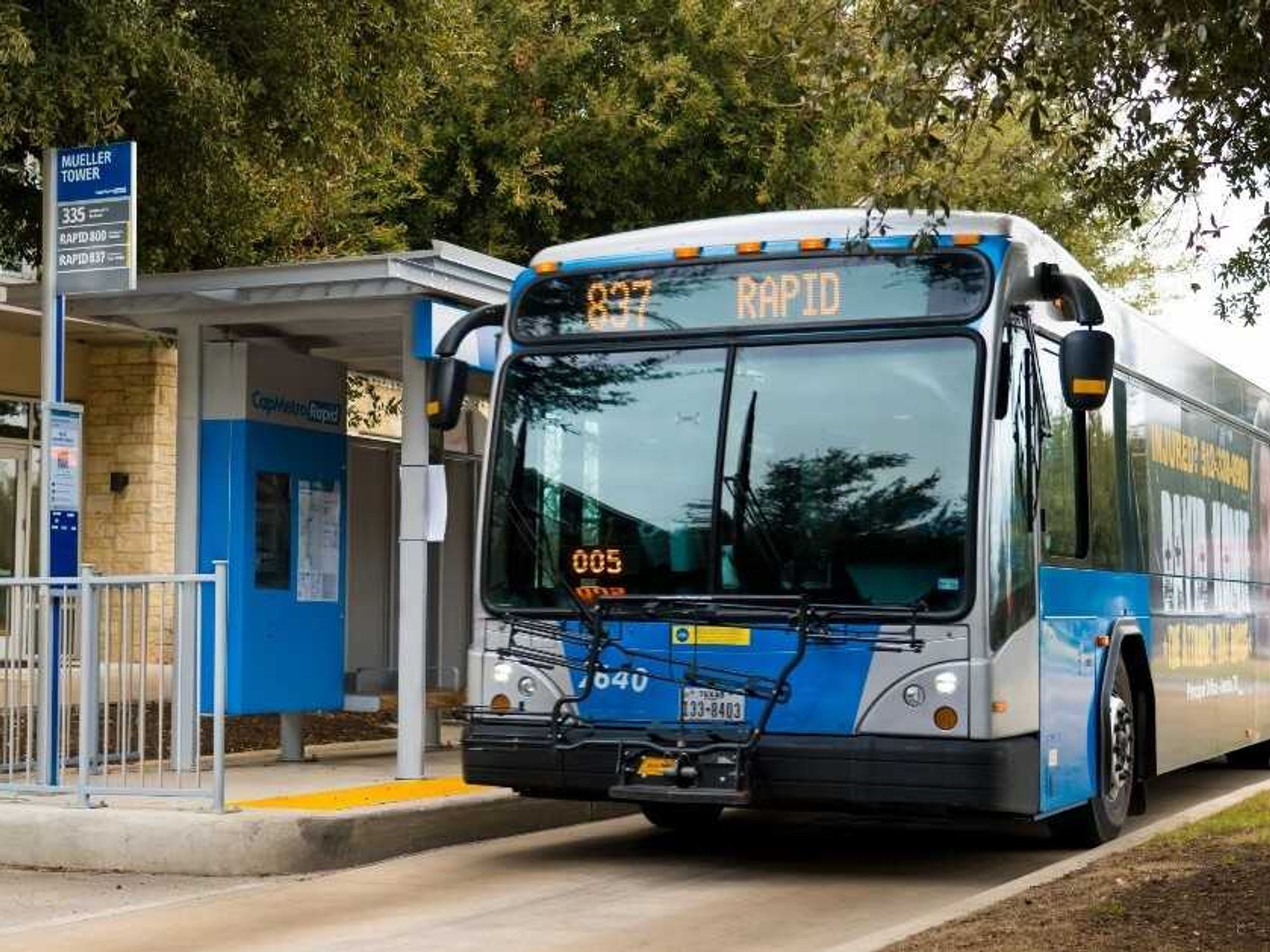
CapMetro will add six routes over the next 10 years, and improve more.
CapMetro, Austin's transit service, has approved a new plan for expanding its network over the next 10 years. The plan will go into effect in 2026, and it is updated "about every five years," according to CapMetro.
KVUE reports that the vote was unanimous. The plan was developed with the input of more than 10,000 people in Central Texas, including 8,500 survey-takers.
The executive summary of the CapMetro Transit Plan 2035 explains that Austinites were riding fixed bus routes increasingly before the pandemic — Austin was one of seven cities in the country seeing ridership rise. During the pandemic, ridership dropped less dramatically, and is recovering faster, too. The report found unmet demand mostly on the north side of the metro — in Pflugerville, Round Rock, and Cedar Park.
In all, at the end of the 10 year period, the plan counts 41 "realigned" routes, 19 routes with improvements in their frequency and span, and six brand-new routes. After 10 years, there will be more improvements, including to the Green and Red Line Commuter Rail services, and expansion of rapid service.
The "preferred network" — the one recommended by the plan — will add increased connection to the airport, more east-west connections, integration with the Austin Light Rail, and more.
Bus riders can view their routes over the next five years on an interactive map, including information about arrival times and how often each bus is scheduled to come. It also provides population data within a quarter-mile of each line's stops: the number of people who live there, the percentage living in poverty, and the percentage who are non-white or of Hispanic/Latino origin. Users can also view SNAP grocers and average daily ridership in April of 2024.
A second interactive map shows the plan after the next five years.
The plan also puts forth some worries about funding, including that operational costs are rising, sales tax revenue is slowing, and fares cannot cover all expenses. It describes the outlook until 2035 as "financially constrained." More decisions will have to be made as conditions change to implement the plan over the years.