
Where the River Took Us
2026 Pulitzer winner creates podcast about life after Central Texas flood
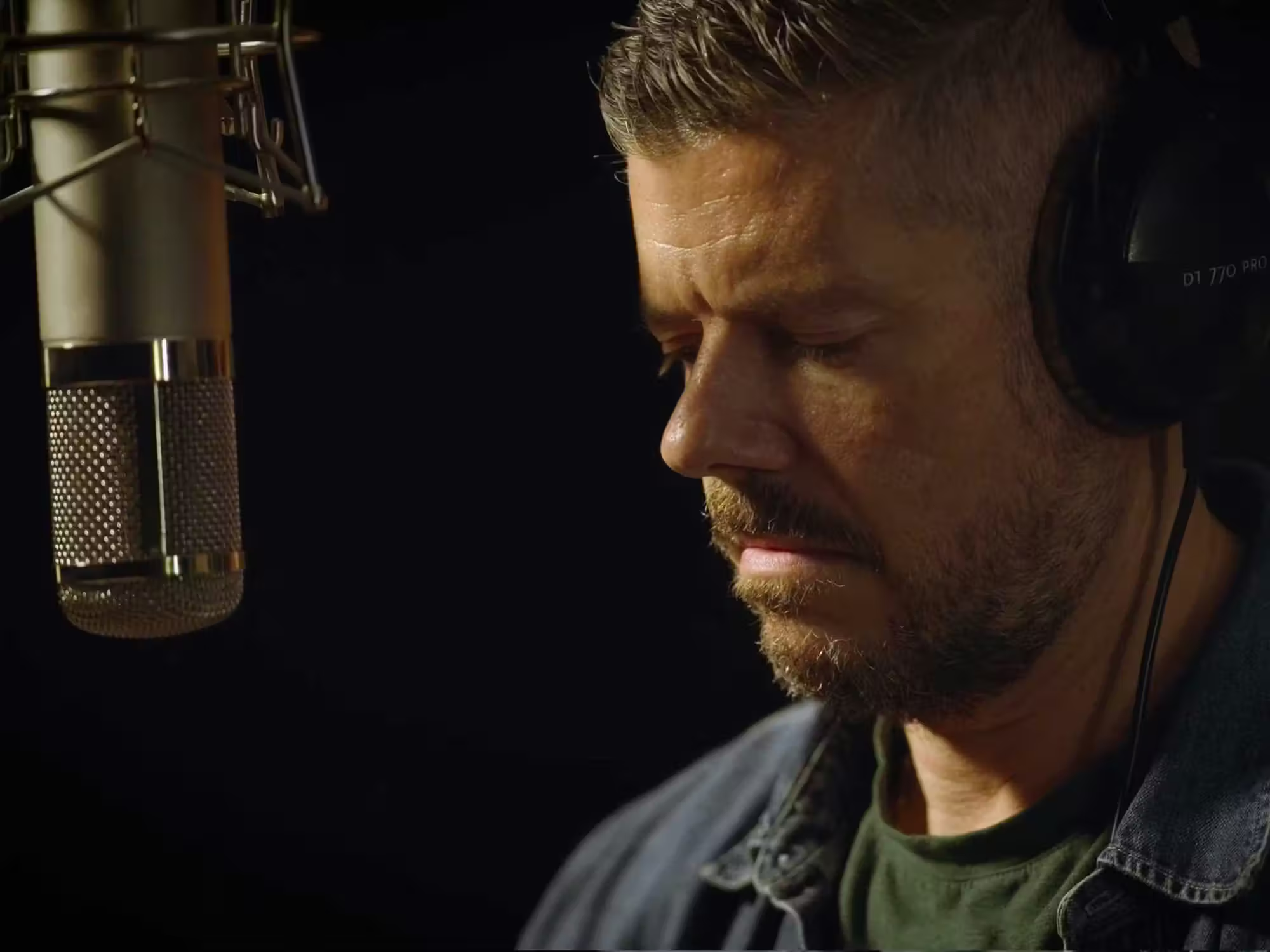
Aaron Parsley's new podcast "Where the River Took Us" looks at how the flood has impacted his own family and others this past year.
Less than a year ago, the Guadalupe River swallowed everything in its path. Houses. Roadways. Lives. For many Central Texans, time now splits cleanly into a before and an after, and for Aaron Parsley, senior editor at Texas Monthly, that divide is deeply, irreversibly personal. After winning a 2026 Pulitzer Prize for his firsthand account of the flood, he's expanding the narrative in Where the River Took Us, a seven-episode limited narrative podcast out now.
On July 4, Parsley's family was spending the holiday weekend together at their river house on the Guadalupe: Aaron and his husband Patrick; Aaron's father, Clint, and sister, Alissa; and Alissa's husband, Lance, and their two children, Clay and Rosemary. In the early, still dark hours of the morning, flood waters tore through the Texas Hill Country in what quickly became one of the deadliest natural disasters in recent history.
Aaron escaped. Patrick escaped. Lance escaped. Clint escaped. Alissa escaped, saving her daughter's life. But Alissa's 20-month-old son, Clay, did not.
Telling the story
In the days that followed, Parsley did what writers do: he wrote. Feverishly, at 1, or 3, or 4 in the morning, he wrote. His first-person account of the flood, which started out as an email to his boss, was the cover story for Texas Monthly last August. The story became an instant landmark piece — intimate and devastating in a way only someone who had lived it could make it. In the beginning of May, 2026, the story won Parsley his Pulitzer for feature writing.
Following up on the original story, Parsley has also written a new feature for Texas Monthly, a quiet reflection on life for his family since the flood, grief's persistence, and the strange, ongoing work of being changed by something.
In conversation with CultureMap, Parsley — speaking from his home office in Lockhart, where he and Patrick moved in December — was candid about the decision to keep his work focused on something so personal and traumatic.
"I will say that this experience itself, and then the story, and the response that I got to the story, was so overwhelming in all different kinds of ways," Parsley says. "It would have been on my mind no matter what. I was thinking and asking questions and exploring what this experience means. So, to be able to make that part of my job, I think, is a real privilege and a real opportunity."
The podcast features voices beyond Parsley's own. Listeners will hear from his sister, Alissa. From a father who lost his daughter at Camp Mystic. From the people who took Aaron and Patrick in when they crawled out of the river that morning. From neighbors who are still out there, still rebuilding.
Sitting down to formally interview his own family, including his husband and Alissa, was something else entirely.
"It was extremely strange," he says. "It was emotional. It made me feel really proud of them. Every single person showed up in the best way possible for something like this... And ultimately, those conversations are unforgettable to me, and I really appreciate that I was able to do that. I guess it sort of provided this moment for us to take some time, and sit face-to-face, and ask each other questions, and explore our experience and our lives since."
Being in the podcast studio helped, he says. "It's dark, it's quiet, we're right in front of each other. It's peaceful in there. It is an intimate setting, and I think it serves the purpose that we were looking for, which is to open up and share."
Moving forward
What Parsley is describing feels beyond journalism, though it is, of course, that too. It's a reckoning with his own personal grief, his faith, his relationship with those he loves, and his priorities in life.
"I was going to be looking at this experience no matter what," he says. "It felt right to be able to do that exploration about what it means to be a survivor of something like this."
The flood has reshaped nearly everything in his life. The move out to a smaller, quieter, and less hectic community than Austin happened faster than it might have otherwise. Patrick, a talented painter, is now pursuing his art full-time. Parsley describes a new relationship with spirituality, a changed family dynamic, and a clarity about priorities that comes from simultaneously losing so much, but not everything.
"It's been life-changing," says Parsley. "I've embraced that. I've wanted to prolong the experience of being changed by something. Continuing to write about it, and learn about it, and share about it has been a way that I can ensure that this thing that happened continues to shape my life."
Parsley also adds that the podcast is an immersive experience. Listeners don't just see the event that changed lives; they get access to the feelings and the unexpected details that come later.
"It's a depiction of what it feels like to survive something, and all these things that come with that," says Parsley. 'You don't just get back to normal life. There's all this stuff you carry with you, and I'm grateful to have the opportunity to explore that and present what we find in a way that I think is heartfelt and ultimately beautiful."
Where the River Took Us is written and hosted by Aaron Parsley and executive produced by Melissa Reese. Additional production and editing are by Patrick Michels and Sara Kinney. It is produced, engineered, and scored by Brian Standefer, with story editing by J. K. Nickell, fact-checking by Doyin Oyeniyi, and artwork by Emily Kimbro and Victoria Millner. Studio musicians are Jeff Queen and Peter Shults.
The podcast launched May 26 with the first two episodes immediately available on Apple Podcasts and other major podcasting platforms. All seven episodes will drop by June 30.

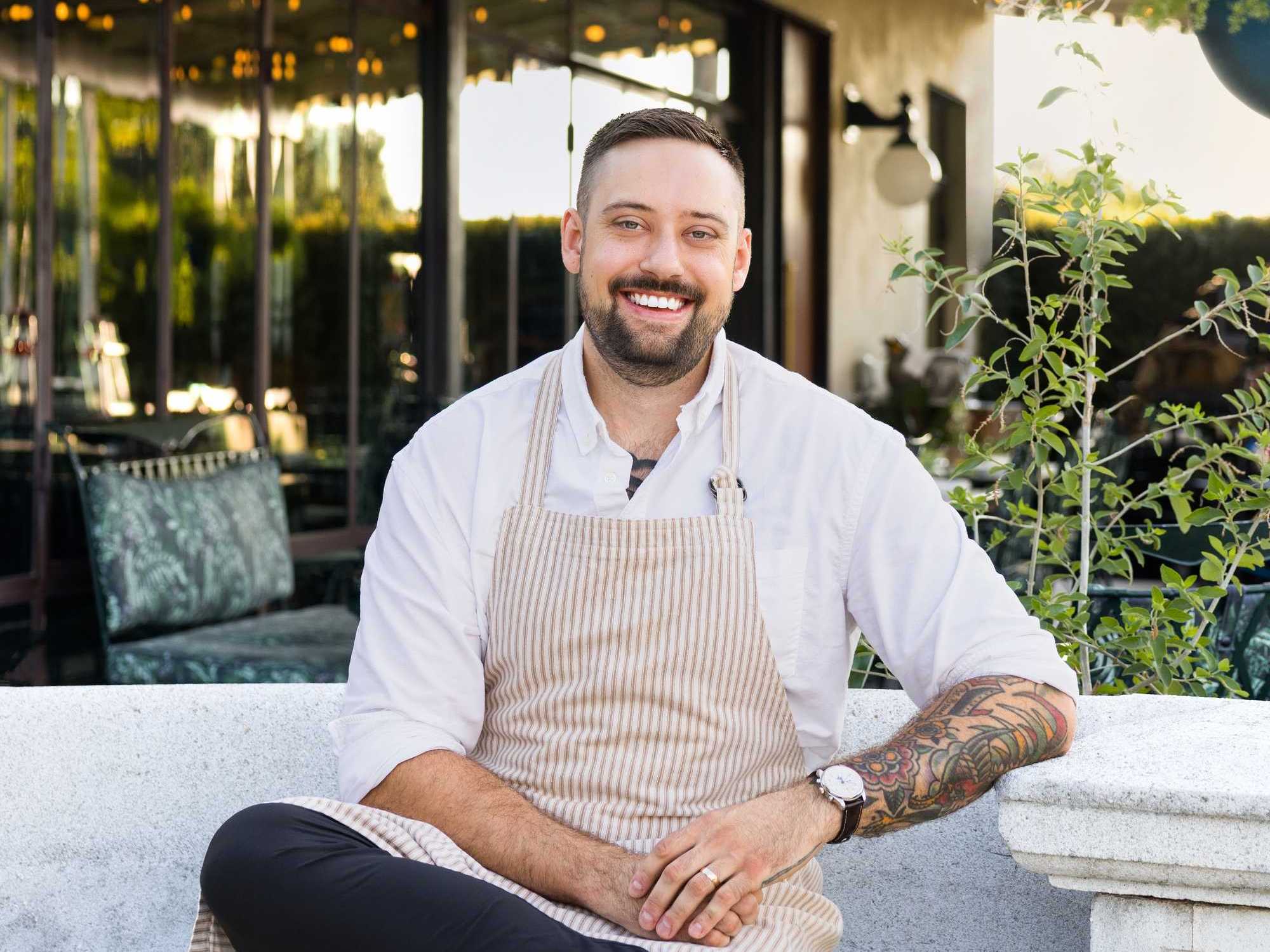 Lutie's new executive chef Jakob Czyszczon has been working in fine dining for 15 years. Photo courtesy of Commodore Perry Estate, Auberge Collection