Though not as buzzy as last weekend’s “MudFest,” the second weekend of Austin City Limits Music Festival 2026 was an equally good time with a much lower barrier of entry. Shoes were spared, and as attention shifted from the weather, it was able to land back on the real draw: the performances.
Although purists might like keeping the focus on the music — which we've mostly tried to do below — so much of the festival is about ambiance, style, and this year, politics. With midterms on the way and once-edgy statements about politicians, war, ICE, and Palestine now all but expected, the most unifying trend was using the stage to amplify one message or another.
We've taken our own stand, the same as always, which is to skip headliners in favor of the smaller acts (even if they're Bleachers small, which is to say, not small at all). We hope readers will take these highlights as cues to look deeper into acts that made an impression, listen up, and be ready to greet them as fans at future shows.
Here are our top 10 highlights from ACL Fest 2026 Weekend Two. For a completely different list of Weekend One highlights, see here.
Friday
Almost Heaven brings the club to the lawn
Almost Heaven played an early-afternoon slot like it was a late-night club set. The Austin duo — frontman Stefan Barraza and drummer Jaelyn Valero, who are playing club dates around the state right now — ran through songs including “Commotion” and “Oscillation” from their debut EP, Raw Cranium. At just 12:45 pm, the tent was about half full. It was still selfie hour out on the grounds. Almost Heaven’s first music came out eight months ago, so the crowd wasn’t familiar with all the tunes, but they were game. Barraza, in his signature bug-eyed sunglasses, led a call-and-response and left the stage to sing from within the crowd. He introduced the pair as brother and sister, then corrected himself: they were “grown in the same lab.” Almost Heaven’s music follows the same kind of logic: heavy synth and drums, often nonsensical lyrics, and a constant push from a young hip duo to make it fun. — Kimberly Reeves, contributor
LP's voice harnesses the power of rock
If I didn’t already know LP, I'd think they were dressed for Halloween. In a brown suede vest with a white tee, a long beaded necklace, aviators, and a cheetah print headband nearly concealed in curls — plus traditional tattoos peeking out from under short sleeves — they looked like a stock image for “hippie rock singer.” Glam rock-styled guitarists in unbuttoned red shirts enhanced the image by prowling flamboyantly around them. But the singer’s textured, warbling voice is as real and as rock and roll as you’ll get at any 2026 festival. That vocal power, backed by a band with no interest in fading into the background, entranced the audience, and LP’s sharp whistle, used for both ad-libs and solos, rang out elegantly across the lawn like the desert in a spaghetti western. Fans sang along, even when they couldn’t, really, because no one can match that soulful tone. — Brianna Caleri, editor
 It's rare to see Jesse Welles so animated.Photo by Nathan Zucker for Austin City Limits Festival 2026
Jesse Welles turns a phrase and tells a storyI'm concerned for the reviewers who panned Jesse Welles last week for heavy-handed lyrics. Who can't get a laugh out of praying and getting Peter Thiel because "he listens closer than God"? The satirical folk singer stood in front of his usual backdrop of power lines and tall grass, but this time with a blues band for backup, leaning into his penchant for a jaunty tune and great guitar licks. Listeners who didn't know him already seemed delighted, turning to each other with surprised grins during a song about liking bugs (because "they're alive and so am I") and committing to getting into his discography at home. It's nice to actually understand lyrics in an environment louder than anyone's thoughts, and if they make you think later...well, that's just a nice bonus. It's okay if they hit you on the first listen. Congrats. You attended a folk show. — BC
Turnstile loves hardcore and probably you
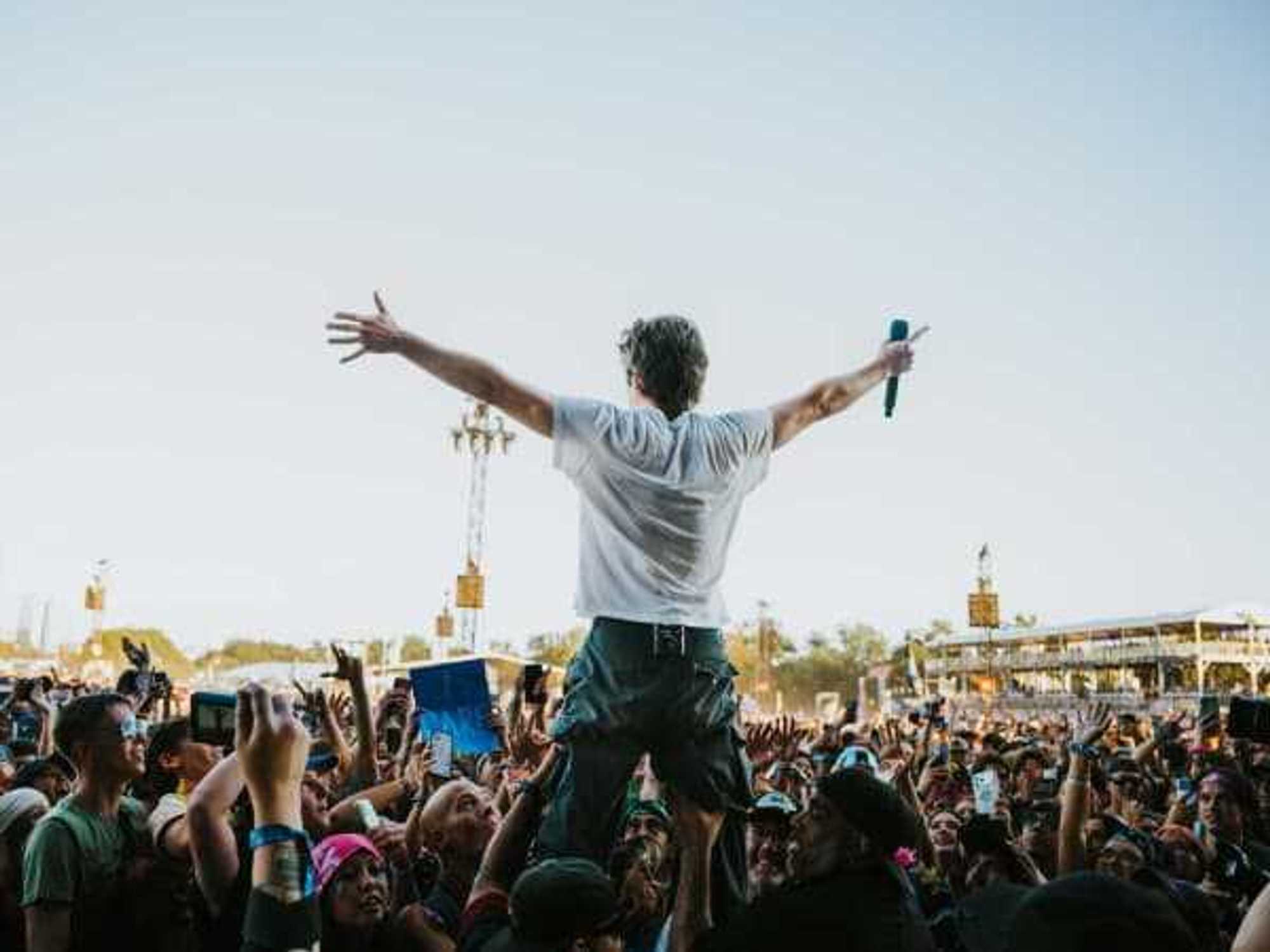
Where's the love at ACL Fest? It's in the mosh pit. Turnstile proved what hardcore fans already know with a series of live cam shots that felt more like a documentary about loving the genre. Camera operators got jostled around in the crowd to pick up fans holding and wearing anti-war messages, a tattoo referencing the Turnstile song "Never Enough," a hoard of blissful crowd-surfers, someone waving a Mexican flag, and more, all while the charismatic band did their own thrashing around onstage. They also cued up some footage from other shows: concert-goers picking up trash, playing in mud, giving testimonials about why they love hardcore music. Intentionally or not, the show made a great case to bring heavier music to the festival known for bedroom pop and light alternative nostalgia. And the band did a good job presenting more pop-flavored fare to keep attendees invested even if they weren't in the mood for moshing. — BC
Saturday
Bleachers had a good show but a weird turnout at ACL Fest 2021, making this 2026 triumph all the more sweet.Photo by Ismael Quintanilla III for Austin City Limits Festival 2026
Bleachers brings the best of New Jersey to Texas
I was already writing this entry in my head, melodramatically crestfallen but still faithful, during the set: “Even though Bleachers frontman Jack Antonoff violated something sacred by stripping down the explosive confessional, ‘I Wanna Get Better’...” But I didn’t get to finish my lamentation. Antonoff did take a chance to present the song on acoustic guitar as he’d written it, but later the band ripped into a reprisal as it appears on the album, giving fans that delicious catharsis of screaming together, “I wanna get better!” Antonoff’s somewhat goofy, blindingly earnest stage presence works in harmony with his E Street Band-esque backers — they’re nearly two bands, including two drummers, two saxophonists, and everyone on background vocals, building up a warm and full New Jersey sound that just can’t come from ACL Fest’s increasingly ubiquitous backing tracks. With such a lively base, over-the-top solos are more exercises in hyper-earnestness, and the band sounds like it exists to play live. — BC
Sunday
Thomas Day looks to the horizon
Thomas Day, out of Nashville, didn’t mind telling the small but growing crowd at the T-Mobile stage early Sunday afternoon that he was playing his first festival, and Austin was where he wanted to do it. Part musical-theater geek, part high school homecoming king, he gave off the vibe of a guy who couldn’t believe he’d made it to the big stage. Still, he had a solid voice and a knack for conveying the feelings behind pop songs like “sore throat,” “superstar,” and the unreleased “What More Do You Want From Me?” Day kept up the patter, telling fans he had just turned 24, had been dreaming about playing festivals, and had released his EP, my bad, on Friday. A self-taught pianist and former America’s Got Talent contestant with 6.5 million TikTok followers, Day turned down college football offers to pursue music. — KR
Sunday (1994) finds hope in the dark
Sunday (1994) brought a familiar but strong set to the Snapchat stage for the second weekend in a row, including “Stained Glass Window,” “Still Blue,” and “Blonde.” Is it just me, or did singer Paige Turner give off serious Rebecca De Mornay vibes with her long, loose hair and ’90s-style dress? This was a band with an established following, with fans crowded at the stage and, let’s face it, under the trees after a long weekend of heat. Turner and guitarist Lee Newell were relaxed and friendly; Newell slyly suggested Weekend Two’s crowd was better-looking. Sunday (1994)’s songs have that same slyness, a light touch with layers beneath. “Stained Glass Window” explores love condemned by religion, while “Still Blue” looks toward finding light at the end of a dark stretch. A number of same-sex couples swayed around me during the set. They closed with “Blossom,” its darker reflections giving way to hope and a strong crowd sing-along. — KR
Ethan Regan is mom-friendly
When I say I could take my mom to see Ethan Regan, I mean it in the best way. His Sunday afternoon set offered sax solo after sax solo, banjo, and layered vocal harmonies. Regan draws on folk, rock, hip-hop, and funk, but to my ears, the set had a yacht rock warmth. It’s his name on the band, and he’s clearly the leader, but there was a good sense of camaraderie among the musicians. Another artist who built a following on TikTok, the Charlotte-raised musician played songs including “closer to you” and “spring cleaning.” Regan has said he wants to portray himself as a force for good in his music, while acknowledging his imperfections. His set’s warmth and lived-in harmonies made it easy to settle in and stay. — KR
Bad Nerves floors it
Punk is not my scene, but you can tell when a band has a following. Bad Nerves fans lined up at the BeatBox stage half an hour early. The band from Essex, England, has released two albums and recently opened dates for Sex Pistols featuring Frank Carter. Singer Bobby Nerves described their live show to the zine Out of the Blue as a “real fast good time.” That seemed right. They pushed the pedal down as soon as the first song opened and did not take their foot off the gas. The crowd was both conventional and not, of all ages and types. The festival totems started gathering: tall poles topped with Benson Boone’s head, a cat, a Halloween pumpkin, and a dinosaur resembling Barney. Heads bobbed on poles and in the crowd, including a six-year-old wearing headphones who bobbed his heart out alongside his dad. — KR
Sofi Tukker
It almost feels like cheating to choose Sofi Tukker as a highlight, because it was so obvious ahead of time that it would be a great show. I'm not usually deeply invested in the electronic dance sets, but this duo has more than enough personality to create an experience in their own category. Sofi stayed dynamic by supplying guitar riffs, vocals, and even an ab workout set; Tukker ducked periodically behind a DJ booth, but didn't hide out there long. Tukker's voice is an interesting exercise in sonic identity; even though it's heavily modified for his short vamps, the fact that it's always processed the same makes it feel almost natural, like it's really just how he sounds. Both performers offered up creative choreography and two backup dancers heightened the club atmosphere, helping the house beats land for listeners over the wide expanse of lawn as folks started to gather early for Twenty One Pilots' headlining set. — BC


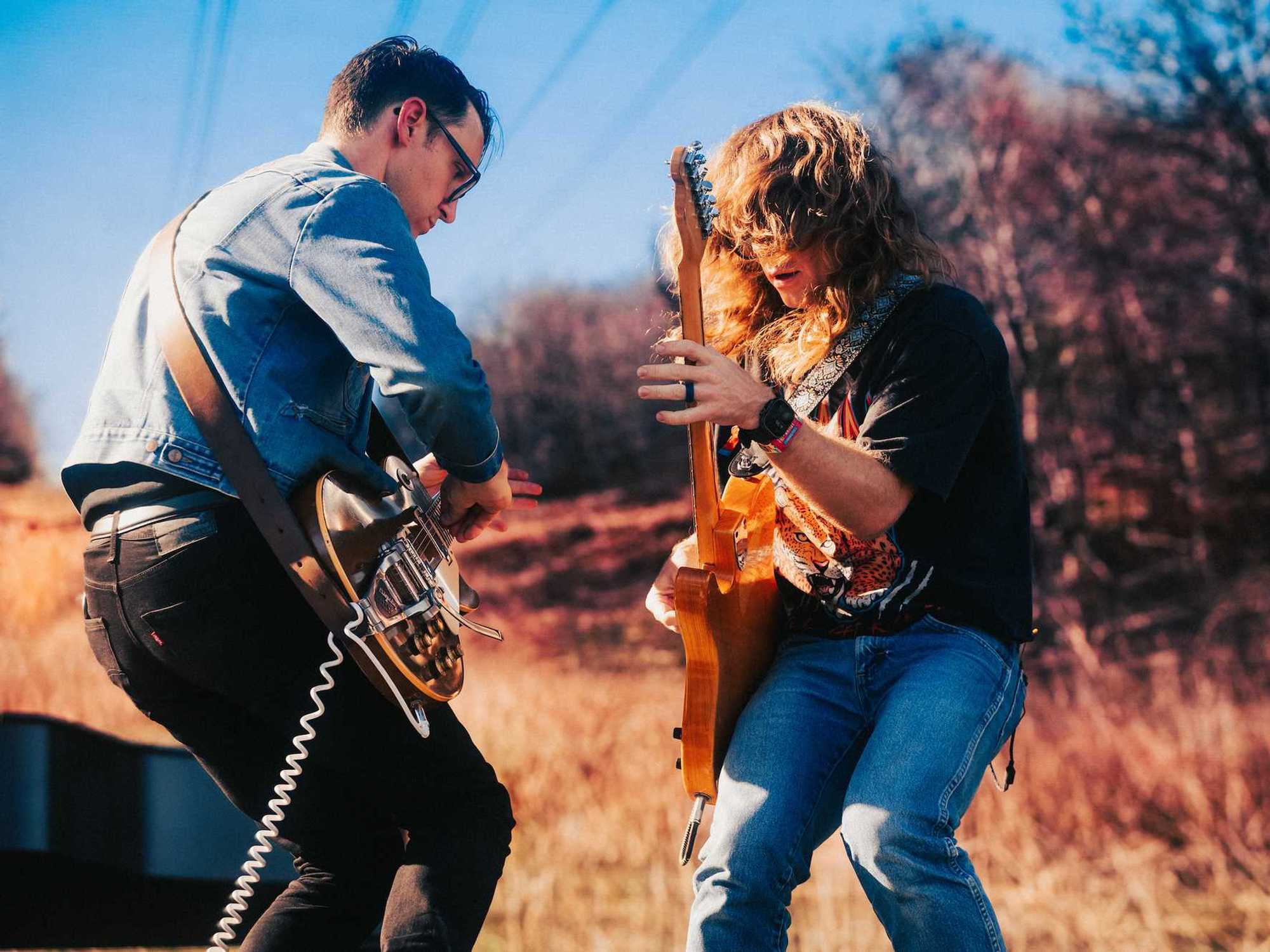 It's rare to see Jesse Welles so animated.Photo by Nathan Zucker for Austin City Limits Festival 2026
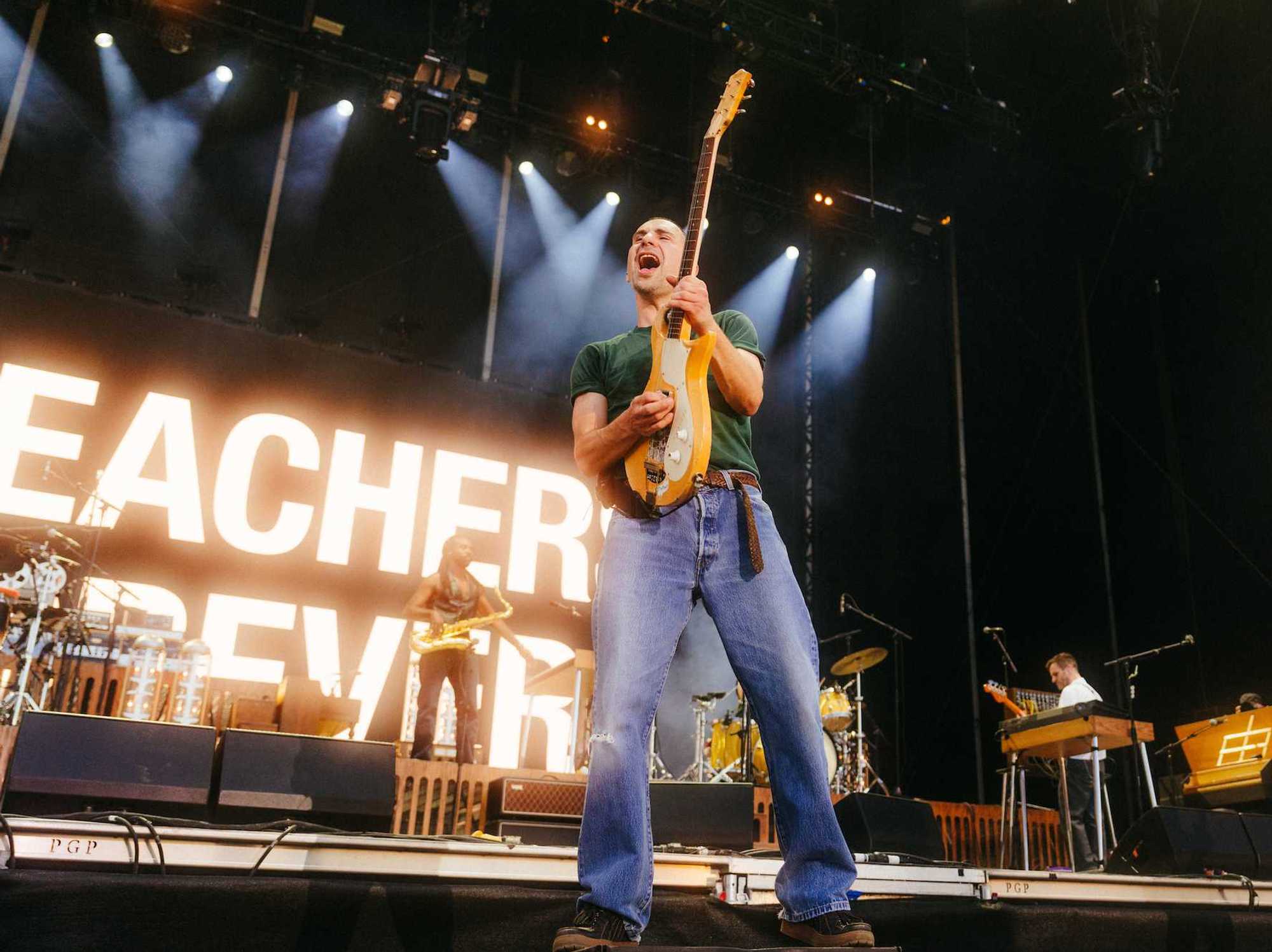 Bleachers had a good show but a weird turnout at ACL Fest 2021, making this 2026 triumph all the more sweet.Photo by Ismael Quintanilla III for Austin City Limits Festival 2026