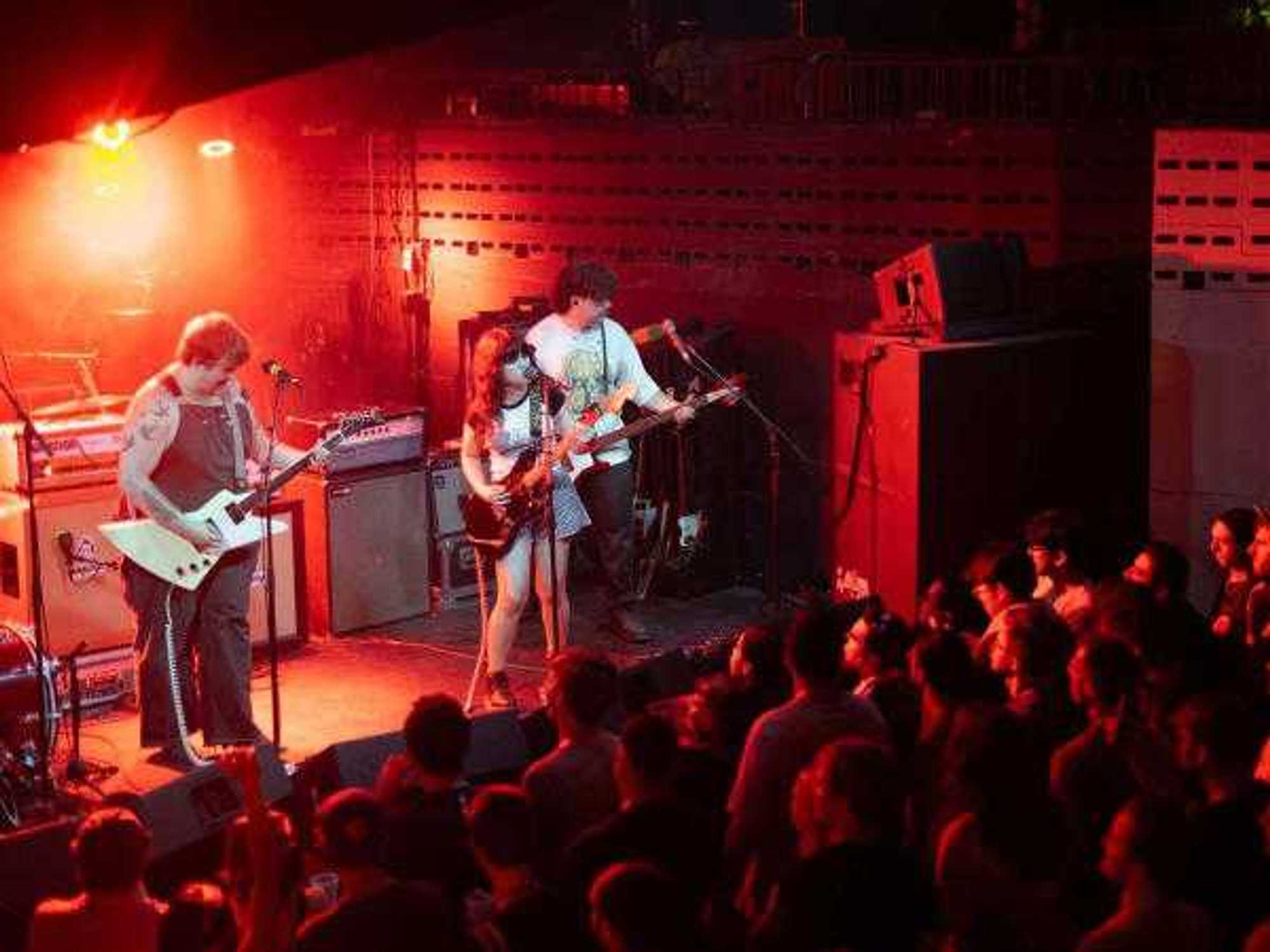
Every year when the Austin City Limits Music Festival lineup comes out, a new group of people joins the "I can't believe I'm this old and out of touch" crew. Trust us, we don't recognize half of the acts either.
That's why I listened to every single artist playing at the festival this year. (My playlist is 14 and a half hours long.)
Hopefully this guide will help you select some must-see sets, but be warned now that it is completely subjective. I tend to gravitate toward bands that noodle around onstage and have a strong connection to genre — whether that means committing to expectations or smartly subverting them. If that sounds like you, then there will probably be an exciting discovery or two waiting below.
ACL Fest will take place at Zilker Park from October 2-4 and 9-11. For our festival food recommendations, see here.
Methodology
To streamline this experience, I settled on a somewhat formulaic methodology. I selected two songs per artist, prioritizing popular songs on multiple albums when available. While listening, I rated each artist subjectively from 1-5, and I narrowed my list down to only artists that received a 4 or higher. (Lower than a 4 is not bad — it's just not a priority.)
Since that was still a total of 45 artists, I'm only going to explain the artists who fall in the mysterious space between being super famous (at the top of the lineup) and those playing at a time of day when a lot of people will be at the festival looking for something to see. I won't mention headliners or kids' performers at all.
Finally, for some of these artists, I know nothing but the two songs I listened to. Unless otherwise stated, my picks have nothing to do with their image, actions, or beliefs.
Friday
Big acts
- Leon Thomas
- Brandon Flowers (of The Killers, weekend 1 only)
Early shows
- Dallas Wax (weekend 2 only)
- Brigitte Calls Me Baby (weekend 2 only)
- Almost Heaven (local, weekend 2 only)
- The 4411 (local, weekend 1 only)
My middle picks
- Amyl and the Sniffers: This Australian garage rock band should really get the energy up during a tough time slot on the American Express stage, which tends to be hot and awkward for smaller bands at the height of the day. Their riff-driven songwriting reminds me of Wet Leg if you remove all their English nonchalance.
- Jesse Welles: Hailed by many online commenters as the next Bob Dylan or John Prine, Jesse Welles has a talent for writing witty, often sarcastic, super-political folk songs. It'll be interesting to see how the crowd who doesn't know him well reacts. Plus, Welles is a killer guitarist.
- Bunt: The electronic artists can really start to blend together for me, but I enjoyed listening to Germany's Bunt, whose beats are shimmery and warm. Those who want to dance can have fun; I think those who don't can also sit back and enjoy.
- LP: Even people who don't know LP (Laura Pergolizzi) probably know some of their work as a songwriter from the aughts and 2010s (Rihanna, the Backstreet Boys, Christina Aguilera). Their own studio work is a bit hard to categorize, but it has a powerful point of view, and she is a fantastic, distinctive singer.
- Natasha Bedingfield (weekend 2 only): It feels like the artist behind "Unwritten" and "Pocketful of Sunshine" should be higher up the lineup, but perhaps ACL Fest's target audience is too young to recognize the name? I don't have much to add — I can't imagine a happier, more nostalgic set for a lot of people walking through festival gates.
- Grocery Bag (weekend 1 only): Local act Grocery Bag is a regular on CultureMap. We love their upbeat psych-garage rock tunes (to use their self-description). This set will be great to drag friends to, since Grocery Bag has some punk edge but stays approachable and fun.
Saturday
Big acts
- Bleachers
- Lykke Li
- Snow Strippers
Early shows
- Annie DiRusso
- Night Tapes
- Cure for Paranoia (weekend 1 only)
- Nat Myers (weekend 2 only)
- Fightmaster (weekend 1 only)
- Lluvii (local, weekend 2 only)
- Montclair (weekend 2 only)
My middle picks
- Fakemink: English rapper and producer Fakemink will play a small-stage set that's easy to overlook since it leads right into the headliners on both big stages. I found his work to be creative, layered, and transformative of the genres it pulls from. I could see this being a really fun dance set.
- Palace (weekend 1 only): Fans of artful guitar noodling should be at this set. Palace's jazzy, lilting, and warm songwriting reminds me of driving around in the mid-2010s and listening to alternative radio. These songs will probably be stuck in your head on the way out — if Lorde doesn't displace them.
- Rodrigo y Gabriela: This iconic Mexican guitar duo is admittedly a bit niche, but their fame beyond that niche is a good sign that anyone who stops by their set is likely to have a good time. It is satisfying to hear them lock in with each other, and it'll be a good dance set for people who want a break from the EDM.
- Balu Brigada: In my notes, I described this New Zealand rock act as "lite indie sleaze" — they also feel like a distant, younger cousin of longtime ACL Fest favorites The Strokes.
- Coleman Jennings (local, weekend 1 only): Tourists will probably be delighted to see this heavily western set. Jennings writes lyrics about the desert, whistles cinematically, and sings with a Willie Nelson-ish timbre. Austinites should be proud to claim him, too.
Sunday
Big acts
- Geese
- Sofi Tukker
- Parcels
- The War on Drugs
- Blood Orange
Early shows
- Paloma Morphy
- Sunday (1994)
- Villanelle (weekend 1 only)
- Kevin Atwater (weekend 2 only)
My middle picks
- Saint Motel: I remember seeing Saint Motel at past festivals, and it's always a fun show. This funk-infused California band that was big in 2015 puts out some very unsubtle stuff, so get ready to lean into it and enjoy the broad appeal.
- Houndmouth: I still have a big soft spot for "Sedona," Houndmouth's breakout alternative hit from the same year. Beyond that wistful entrance to national radio play, they have a nice bluesy sound that is perfect for live jams and soulful solos.
- Underscores: This was one of the first acts I was really pleased to see when the 2026 lineup came out. Underscores, a solo artist and a current tour opener for Charli XCX, takes hyperpop and adds her own creative, ironic, and avant garde flavor. It feels like what I thought Brat would sound like before I heard it, from how people were talking about it. (Guess my music degree did me little good.)
- Claire Rosinkranz: I originally figured this was one of those yearly ACL picks based on social media virality. But listening more, I found Rosinkranz's work to be pleasantly whimsical, layering lightly jazzy touches over somewhat disaffected, contemporary pop.
- Grace Ives: Of all my "discoveries" from this year's listening, Grace Ives stuck with me the most. With high praise from both Stereogum and Pitchfork, Ives is a melodramatic writer in an upbeat way, with a synthy, nimble, and dreamy sound.
- Bad Nerves: Bad Nerves from Essex call themselves a "powerpop rock n roll band." Reviewers confirm that their live show is as energetic as it sounds like it would be. (My favorite review headline: "If Punk’s Dead, Bad Nerves Just Punched a Hole Through Its Coffin.")