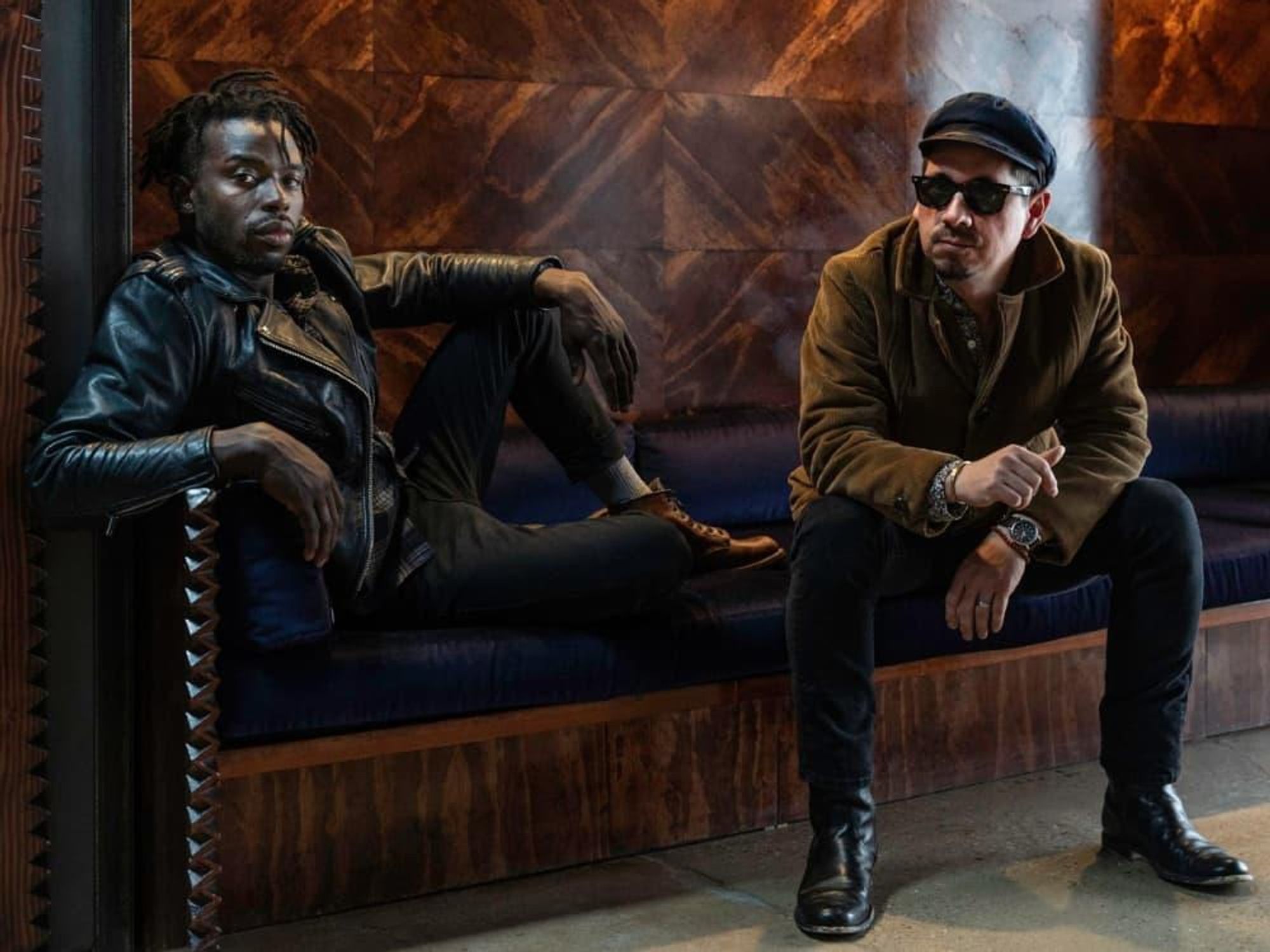
Black Pumas are among the best new artist nominees for the 62nd Grammy Awards.
Black Pumas/Facebook
Nestled among a list of pop culture phenomenons like Billie Eilish and Lizzo, the 62nd Grammy Awards nomination announcement on November 20 included a local surprise. Austin soul-funk duo Black Pumas are among those vying for the Grammy's best new artist trophy.
Black Pumas is comprised of singer Eric Burton and producer-guitarist Adrian Quesada, one of Austin’s best-known musicians and a fixture of the local music scene. Throughout his decades-long career, Quesada has performed with a diverse array of artists including Prince, Los Lobos, and GZA. In 2011, he nabbed his first Grammy for best Latin rock album for his work with Grupo Fantasma.
Though less than two years old, Black Pumas has quickly garnered an Austin fanbase, regularly selling out venues like The Mohawk. And the rest of the world is starting to take notice, beginning with an October appearance on Jimmy Kimmel Live.
In an interview with CultureMap this summer, Quesada spoke of the band's seemingly meteoric rise, saying, "I knew we had something special right after the first show we played. I didn’t realize it would catch on worldwide at the rate that it has, but I knew the music was good, soulful, and sincere."
The Austin band joins some of 2019’s biggest names in the new artist category. In addition to Eilish and Lizzo, Maggie Rogers, Tank and the Bangas, Yola, Rosalía, and “Old Town Road” sensation Lil Nas X also got nods. The winner will be announced January 26, 2020, during a ceremony aired on CBS.
Those wanting to congratulate the band in person, however, will only have to wait a few days. Black Pumas is currently breezing through the United Kingdom before returning to Austin for a free show at the Darrell K. Royal-Texas Memorial Stadium November 29 as part of Longhorn City Limits.

Few people are strong enough to resist the lure of Girl Scout cookie season every year, with the cookies’ limited availability and unique flavors a strong incentive to indulge. But only the girls and their families who have sold the cookies know the joys and stresses of trying to get people to buy them, a process that is detailed in the new documentary, Cookie Queens.
The film by documentarian Alysa Nahmias uses the stories of four different girls to represent the nationwide ritual for the Girl Scouts. They include 12-year-old Olive in Charlotte, North Carolina, a longtime top seller; 8-year-old Shannon Elizabeth in El Paso, Texas, who wants to earn the reward of going to camp; 5-year-old Ara in San Diego, California, whose goal is modest compared to most other girls; and 9-year-old Nikki in Chino, California, who has to compete with her older sisters in the cookie-selling bonanza.
The girls represent a cross-section of both ages and backgrounds, with some girls coming from wealthy families and some girls dealing with more limited means. And how much money your family has makes a big difference, as not only does someone richer have more freedom with their time and supplies, but all scouts are required to reimburse the organization for every box they take in, regardless of whether they’re able to sell it or not.
That caveat makes the journeys of the four featured girls feel wildly different. It’s clear from the start that Olive and Nikki’s families don’t give a second thought to the personal economics of selling cookies, with each girl taking in thousands of boxes at the beginning of the six-week selling season. With both Olive and Nikki rightfully confident that they’ll have no problem offloading their supply, their stories turn to how selling is personally affecting them, with each trying to reconcile the fun of doing it with the pressure they feel from their family members.
Shannon Elizabeth’s story is more harrowing, as her parents feel a strong desire to help her accomplish her lofty goal, but worry that the cost might literally be too high for the family as a whole. More than once, the parents are shown fretting that they won’t have the money to pay back what they owe should they fall significantly short in their sales. Their selling approach, which includes walking through an empty swap meet and standing outside a chain restaurant at night, only adds to their stress.
The most fun story to watch is that of Ara, whose innocence is matched by her confidence. Her parents teach her how much money they’ll owe with her small goal of 55 boxes, but right away she takes on more responsibility than expected. She’s shown making sales pitches and tallying the total number of boxes she’s sold with little to no help from either her mom or dad. With her high voice, glasses, and a monitor on her arm to manage her diabetes, she becomes the cute and sympathetic part of the film.
There are times that the film starts to feel more than a little manipulative, however. While many of the moments documented come off as organic, some of them seem like Nahmias is actively guiding the participants in order to get a better story. This is especially evident with Shannon Elizabeth and her family, whose early struggles turn into a miraculous feel-good story by the end, a turnaround that seems implausible at best. Everything with them might have been aboveboard, but Nahmias and her team edit the family’s journey in a way that pushes a bit too hard for emotion.
Cookie Queens, which was produced by a company owned by Prince Harry and Meghan Markle, helps to give insight into the business of selling Girl Scout cookies for those who’ve only been on the purchasing end of the transaction. The dedication of each girl toward selling their allotted supply proves fun and interesting, even if the filmmaker tries to gild the lily on occasion.