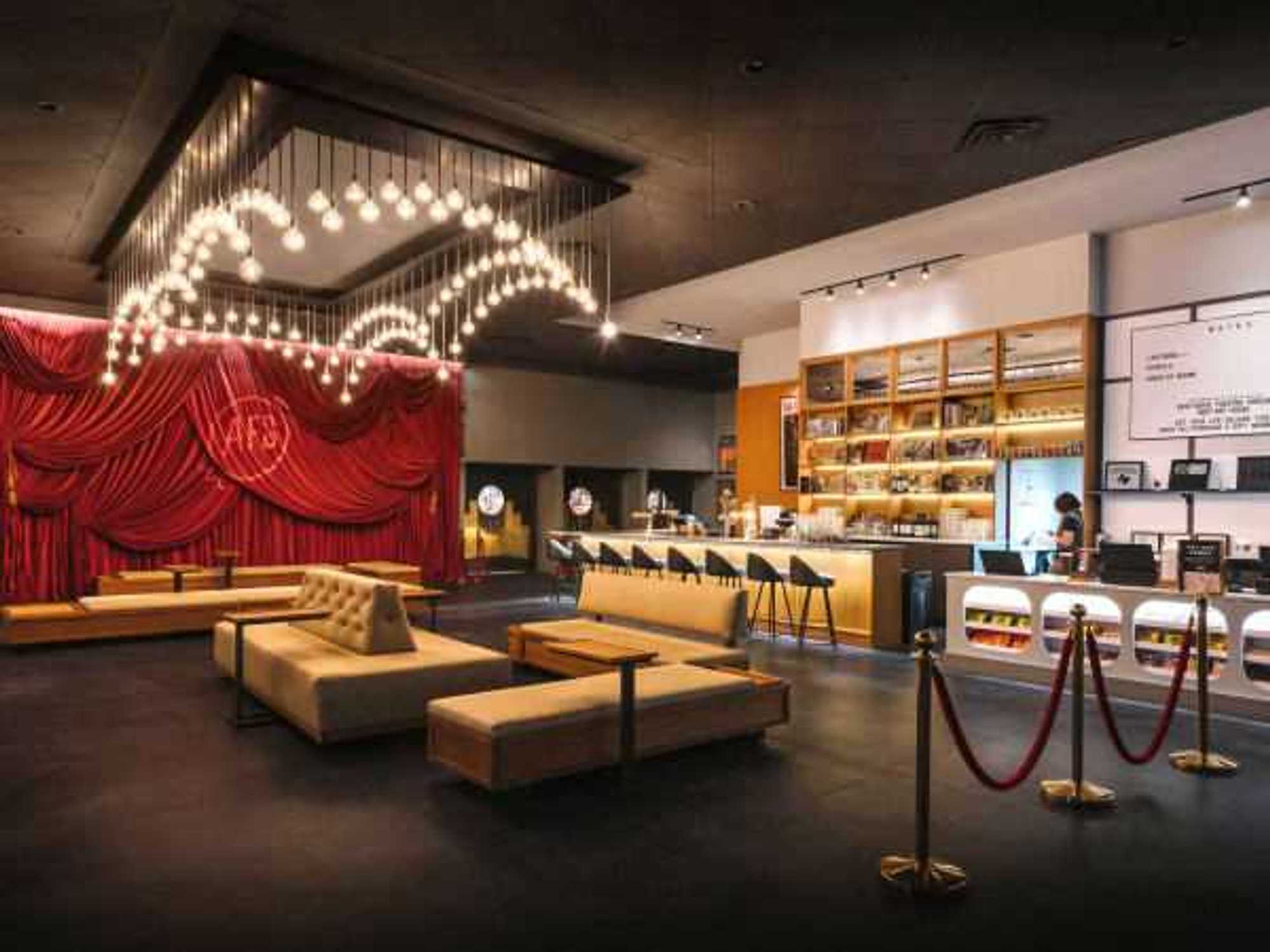
A Marfa Film Festival screening in conjunction with the Alamo Drafthouse.
El Cosmico in Marfa, Texas
Photo by Andrew Collins
West Texas landscape.
Photo by Andrew Collins
After a two-year hiatus and three-year legal dispute, the Marfa Film Festival is to be resurrected in June of 2013.
As is the support of any artistic venture born within it, the affection for Marfa is contagious. Festival creator and director Robin Lambaria plans to make the fourth iteration of the festival more experiential, attracting a wide swath of people to the remote West Texas town with a roster of over 50 features, shorts, music videos and experimental works programmed by herself and "a trusted group of filmmakers and programmers from around the world."
"I think of it like a long set of songs — a ballet of films — with emotional highs and lows." - Mercer Black Declercq
While there's no prescribed theme for films submitted to the Marfa Film Festival, Mercer Black Declercq, festival press relations, tells CultureMap, "I think of it like a long set of songs — a ballet of films — with emotional highs and lows."
The team behind the Marfa Film Festival eschews the distinctly digital-age notion of "nowness" and describes a refreshingly noncompetitive outlook.
"We will share anything regardless of its date of creation," Lambaria says. "What we're interested in are stories and perspectives that speak to our audience now. I personally believe that art of timeless and good films never to lose their potency."
And what better place to watch a film, new or old, than under the stars of Texas' vast skies, against Marfa's alluring desert backdrop?
"In our ad hoc 'drive-in' environment, people gather sitting on blankets or chairs under a blanket of stars. We choose classic films like Night of the Hunter, the Last Picture Show and The Red Shoes, and new modern classics like True Stories, The Harder They Come and American Astronaut," says Lambaria. "It's so lovely to watch people's heads go back at times when they take a break from watching the screen and take in the stars."
"It's so lovely to watch people's heads go back at times when they take a break from watching the screen and take in the stars." - Robin Lambaria
Lambaria says she's thrilled to have another go-round at facilitating a truly unique union of magic onscreen and off. She explains that the time spent in litigation (the case was ultimately settled, resulting in sole ownership for Lambaria) provided her with the time needed to refocus on the purpose of the five-day festival.
"In my travels over these last few years, I was encouraged on more than one occasion to start a festival in another town or special destination, and over and over again, I realized that there is truly no place like Marfa. I'm excited to be back and I'm excited about how excited everybody is," she says.
"The festival is designed to encourage connection... and part of what makes Marfa beautiful is the possibility of just about anything happening."
---
Purchase tickets for the festival, June 26 - 30, online.
Few people are strong enough to resist the lure of Girl Scout cookie season every year, with the cookies’ limited availability and unique flavors a strong incentive to indulge. But only the girls and their families who have sold the cookies know the joys and stresses of trying to get people to buy them, a process that is detailed in the new documentary, Cookie Queens.
The film by documentarian Alysa Nahmias uses the stories of four different girls to represent the nationwide ritual for the Girl Scouts. They include 12-year-old Olive in Charlotte, North Carolina, a longtime top seller; 8-year-old Shannon Elizabeth in El Paso, Texas, who wants to earn the reward of going to camp; 5-year-old Ara in San Diego, California, whose goal is modest compared to most other girls; and 9-year-old Nikki in Chino, California, who has to compete with her older sisters in the cookie-selling bonanza.
The girls represent a cross-section of both ages and backgrounds, with some girls coming from wealthy families and some girls dealing with more limited means. And how much money your family has makes a big difference, as not only does someone richer have more freedom with their time and supplies, but all scouts are required to reimburse the organization for every box they take in, regardless of whether they’re able to sell it or not.
That caveat makes the journeys of the four featured girls feel wildly different. It’s clear from the start that Olive and Nikki’s families don’t give a second thought to the personal economics of selling cookies, with each girl taking in thousands of boxes at the beginning of the six-week selling season. With both Olive and Nikki rightfully confident that they’ll have no problem offloading their supply, their stories turn to how selling is personally affecting them, with each trying to reconcile the fun of doing it with the pressure they feel from their family members.
Shannon Elizabeth’s story is more harrowing, as her parents feel a strong desire to help her accomplish her lofty goal, but worry that the cost might literally be too high for the family as a whole. More than once, the parents are shown fretting that they won’t have the money to pay back what they owe should they fall significantly short in their sales. Their selling approach, which includes walking through an empty swap meet and standing outside a chain restaurant at night, only adds to their stress.
The most fun story to watch is that of Ara, whose innocence is matched by her confidence. Her parents teach her how much money they’ll owe with her small goal of 55 boxes, but right away she takes on more responsibility than expected. She’s shown making sales pitches and tallying the total number of boxes she’s sold with little to no help from either her mom or dad. With her high voice, glasses, and a monitor on her arm to manage her diabetes, she becomes the cute and sympathetic part of the film.
There are times that the film starts to feel more than a little manipulative, however. While many of the moments documented come off as organic, some of them seem like Nahmias is actively guiding the participants in order to get a better story. This is especially evident with Shannon Elizabeth and her family, whose early struggles turn into a miraculous feel-good story by the end, a turnaround that seems implausible at best. Everything with them might have been aboveboard, but Nahmias and her team edit the family’s journey in a way that pushes a bit too hard for emotion.
Cookie Queens, which was produced by a company owned by Prince Harry and Meghan Markle, helps to give insight into the business of selling Girl Scout cookies for those who’ve only been on the purchasing end of the transaction. The dedication of each girl toward selling their allotted supply proves fun and interesting, even if the filmmaker tries to gild the lily on occasion.