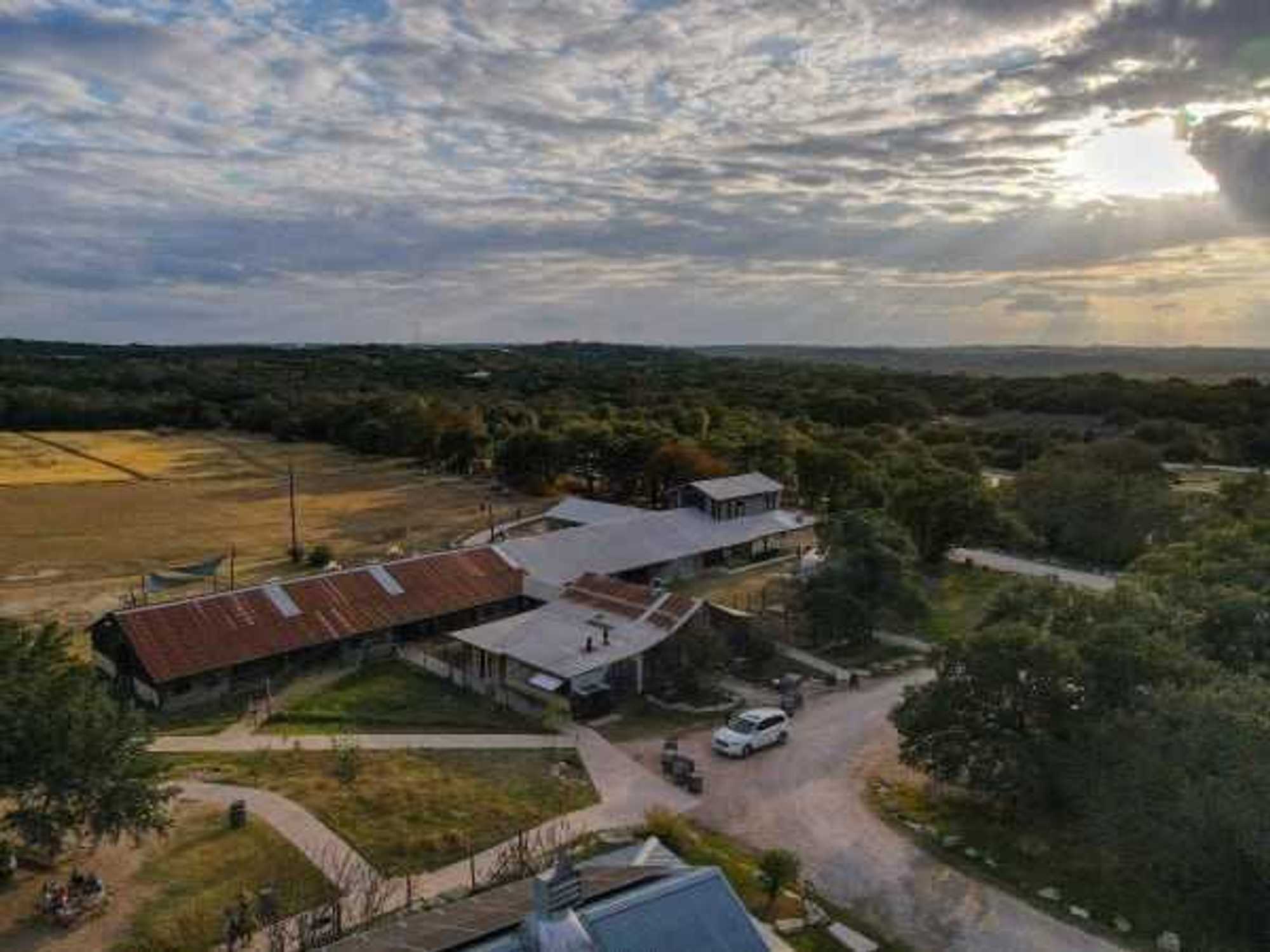
A popular Austin brewery's search for a new investor is getting a response. Two business days after announcing the opportunity on Instagram, Jester King Brewery had heard from dozens of prospective buyers, co-founder Jeffrey Stuffings tells CultureMap.
“About 50 different parties have reached out to us," Stuffings says. "Whether that translates into serious interest once people start going through the numbers and operations, time will tell."
The response gives the 16-year-old Hill Country brewery a starting point as its founders, Stuffings and his brother Michael Steffing, consider selling a majority stake or the entire business to address debt and bring in fresh capital.
The ideal match, Stuffings says, would be another brewery, a brewery group, or a hospitality company interested in continuing what Jester King has built on Fitzhugh Road. A major new attraction isn’t the priority; a financial reset is.
For now Jester King remains open, operating as a brewery, restaurant, and working farm while its founders explore their options. Saturday, October 31, brought a pop-up fair featuring local artisans, while the brewery's upcoming calendar includes live music, goat yoga, and performances of Julius Caesar on November 21 and 22.
Jester King’s ambitions once extended across a much larger property. In 2016, the owners purchased 58 surrounding acres to protect the rural setting from residential development, with plans for farming, lodging, and events. Two years later, it added 107 acres, Stanley’s Farmhouse Pizza, and an event center. The five-unit Tipping T Inn followed in 2019, an acquisition announced around the brewery’s 10th anniversary in 2020.
Today, Jester King owns 41 acres, Stuffings says. It has sold both the inn and the event hall to pay down debt. Those businesses generated revenue at good margins, he says, but the proceeds weren’t enough to resolve the brewery’s broader financial problems.
Part of the difficulty lies with the beer that made its name: farmhouse ales inspired by Belgian and French brewing traditions, including saison and lambic. Stuffings describes a farmhouse approach rooted in wild yeast, barrel aging, and ingredients from nearby farms. But demand for those beers, and craft beer in general, has fallen sharply, particularly since late 2022.
“We used to sell around 2,000 barrels of farmhouse beer a year, and now that’s shrunk down to about a fourth of that previous level. So it’s been kind of tough going the last three, four years,” he says.
Jester King has responded by broadening its brewing lineup. IPAs, lagers, and stouts now account for most of its production, Stuffings says, and the brewery has started its own distribution company. H-E-B is now its largest retailer. That puts a different side of Jester King in front of grocery shoppers, even as its farmhouse beers remain central to the brewery’s identity.
Stuffings says pandemic borrowing has also constrained the business, including a federal Economic Injury Disaster Loan. The brewery also carries a Small Business Administration loan used to purchase its land.
Access has been another challenge. Years of construction on the Oak Hill Parkway project, just up the road at the U.S. 290 and Texas 71 split, have discouraged some trips from Austin, Stuffings says. That construction is now complete.
Although he believes the project could benefit the area over time, he says the construction changed customers’ habits and made the brewery feel farther away. Meanwhile, selling off pieces of the property has reduced debt without providing the fresh start the founders believe the remaining business needs.
Stuffings sees that opportunity in an owner or investor who wants to preserve Jester King’s character while helping it grow. The appeal is the brewery, food, farm, and setting already there.
Stuffings believes the rural destination and established Austin brand Jester King has built since 2010 would be difficult to create from scratch today. For now, the founders are waiting to see which of the initial inquiries develops into a serious proposal. Stuffings says the place deserves “a bit of a reboot.”
“I think that would be good for the beer industry and ultimately good for, you know, local independent business in our hometown,” Stuffings says.