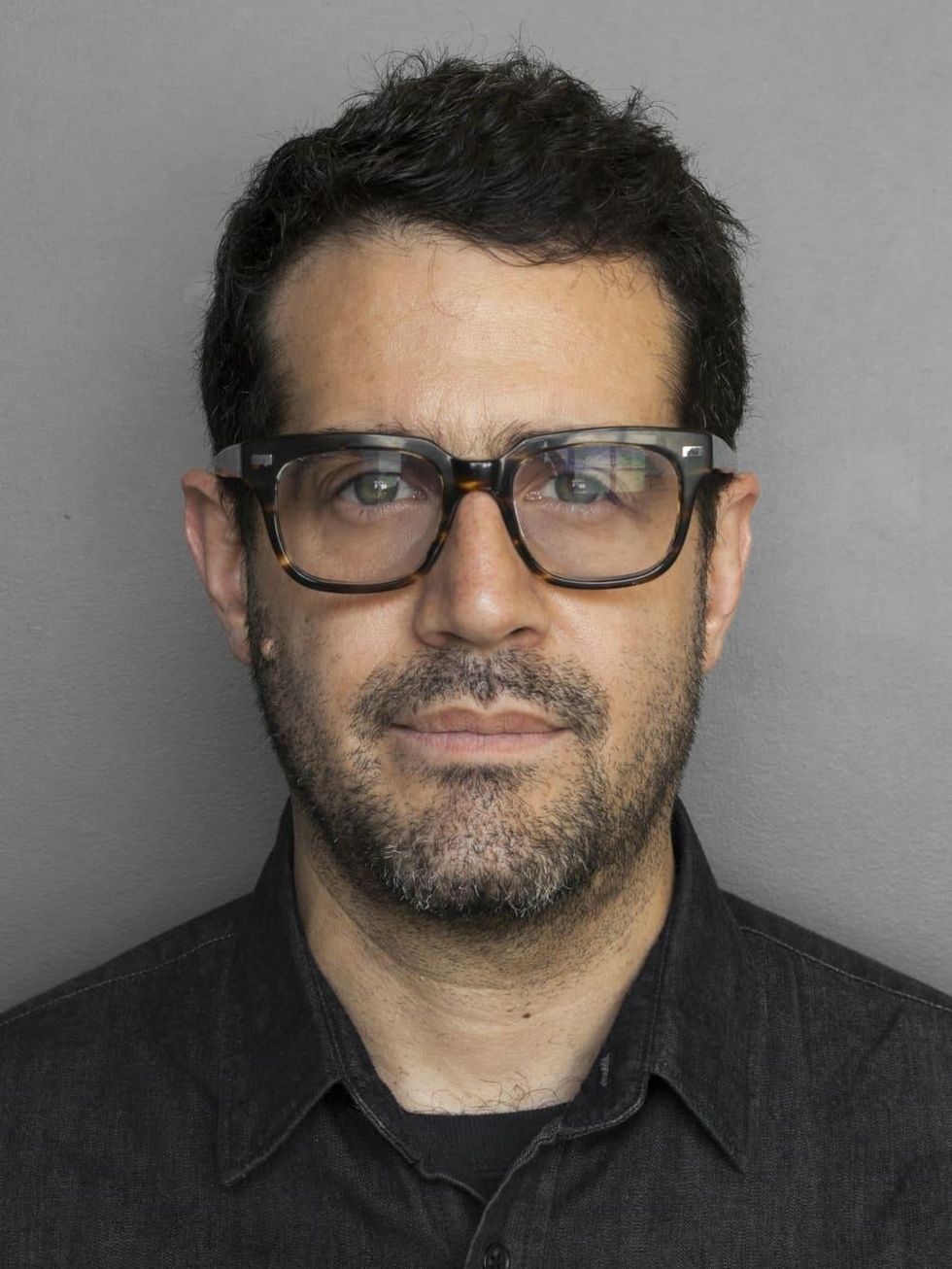
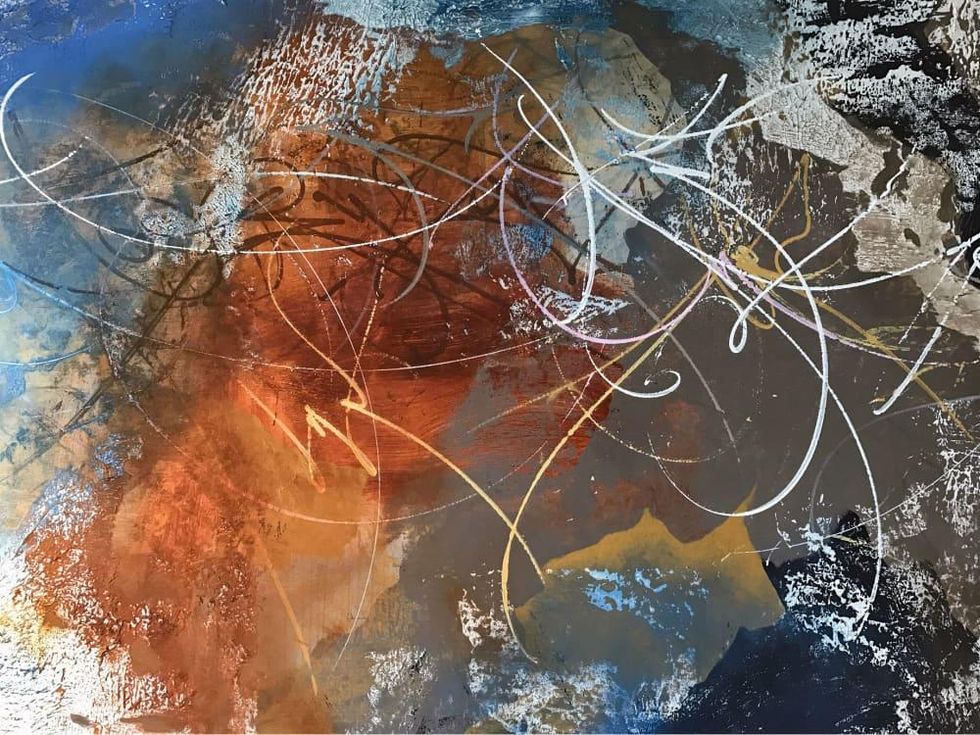
A monumental new mural from critically acclaimed artist José Parlá will soon join the award-winning Landmarks collection at the University of Texas at Austin. Featuring his characteristic traces of collage and distinctive calligraphic marks, the mural will be the artist’s most ambitious project to date.
The colossal piece will occupy some 4000 square feet, covering a 25-foot-by-160-foot wall in the entrance to the Zlotnik Family Ballroom of Robert B. Rowling Hall. Rowling Hall is set to open in the spring of 2018 as the new graduate education building and architectural anchor for the McCombs School of Business' graduate program.
Parla’s sweeping mural will be a signature feature of the new space, evoking Austin’s natural environment and its urban cityscape. His work is the latest announcement from the Landmarks collection at UT, which has commissioned dozens of public installations from contemporary artists across UT’s 433-acre main campus. Open to all, the collection provides students and visitors with opportunities to engage with great art.
“The sheer scale of this undertaking is arresting,” says Landmarks’ founding director, Andrée Bober, in a statement, “and José Parlá is the perfect artist to tackle it ... Beyond the visual delight of his painting, I think people will connect with his evocation of history, memory, and the experience of life and the landscape of Austin.”
The unveiling will take place in January 2018, with an artist Q&A led by American culture critic and curator, Carlo McCormick.
Ballet Austin isn't afraid to add some edge to classic stories.
Whether or not you agree with actor Timothée Chalamet's viral assessment of ballet's popularity, it's practically inescapable on the internet right now. Some onlookers are shrugging their shoulders while others leap (jeté, if you will) to the art form's defense; Ballet Austin is taking this unique opportunity to turn a hot topic into a promotion for its next production.
In conversation with Austin actor Matthew McConaughey at the University of Texas at Austin this February, Chalamet said, "I don't want to be working in ballet or opera, or you know, things where it's like, 'hey, keep this thing alive, even though like no one cares about this anymore.' All respect to the ballet and opera people out there. I just lost 14 cents in viewership."
Chalamet immediately seemed to experience a twinge of regret, awkwardly adding, "But um...damn, I just took shots for no reason." He also sang a note and hid his face behind the cards he was holding.
In response, Ballet Austin posted a clip of the interview March 10 inviting anyone named Timothée, Timothee, or Timothy to claim a free ticket to the world premiere of Marie Antoinette: Vampire Queen of Versailles.
"Timothée… you were in Austin? We were literally down the street," the post says. "Austin has brisket. Austin has music. Austin also has ballet."
If they wanted to be a bit wordier, the company also could have added, "Austin has opera," since Austin Opera is, in fact, another local organization that even performs at the same venue, the Long Center for the Performing Arts.
Even if Chalamet's words were dismissive, he's obviously not wrong about the relative distribution of public interest between the classical arts and major films like Marty Supreme, the late 2025 film he stars in and is busy promoting. The film's commercially successful release set a record for A24, an already renowned studio.
Chalamet brought up ballet and opera in service of a larger point about pacing in movies. He said he exists in a middle ground as a consumer between wanting to be drawn in early and being more patient as a film progresses. Ultimately, he juxtaposed Barbie and Oppenheimer with the classical arts, pointing out that if the masses want to go see a film, they will "be loud and proud about it" organically, without needing performers to advocate for the seriousness of the art form.
Coincidentally, there couldn't be a better counterpoint to this argument than Marie Antoinette: Vampire Queen of Versailles.
As the title suggests, the story follows historical figure Marie Antoinette as she chooses to become a vampire, seeking "power, immortality, and vengeance," according to an earlier press release about the production. It takes a somewhat silly premise and gives it dramatic gravitas, with an original score by Austin composer Graham Reynolds, who is known outside of classical circles and sometimes composes for movie soundtracks.
"For Ballet Austin, the moment is an opportunity to remind audiences that ballet isn’t fading away," says a short press release about the new promotion. "It’s evolving, drawing new audiences and continuing to thrive in creative cities like Austin."
If Chalamet really does fall in the middle of instant and delayed artistic gratification, this sounds like the perfect production to draw him in. And perhaps Ballet Austin should add people named Matthew to their promotion, since McConaughey threw the younger star a bone after his momentary walk-back, saying, "That's not a shot — I hear what you're saying."
All Timothées and folks with similar names will have to do to claim a ticket is send a message to Ballet Austin on social media and show identification. Everyone else who wants to see the supernatural show where "the line between victim and villain blurs" will have to purchase a ticket ($25-$125) at balletaustin.org. The show only runs for three performances from March 27-29.