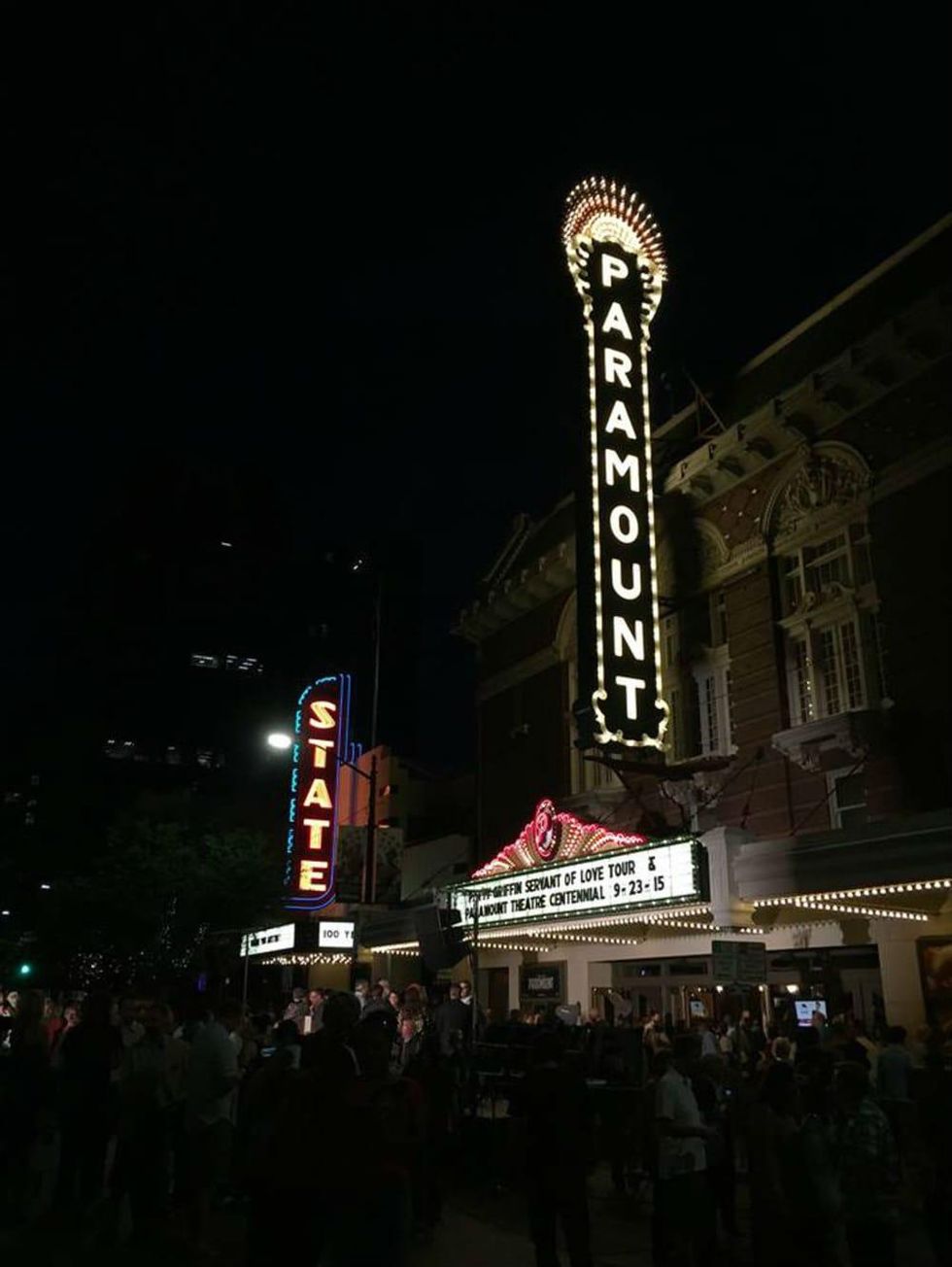
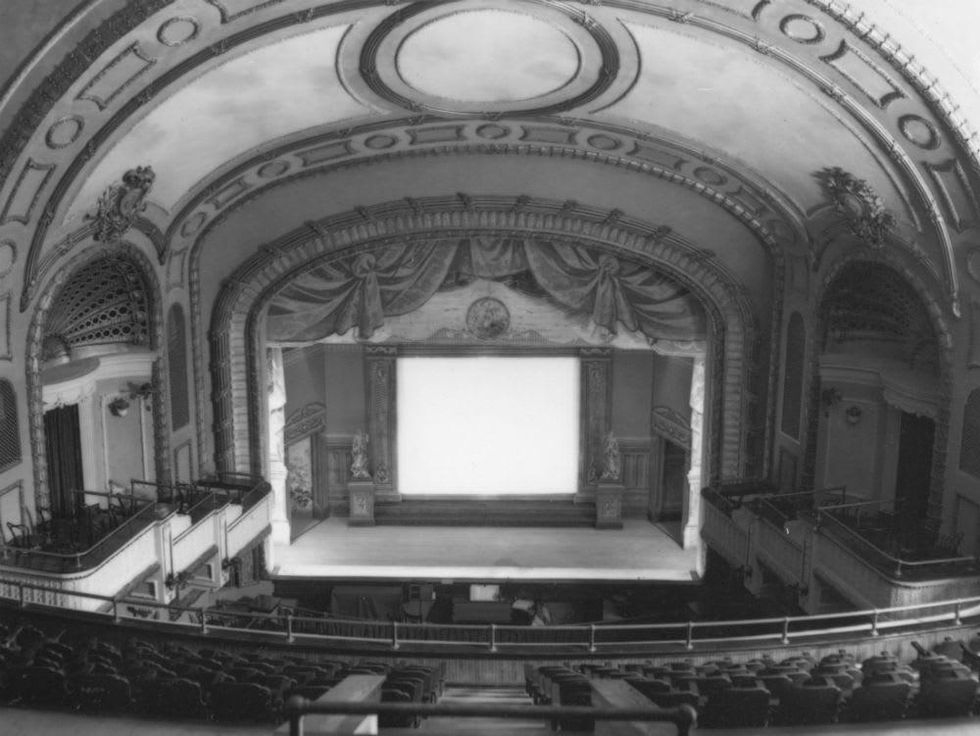
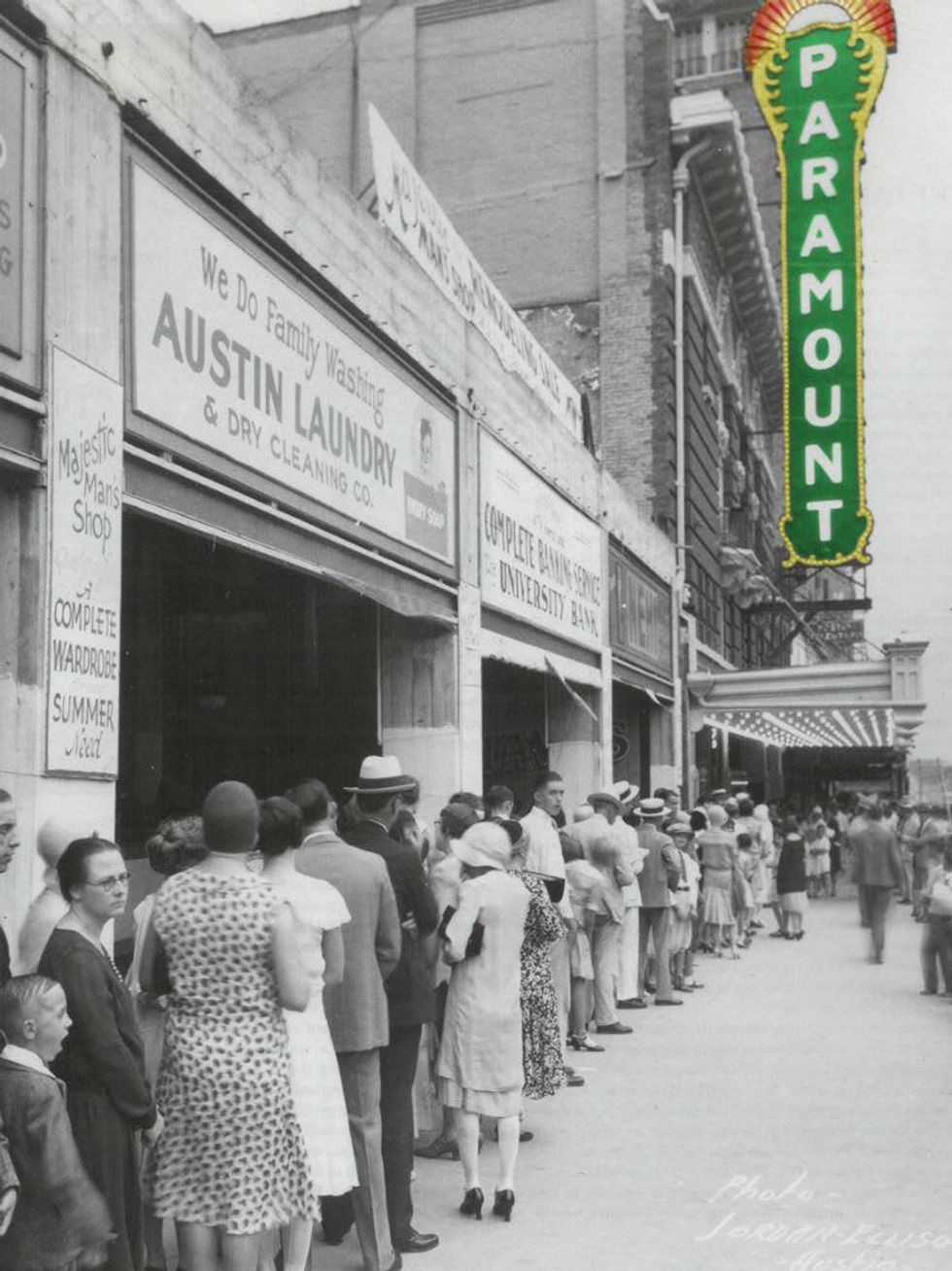
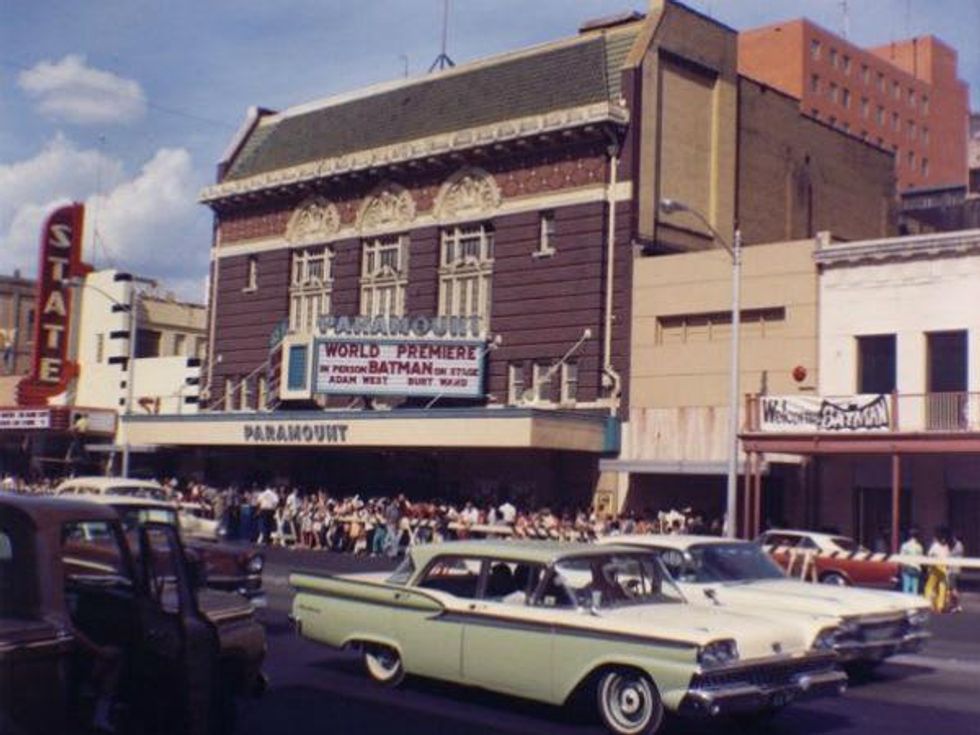
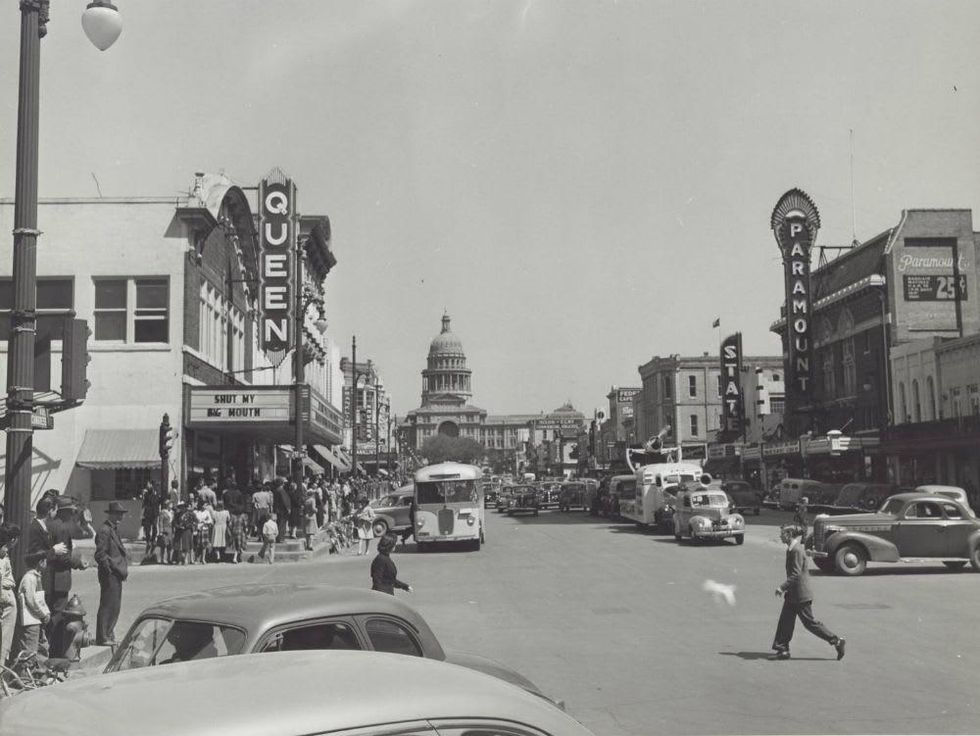
The Paramount Theatre has been a downtown Austin institution since opening in October 1915. But for more than half of its reign, the 100-year-old Paramount has been missing its crown jewel: a stunning, 48-foot blade featuring its name in bright lights.
It's a mystery that has plagued the Paramount for 52 years. Originally erected in 1930 when Paramount Pictures bought the theater (and its name changed to what we know today), the blade was removed in 1963 for renovations never to be seen again.
In celebration of its 100th anniversary, the Paramount commissioned Wagner Sign Company in Ohio to recreate the blade. The new blade now stands tall with the theater, complete with 1,386 buzzing lights bulbs in all the original colors. Now it's time to plug it in.
The official lighting ceremony for the new blade takes place Wednesday evening during the Paramount's centennial celebration. The celebration kicks off at 6 pm with complimentary drinks and live tunes from New Breed Brass Band. Afterward, Patty Griffin will perform to a sold-out crowd at the legendary theater.
---
For more information on Wednesday's relighting ceremony, head over to the Paramount Theatre website.
The iconic Paramount blade was revealed during a celebration on Wednesday.
Paramount Theatre/Facebook
The iconic Paramount blade was revealed during a celebration on Wednesday.
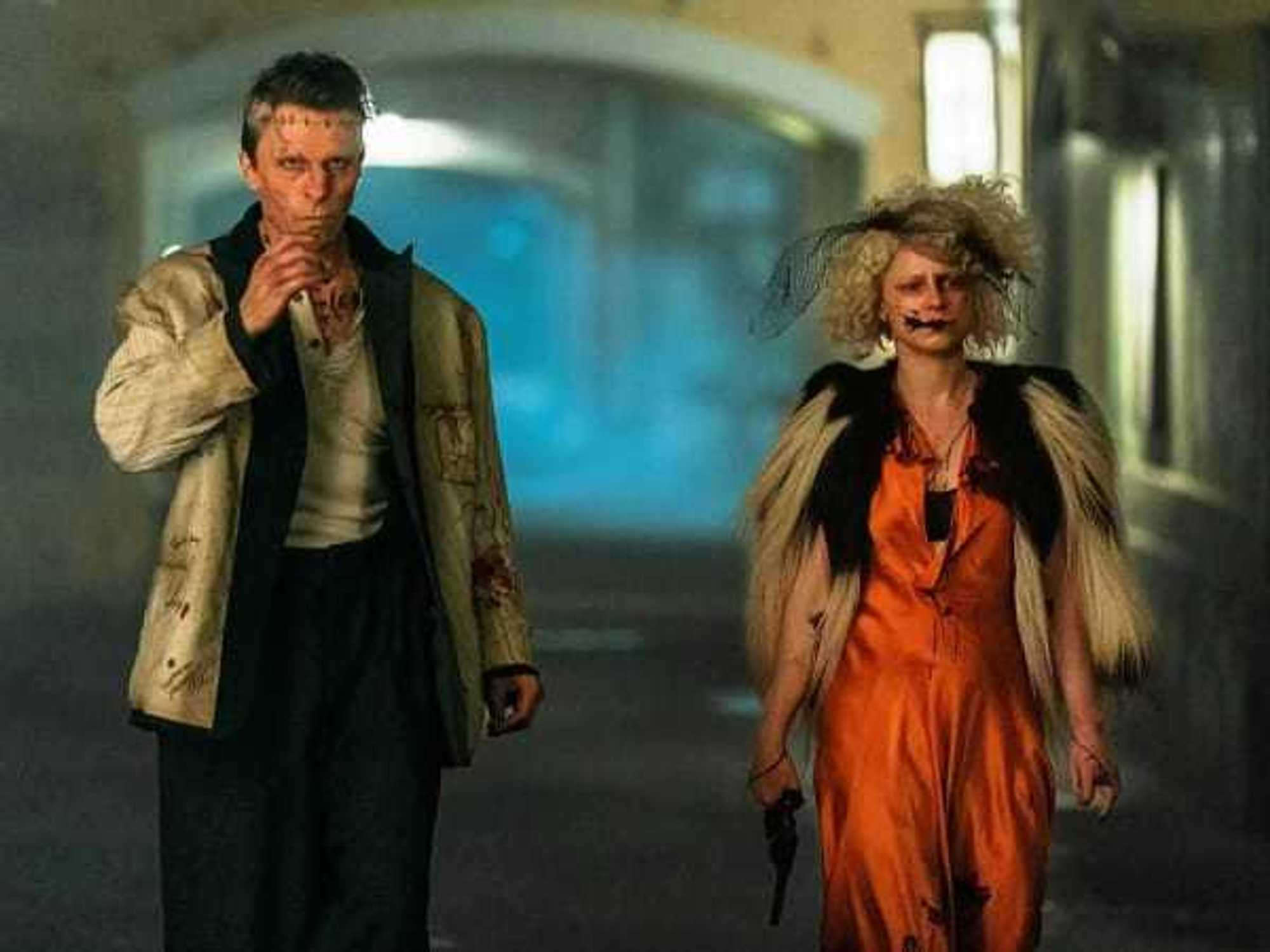
The story of Dr. Frankenstein and his monster is now over 200 years old, with Mary Shelley’s book having been adapted or referenced in close to 500 films. Less common is the character of The Bride of Frankenstein, which existed in the original text but has more often than not been excised in adaptations. Writer/director Maggie Gyllenhaal has tried to rectify that by giving the character a big showcase in her new film, The Bride!.
Gyllenhaal has reimagined the story as one in which a woman named Ida (Jessie Buckley) becomes possessed by the spirit of Shelley (also Buckley). At the same time, the already-existing Frankenstein’s monster (Christian Bale) approaches Dr. Euphronius (Annette Bening), who specializes in reanimation, with the request to make him a wife. When Ida falls to her death in an “accident” involving her boyfriend (John Magaro), the ideal corpse becomes available.
After Ida’s resurrection, she and the monster become restless being studied by Dr. Euphronius and decide to break out to experience the world. The world, naturally, is not exactly welcoming to them, and soon the couple are on the run for causing mayhem, including a few murders. In hot pursuit are detective Jake Wiles (Peter Sarsgaard) and his assistant, Myrna Mallow (Penélope Cruz), as well as other authorities.
It’s clear that Gyllenhaal wanted to merge the Frankenstein story with Bonnie & Clyde, especially since she sets the film in the mid-1930s. And that wouldn’t have been a bad idea if having the monster and The Bride going on a crime spree was truly the focus of the movie. But most of the time there’s less intentionality in their misdeeds and more confusion, leading to a muddled plot with no clear direction or end goal in mind.
One of the biggest problems is that Gyllenhaal starts the energy of the film at an 11, giving her and everyone else nowhere to go but down. She dabbles in multiple different tones, at times going the straight drama route and other times making what seems like full-on camp. At one point, she even has the monster and the Bride in a dance sequence set to “Puttin’ on the Ritz,” which would be hilarious as an homage to Young Frankenstein if the film weren’t so disjointed.
Most baffling of all is what Gyllenhaal wants from The Bride character. She morphs multiple times over the course of the film, from close to unintelligible at the beginning to rough-and-tumble at the end. There are hints at the lack of control she has over her autonomy, including Shelley’s possession of her and the monster lying to her about her past, but any commentary that Gyllenhaal might be trying to make gets lost amid the oddity of the film as a whole.
Both Buckley and Bale are all-in for their performances, which definitely fall in the “love it or hate it” dichotomy. Each scene is pitched so high that there’s little nuance to either of them, and neither is on par with their previous Oscar-caliber roles. The high-powered supporting cast of Bening, Sarsgaard, Cruz, and Jake Gyllenhaal is watchable based on previous roles, but none of them elevate this particular movie.
Whatever intentions Maggie Gyllenhaal had in making The Bride! are only halfway legible in a film that can never find its tonal footing. There has rarely been subtlety in movies featuring Frankenstein’s monster and related characters, but this one makes all the others seem like stuffy dramas in comparison.