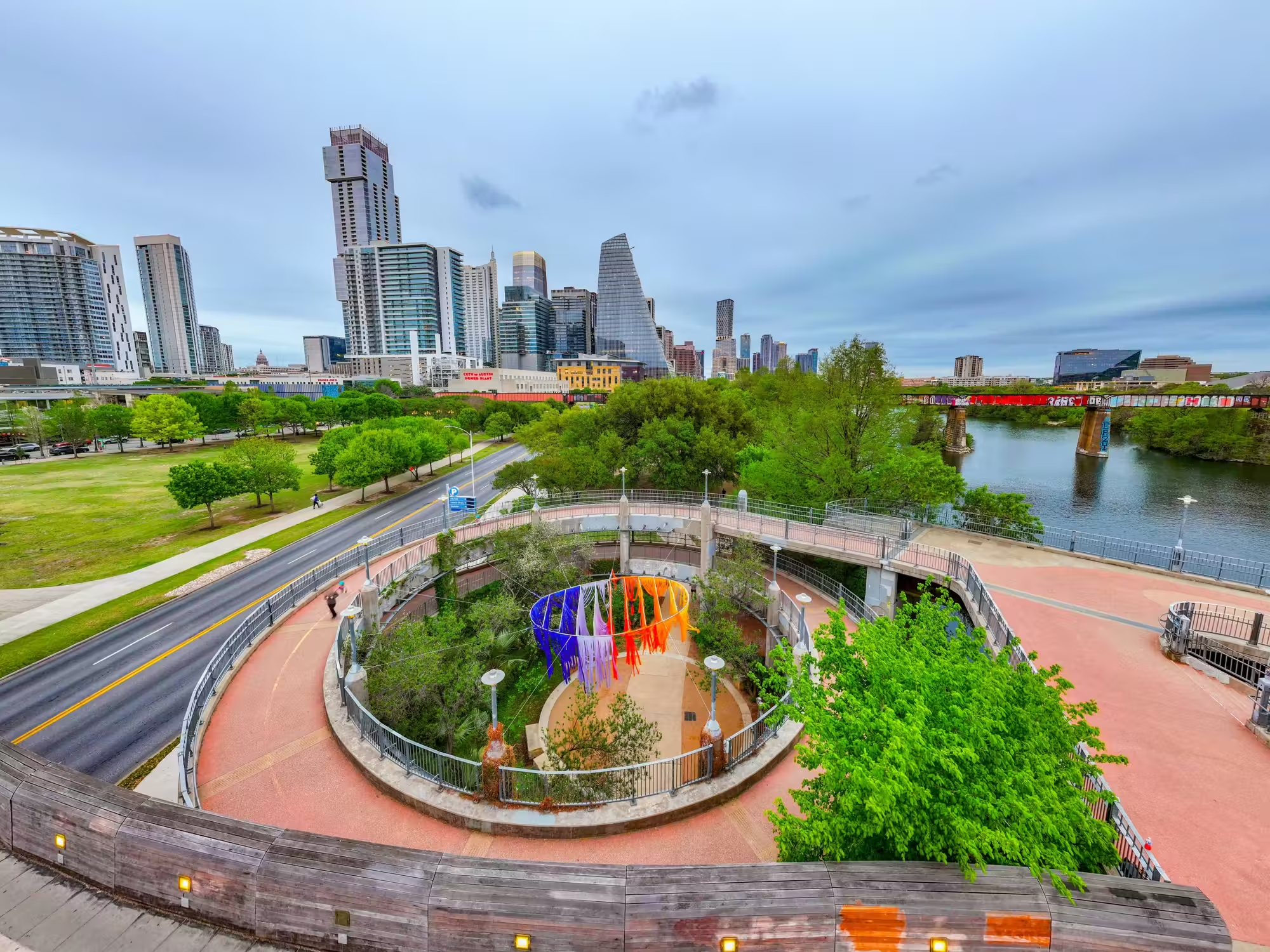
Art is everywhere in Austin. Most recently, a project called Tempo on the Trail has popped up along the Ann and Roy Butler Hike-and-Bike Trail. Nine artists from Austin and the surrounding area have created temporary large-scale installations that will bring color, character, and sometimes movement to one of Austin's most-visited public spaces for the next 12 months.
The Ann and Roy Butler trail wraps around Lady Bird Lake in a 10-mile circuit. Some of it is easily recognizable to Austinites and tourists thanks to the boardwalk along East Riverside Drive; other parts look like a regular walking trail. Now it'll be hard to miss, thanks to these eye-catching artworks.
The installations were built together in March and are now complete. The The Trail Conservancy (TTC) and the City of Austin’s Art in Public Places (AIPP) program, the two organizations that made the work possible, are celebrating them with a public "open house" Saturday, April 11, from 9-11 am. Attendees can meet the artists at the Seaholm and take a guided bike tour with the Ghisallo Cycling Initiative. They can also opt to explore the tail on foot using a new map.
Here are the nine works visitors can expect to see at Tempo on the Trail.
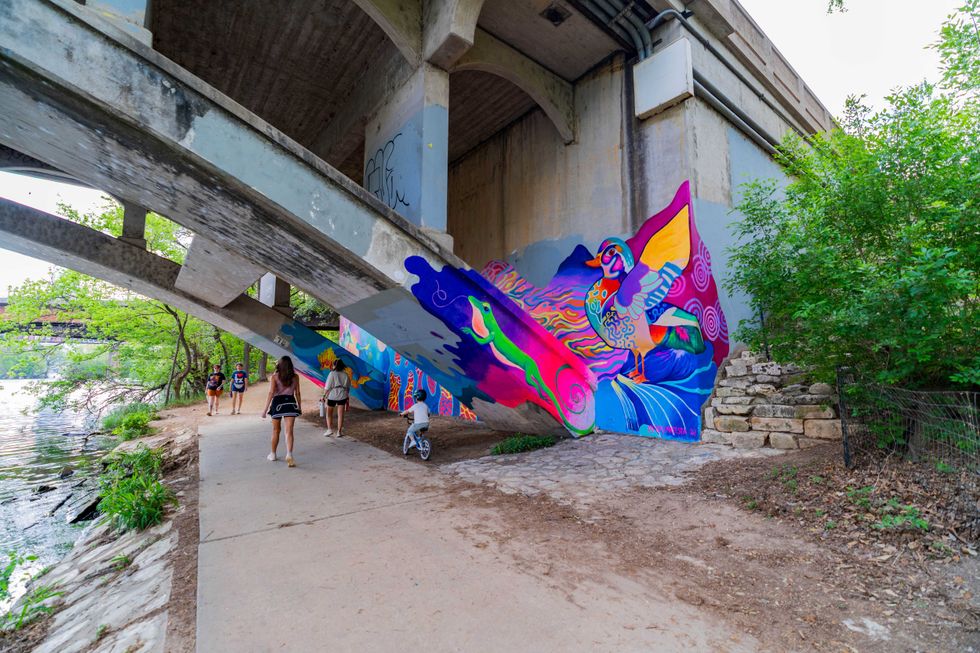 Victoria Marquez – Mural, Lamar BridgePhoto courtesy of the Trail Conservancy & David Aguilar (@aerialaustin_)
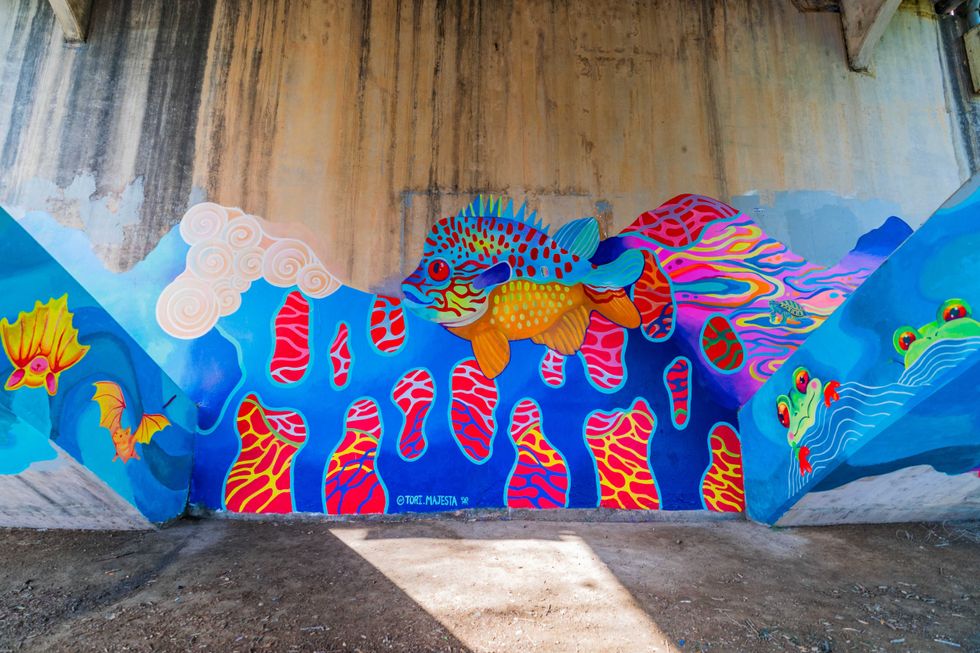 Victoria Marquez – Mural, Lamar BridgePhoto courtesy of the Trail Conservancy & David Aguilar (@aerialaustin_)
This colorful mural splashes nature onto the underside of the Lamar Bridge. In addition to the anole lizard and the mandarin duck visible in this photo, pedestrians can also see bats, frogs, a fish, a dragonfly, and a human-like dancer.
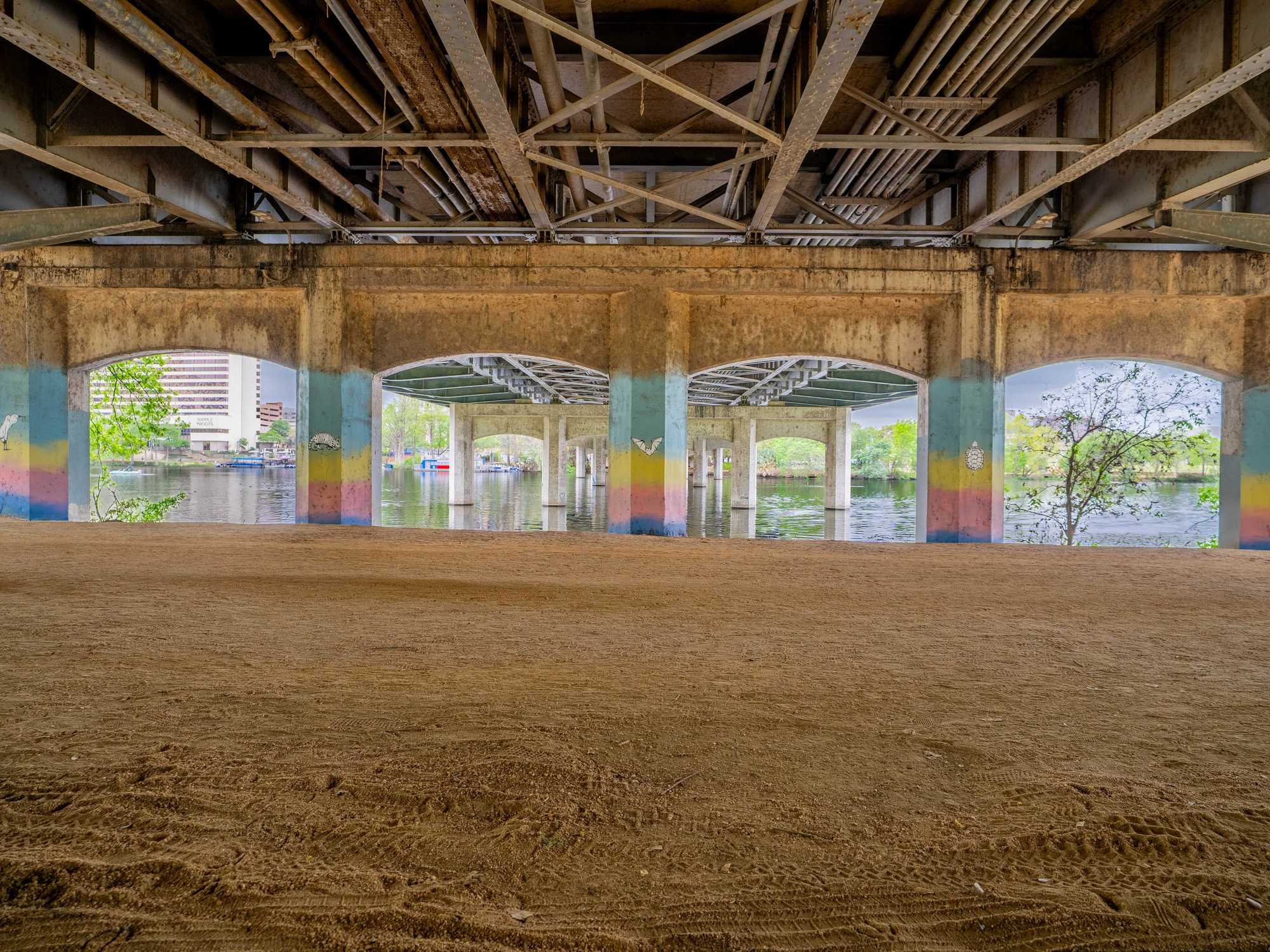 Seth Prestwood – Mural, Drake BridgePhoto courtesy of the Trail Conservancy & David Aguilar (@aerialaustin_)
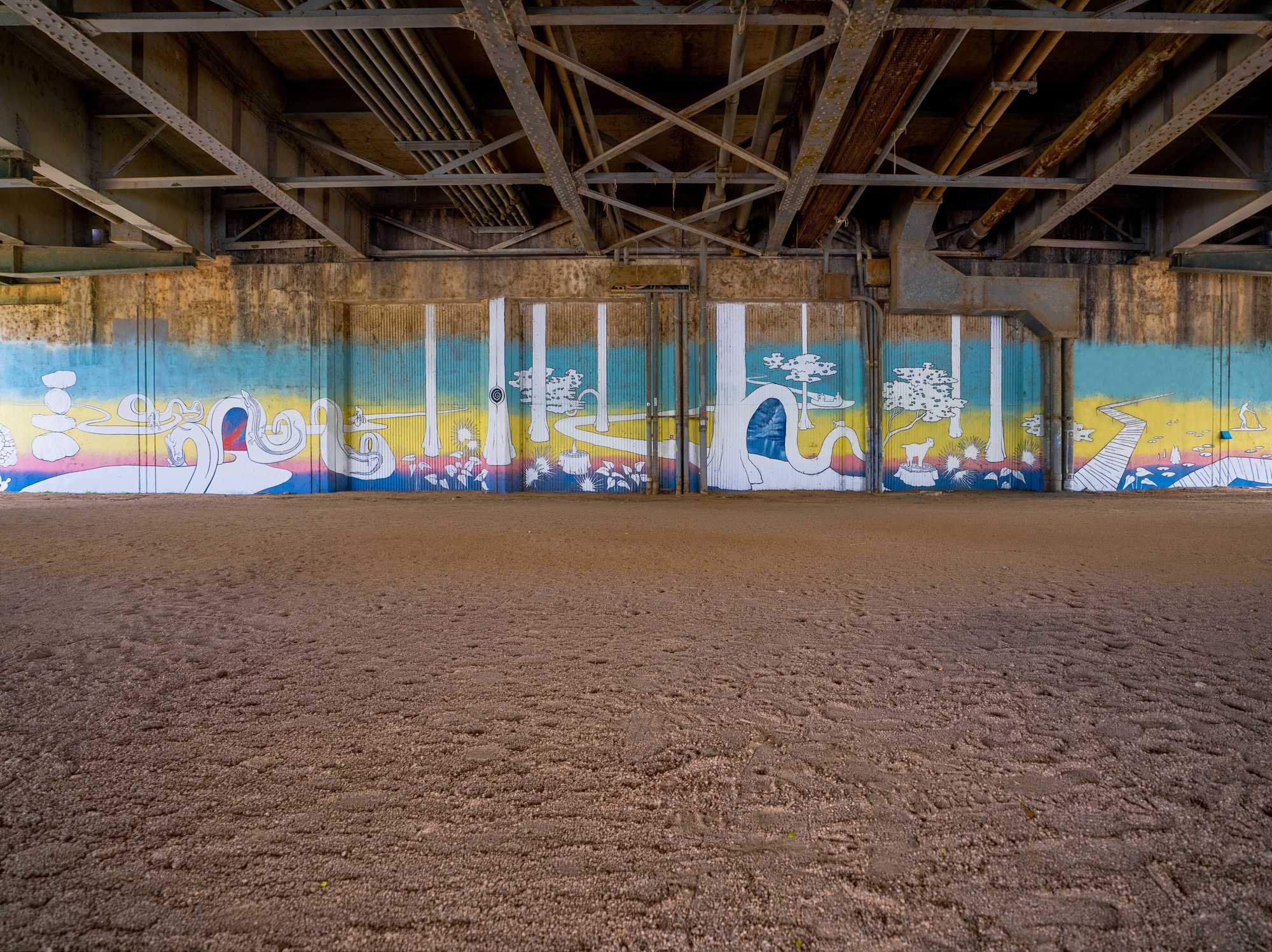 Seth Prestwood – Mural, Drake BridgePhoto courtesy of the Trail Conservancy & David Aguilar (@aerialaustin_)
Another atypical mural enlivens the underside of a bridge, this time the Drake Bridge, a.k.a. the South First Street Bridge. It depicts Texas animals against a pastel sunset: a heron, an armadillo, a bat, a turtle, and a fish. Facing the opposite way, a series of Dr. Seuss-like illustrations extend the trail into a whimsical new realm through portals.
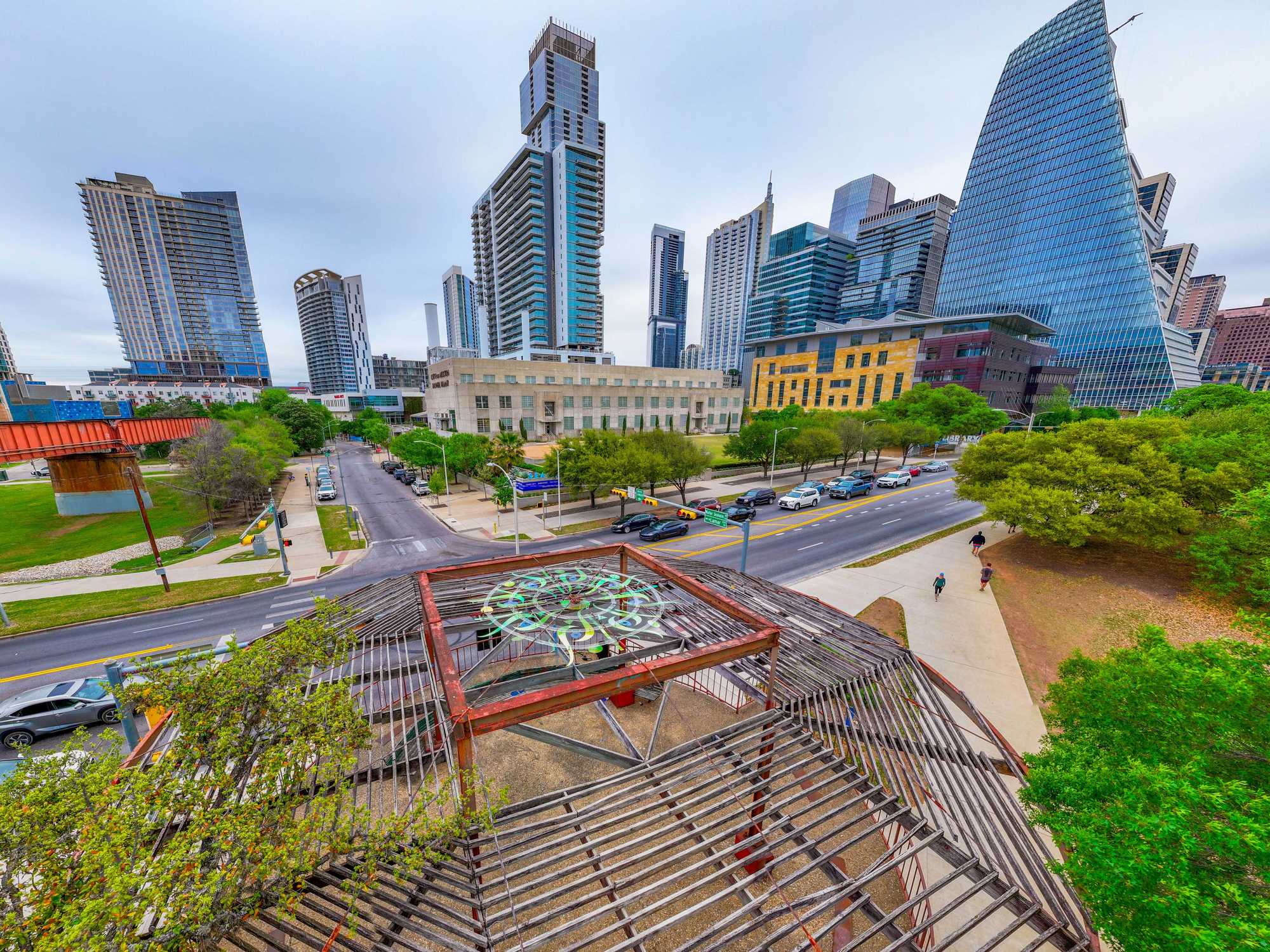 Jamal Hussain – New Media, Odom PavilionPhoto courtesy of the Trail Conservancy & David Aguilar (@aerialaustin_)
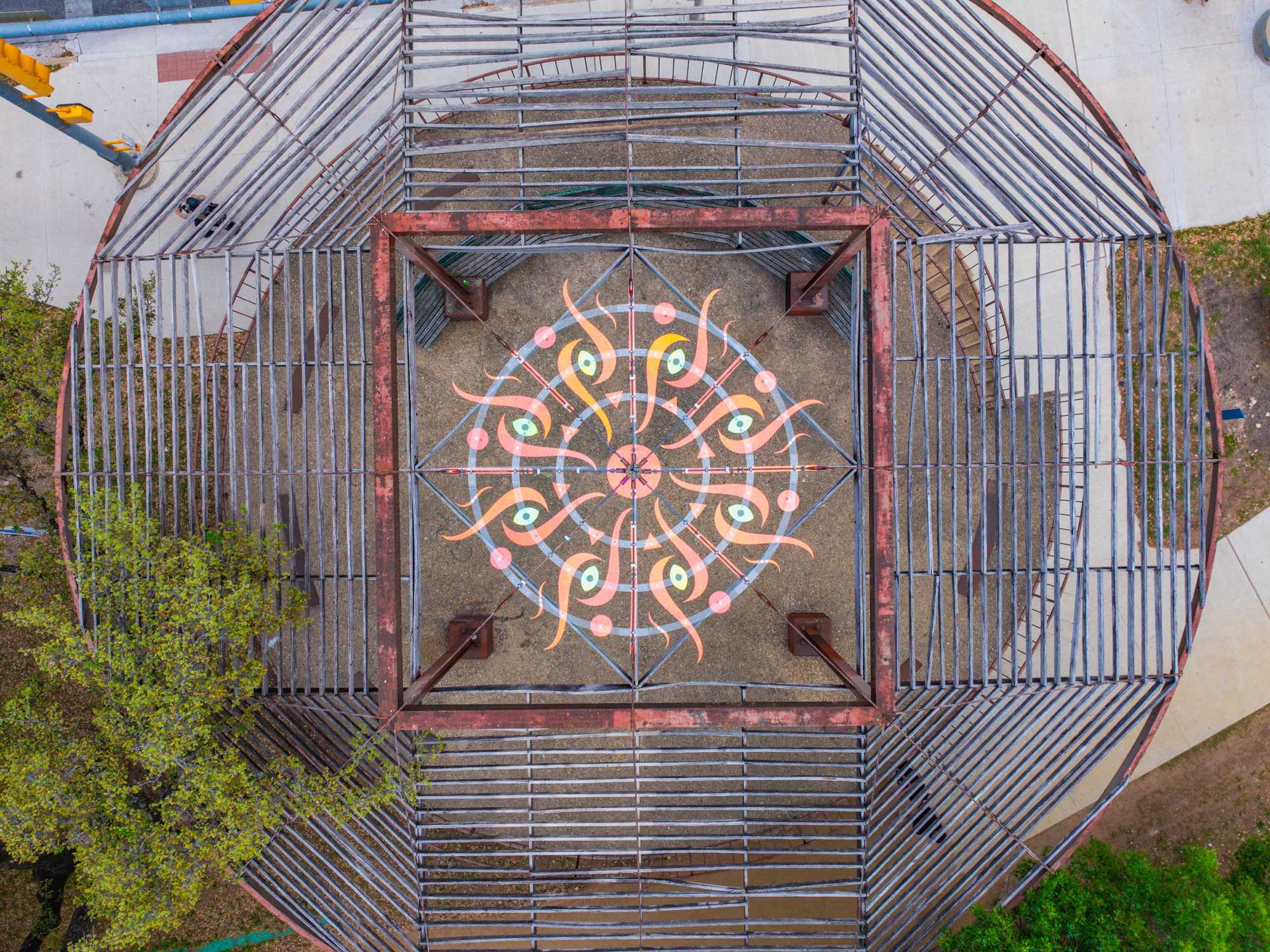 Jamal Hussain – New Media, Odom PavilionPhoto courtesy of the Trail Conservancy & David Aguilar (@aerialaustin_)
This colorful mandala decorates the top of the Odom Pavilion with transparent material that changes color over time. Artist Jamal Hussain says on Instagram that he was inspired by walking on the trail and he "hope[s] to borrow light to actively shape the experience."
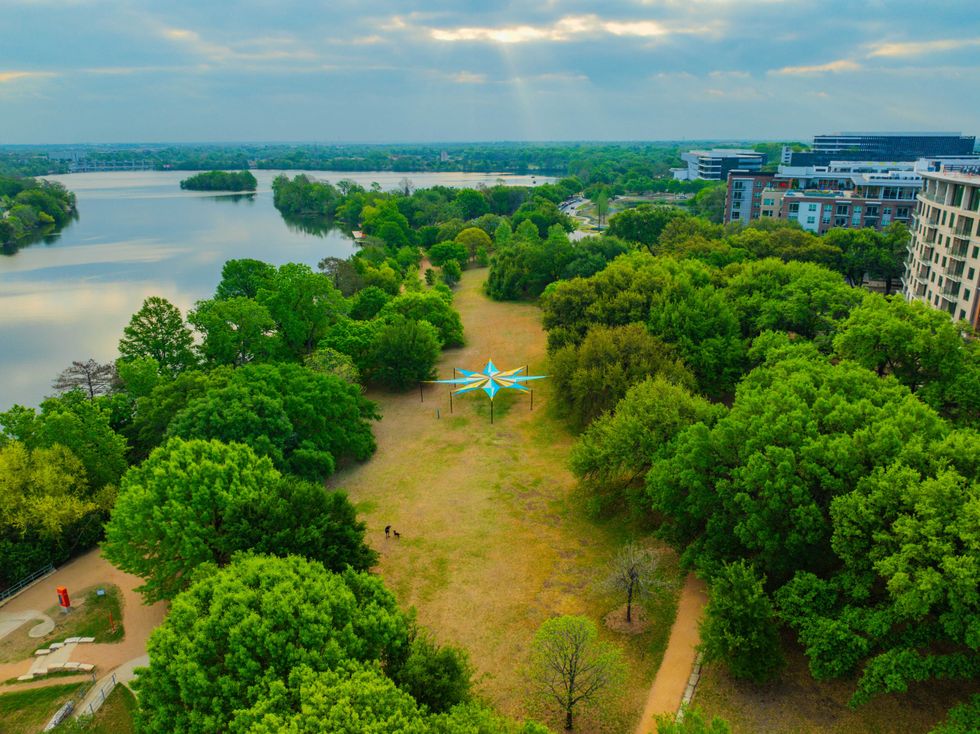 Studio Plus (Priscilla Lustig & Steef Crombach) – Sculpture, LakeshorePhoto courtesy of the Trail Conservancy & David Aguilar (@aerialaustin_)
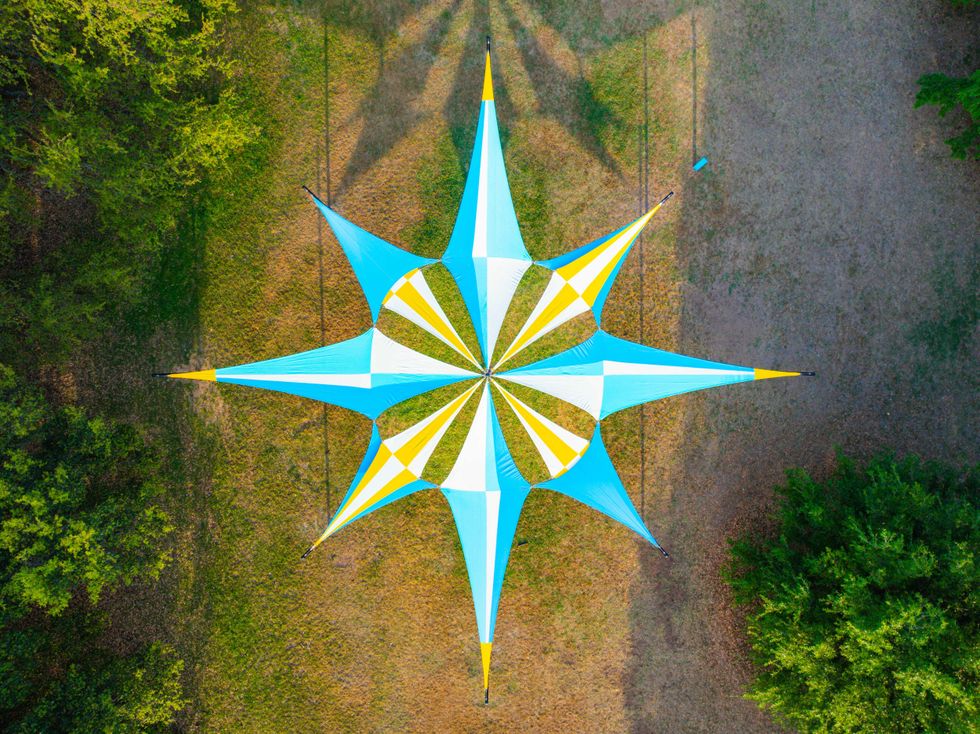 Studio Plus (Priscilla Lustig & Steef Crombach) – Sculpture, LakeshorePhoto courtesy of the Trail Conservancy & David Aguilar (@aerialaustin_)
Like a big compass, this fabric sculpture floats above the land, pointing up and down the river, toward downtown, and toward South Austin. Artist Priscilla Lustig works with light- and wind-resistant fabric, so this seemingly delicate piece should hold up all year.
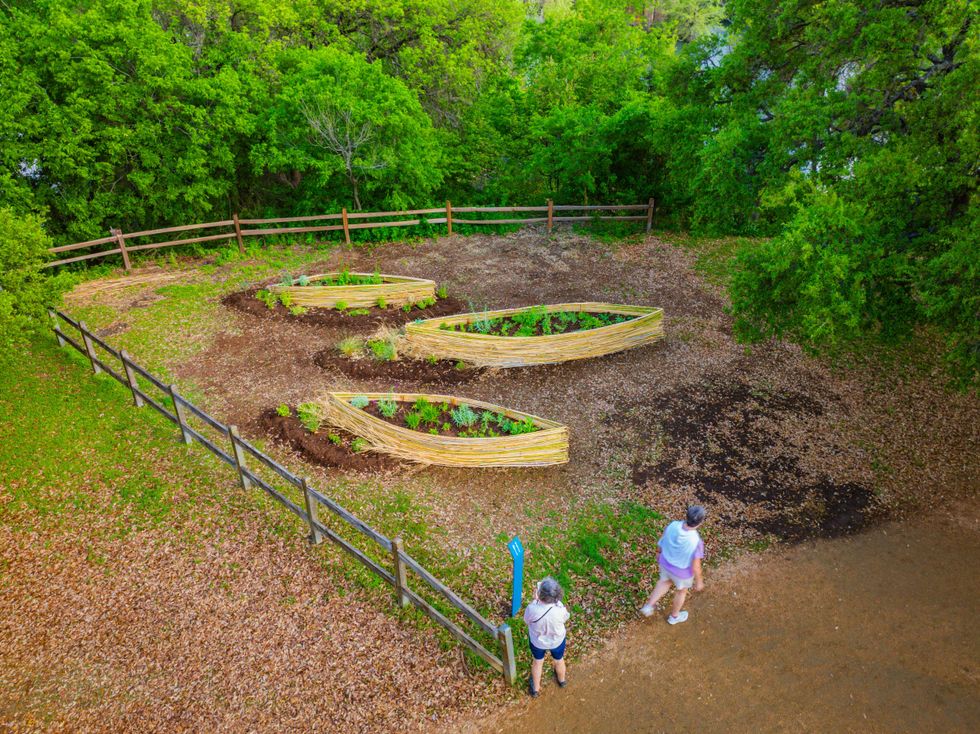 Vy Ngo – Sculpture, Auditorium ShoresPhoto courtesy of the Trail Conservancy & David Aguilar (@aerialaustin_)
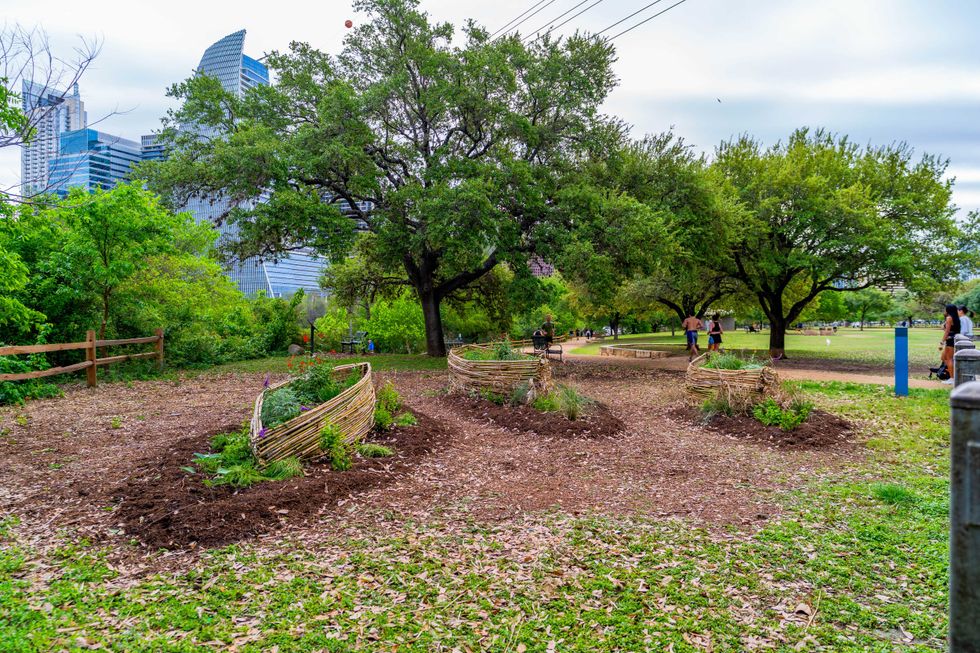 Vy Ngo – Sculpture, Auditorium ShoresPhoto courtesy of the Trail Conservancy & David Aguilar (@aerialaustin_)
These canoe-like planters represent migration and hope that something new will bloom in an uncertain future, says artist Vy Ngo. The garden within contains native, drought-resistant plants and flowers to attract pollinators. It is an homage to Lady Bird Johnson, who set up programs to plant wildflowers and influenced legislation to protect the environment.
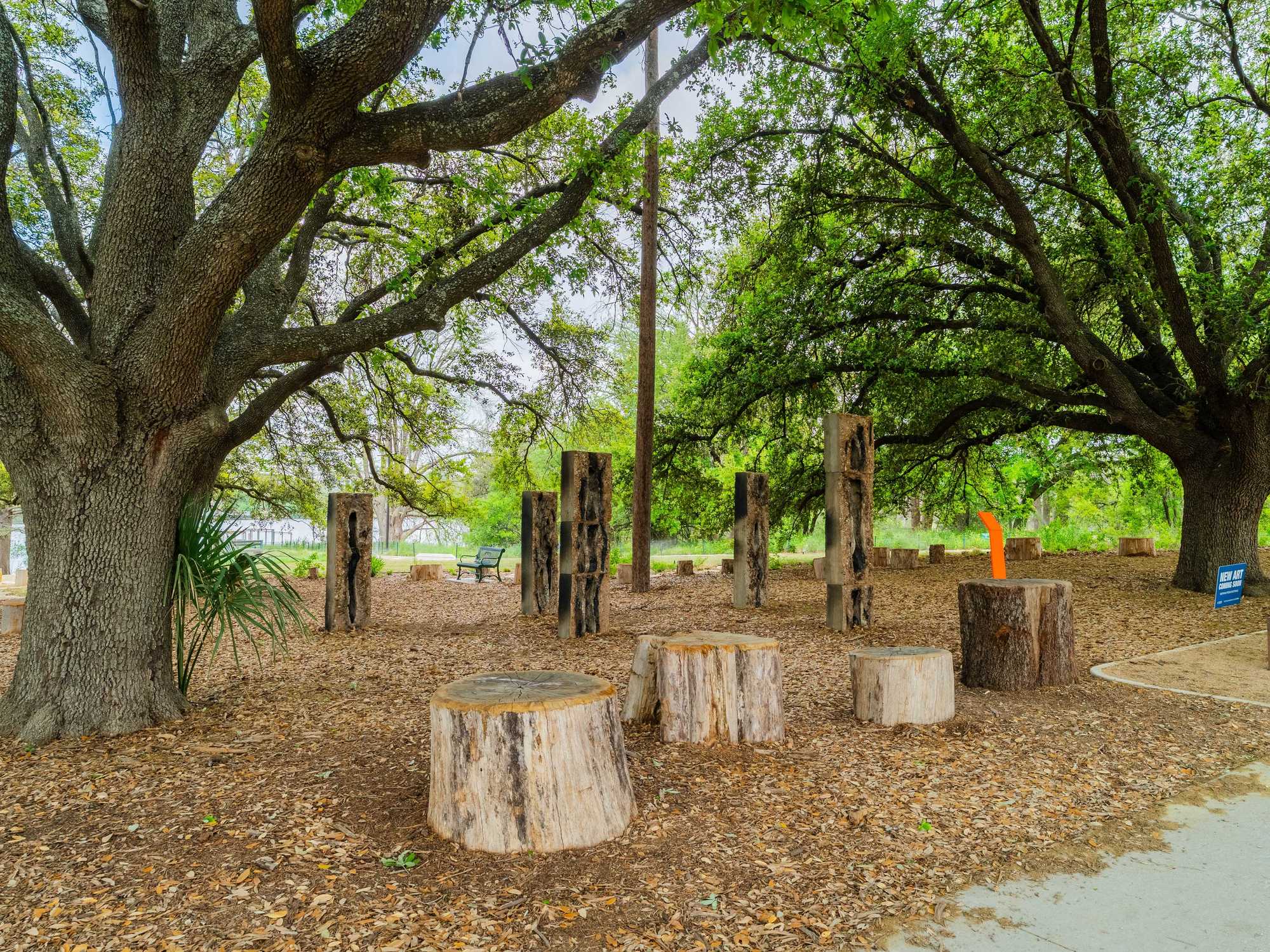 Thomas Lemanski – Sculpture, Holly PointPhoto courtesy of the Trail Conservancy & David Aguilar (@aerialaustin_)
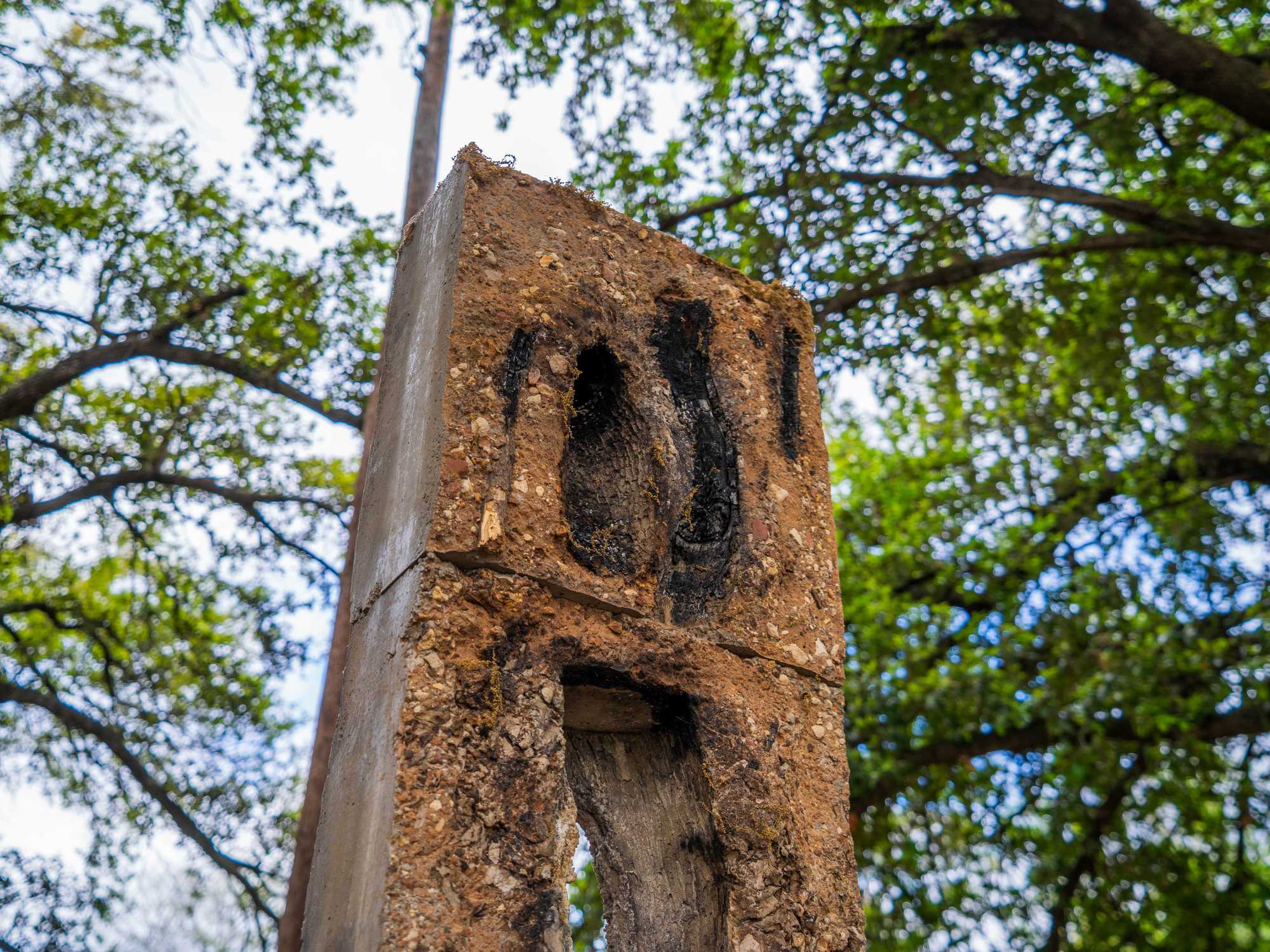 Thomas Lemanski – Sculpture, Holly PointPhoto courtesy of the Trail Conservancy & David Aguilar (@aerialaustin_)
These interesting organic cross-sections blend into the space around them, while still standing out thanks to their obviously manmade stature and right angles. Artist Thomas "TJ" Lemanski has said he collects organic materials like dead tree limbs and discarded construction materials and combines them to recontextualize them.
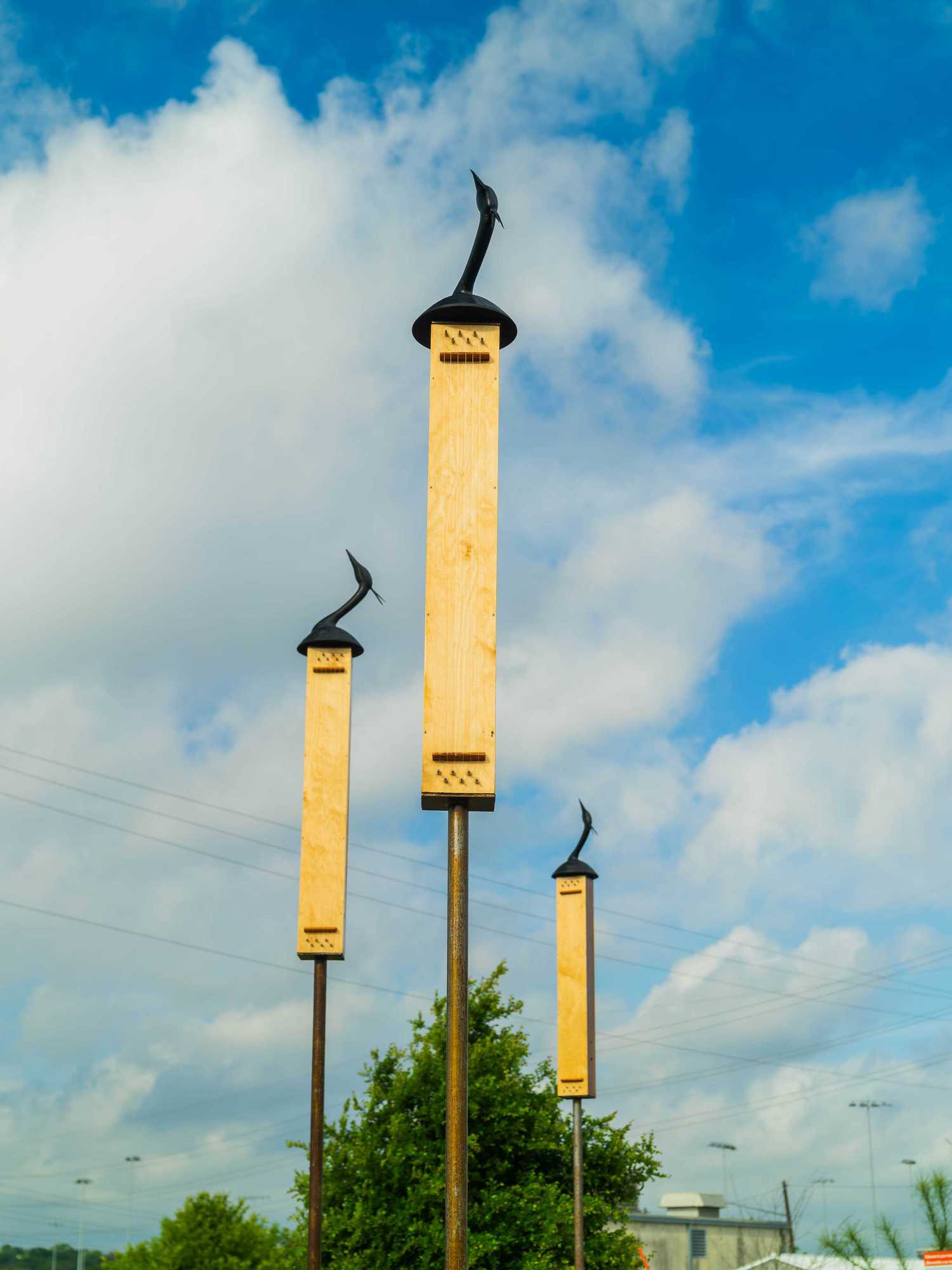 Juan Christian King – Sculpture, Holly ShoresPhoto courtesy of the Trail Conservancy & David Aguilar (@aerialaustin_)
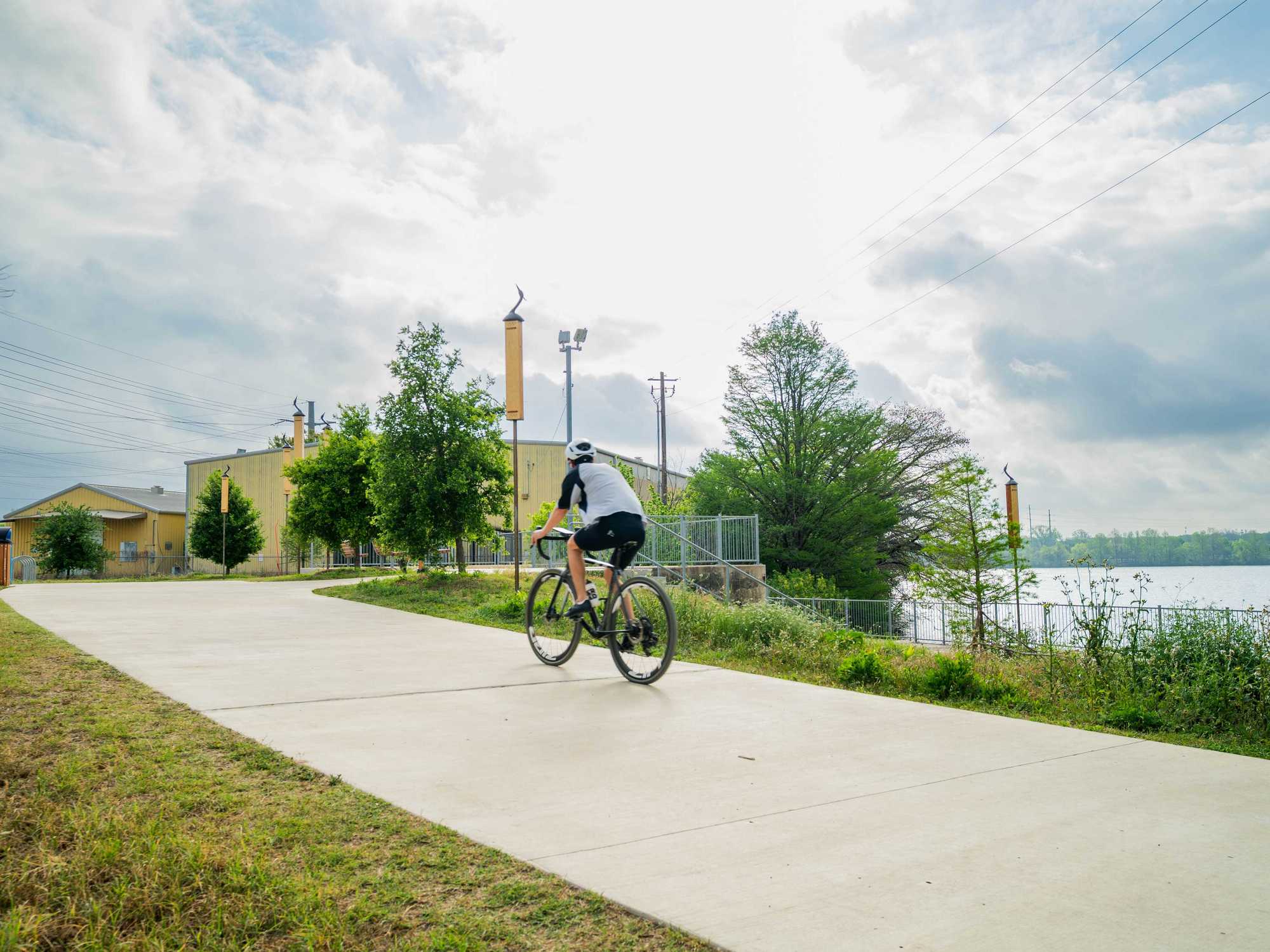 Juan Christian King – Sculpture, Holly ShoresPhoto courtesy of the Trail Conservancy & David Aguilar (@aerialaustin_)
These "Ghost Harps," a.k.a. Aeolian harps, make music as the wind blows. Interestingly, although one could argue that they are literally wind instruments, the sound comes from strings that produce harmonic frequencies — not firm notes like you would get from plucking.
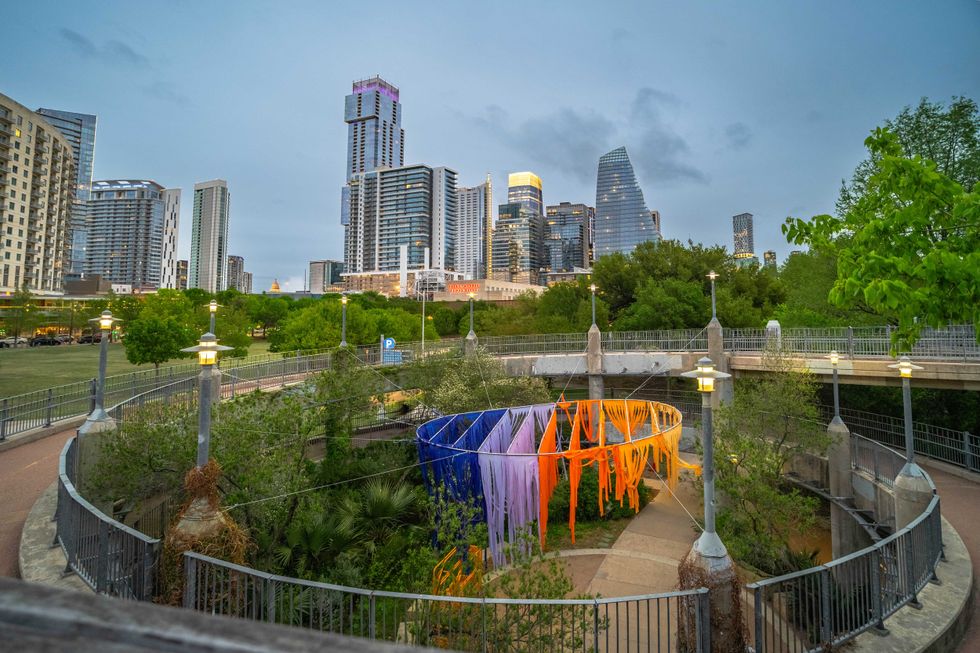 enFOLD Collective (Megan Echols) – Sculpture, Pfluger CirclePhoto courtesy of the Trail Conservancy & David Aguilar (@aerialaustin_)
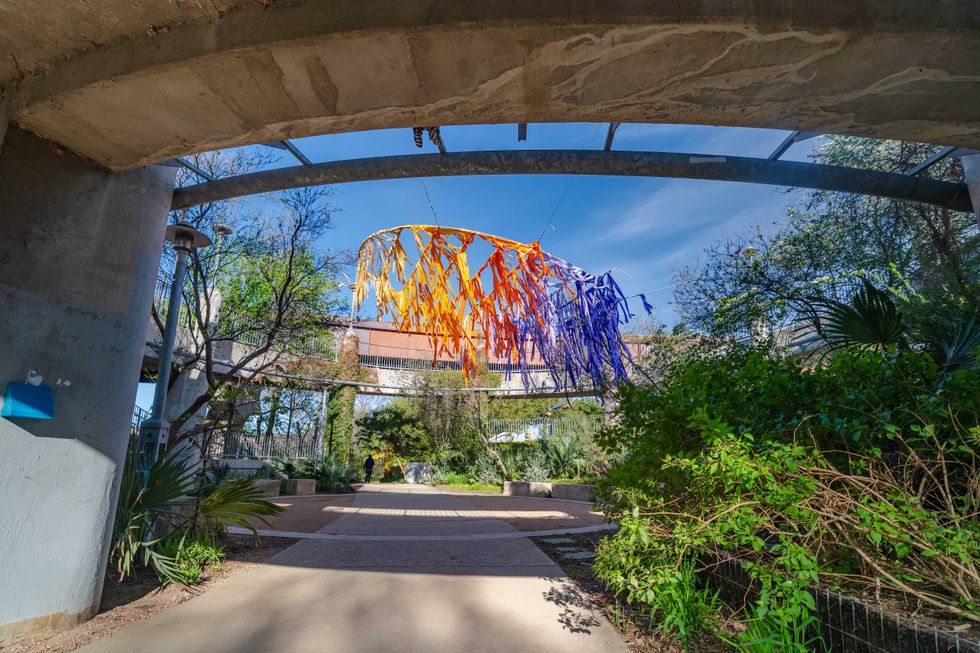 enFOLD Collective (Megan Echols) – Sculpture, Pfluger CirclePhoto courtesy of the Trail Conservancy & David Aguilar (@aerialaustin_)
This very colorful work also comes alive in the wind. The colors reference the "violet crown" sunsets Austin is famous for. Passers-by can enjoy a bit of shade underneath it.
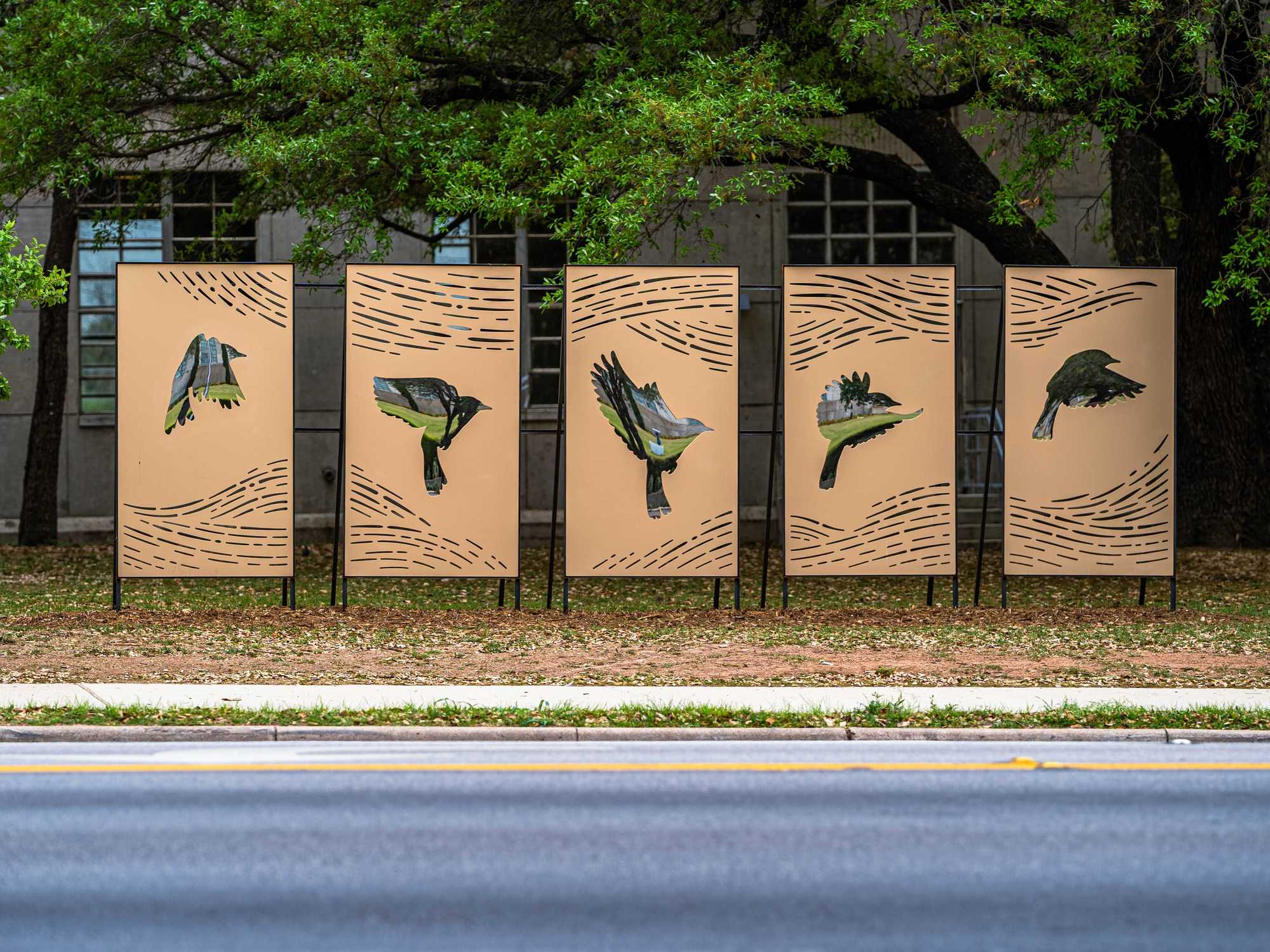 Jasna Boudard – Sculpture, Seaholm areaPhoto courtesy of the Trail Conservancy & David Aguilar (@aerialaustin_)
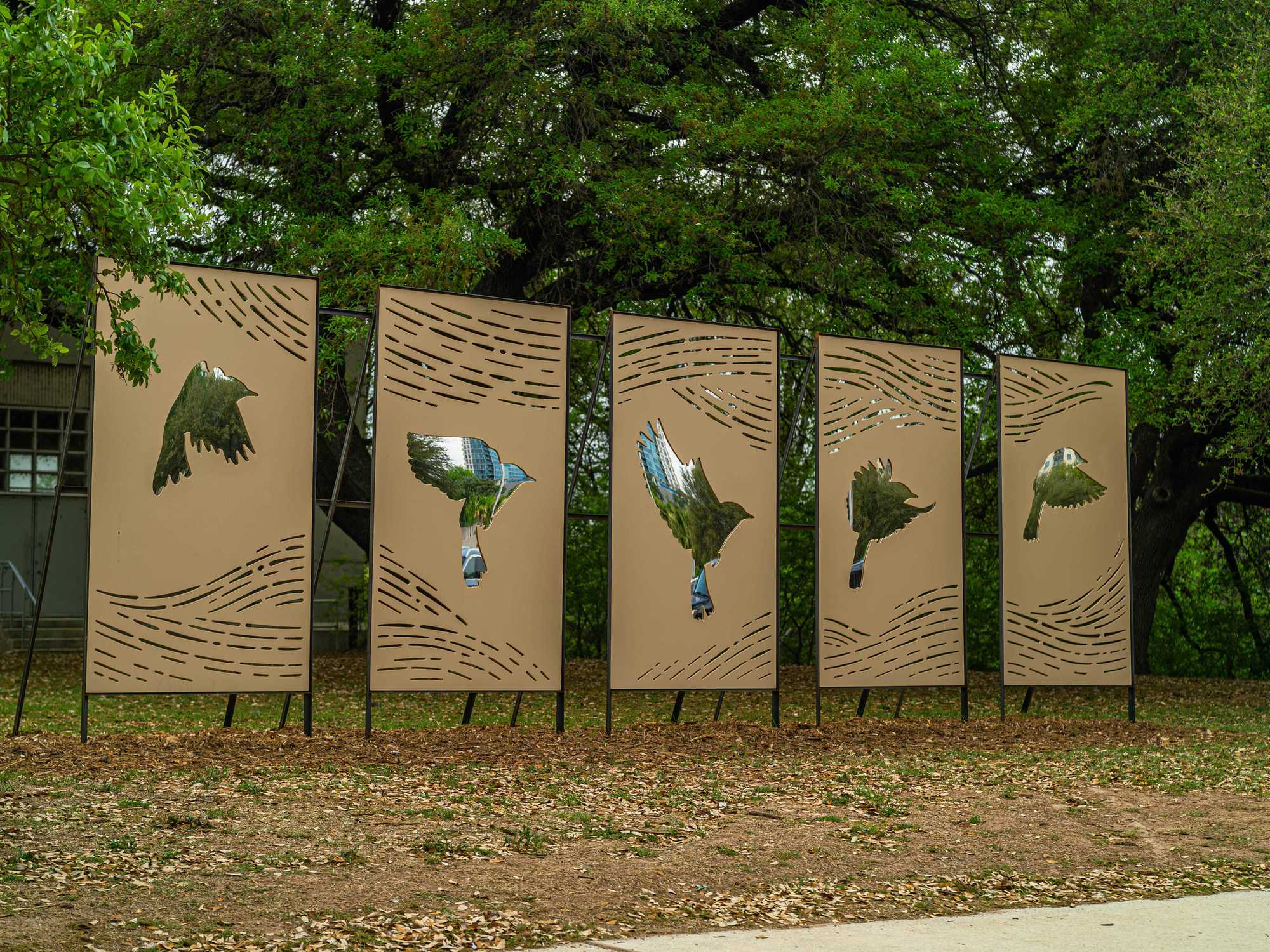 Jasna Boudard – Sculpture, Seaholm areaPhoto courtesy of the Trail Conservancy & David Aguilar (@aerialaustin_)
An endagered Golden-cheeked Warbler, which is native to Central Texas, flaps its wings in this paneled piece. It is flying toward the Hill Country. Each bird shape contains a mirror that reflects people as they pass, encouraging them to attune to the piece and surrounding nature.