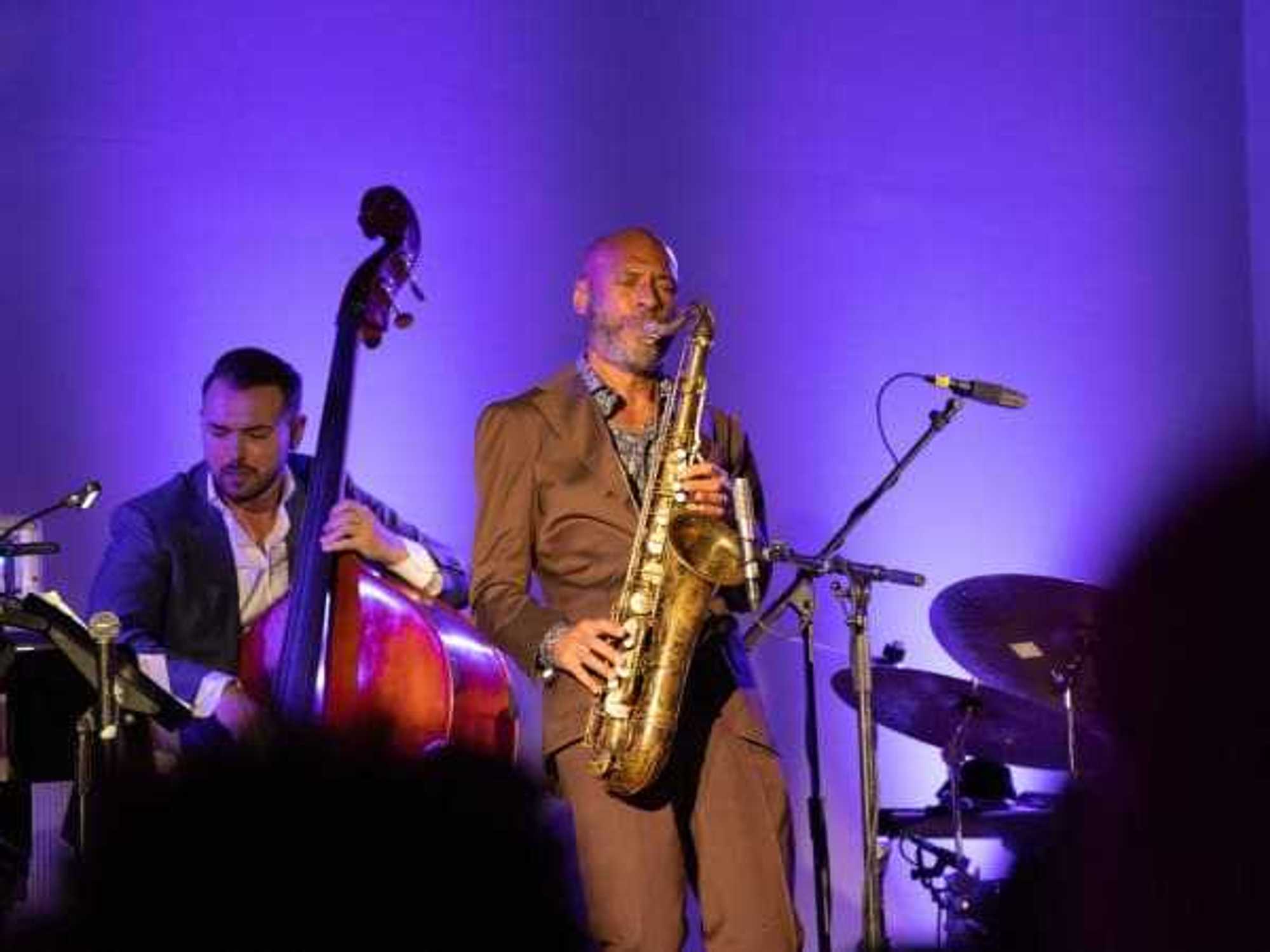
Austin is getting a new jazz festival next spring. ATX Chamber Music and Jazz (ATX Music), which also just announced its 2026-2027 season schedule, is ramping up planning for ATX Jazz Fest from April 2-4, 2027. The musical organization has teased some information about the festival on social media and events calendars, but now it's officially getting the word out.
ATX Chamber Music and Jazz is an organization that curates shows at a number of venues around town, though it also has its own chamber music collective, Ensemble ATX. The upcoming season is the organization's fourth, and according to a press release, it's "most ambitious undertaking yet."
The inaugural ATX Jazz Fest will include more than 29 hours of live music over its three days, on multiple stages at Moody Amphitheater and Assembly Hall. It is not Austin's first jazz festival, but it does promise to be "the most concentrated gathering of jazz talent ever assembled in Texas." Given its breadth, it's easy to see how this will become the city's main jazz event, even considering other flashes in the pan like South by Southwest and occasional notable showcases.
The lineup inlcudes:
- Brad Mehldau
- Christian McBride Big Band
- Cécile McLorin Salvant
- Jason Moran
- Joe Lovano
- Chris Potter
- Cory Henry & The Funk Apostles
- Terence Blanchard & the E-Collective
- Joe Locke
- Sullivan Fortner
- Emmet Cohen
- Bria Skonberg
- Nicole Zuraitis
- Alfredo Rodríguez & Pedrito Martinez
The regular season runs from September 12, 2026, to May 15, 2027. It brings together well-established artists with notable awards as well as emerging musicians from across the state, and more, including international acts.
In addition to more shows at Moody Amphitheater and Assembly Hall, shows will also be held at The Mansion Austin (home to the Texas Federation of Women's Clubs), the Music Box (a creative mansion), and the Kodosky Manor (a Spanish-style villa). ATX Music aims to create social connections through the use of these unique settings.
Regular season events are as follows:
- September 12, 2026 — Stefan Jackiw and Ensemble ATX — The Mansion (Tex-Fed)
- September 25, 2026 — Fred Hersch Solo Piano — Music Box
- September 26, 2026 — Fred Hersch Trio — Assembly Hall
- October 23, 2026 — Nadine Sierra: An Evening of Song — The Mansion (Tex-Fed)
- November 20, 2026 — Daniil Trifonov: A Solo Piano Recital — The Mansion (Tex-Fed)
- January 23, 2027 — Musical Mixology with Ensemble ATX — The Mansion (Tex-Fed)
- February 19, 2027 — Sir Stephen Hough: A Solo Piano Recital — Kodosky Manor
- February 20, 2027 — Sir Stephen Hough with Ensemble ATX — The Mansion (Tex-Fed)
- April 2–4, 2027 — Inaugural ATX Jazz Fest — Moody Amphitheater at Waterloo Park and Assembly Hall
- May 15, 2027 — Marmen Quartet and Anna Petrova — The Mansion (Tex-Fed)
"What has been most rewarding since we began is seeing how enthusiastically Austin audiences have embraced what we're building," said ATX Music co-artistic director Geoffrey Herd in the release. "This season reflects that momentum. By bringing together extraordinary artists from around the world alongside Austin's own creative community — and adding the inaugural ATX Jazz Fest — we hope to welcome new audiences from across the country while contributing to Austin's growing cultural profile."
Outside of the regular season, ATX Music will engage musicians with local restaurants, galleries, cultural organizations, and more for partnerships. It'll also continue its education initiative, Everyone Deserves Art, to bring artists to Title I schools and distribute around 800 tickets for season performances to students and chaperones.
"Whether guests are sharing a meal, discovering the work of a local visual artist, attending a cocktail masterclass, or meeting the musicians after a performance, every event is designed to create lasting connections," said co-artistic director Anna Petrova. "We want audiences to experience world-class artistry in a way that feels welcoming, intimate, and deeply human."
Passes to ATX Jazz Fest, plus regular season tickets and subscriptions, are on sale at atxmusic.com.