Spring has sprung in Austin, and the city’s art scene is buzzing with exhibitions for both quick stops and leisurely strolls. From bigger shows at the Blanton and The Contemporary to more intimate gallery experiences tucked throughout town, there’s something for every kind of art-lover.
This month’s lineup offers everything from striking self portraits to contemplative works on paper, with a kaleidoscope of styles, colors, shapes, and sizes worthy of wildflower season.
Flatbed Center for Contemporary Printmaking
Sandra C. Fernandez: Enduring Presence, Artist Reception — April 9
Sandra C. Fernandez uses monotype, lithography, and hand stitching to build something closer to worn clothing than to paper on a wall. Her collaged dress forms, made from fragmented text and imagery, speak to the experience of migration: what is carried, what is lost, and what becomes something new. On April 9 at 6:30, Fernandez will visit the gallery for a special artist talk.
Wally Workman Gallery
Helmut Barnett: Surfaces — Opening April 11
Helmut Barnett has been making art in Austin since the mid-1970s, and his work still surprises. This new solo show at Wally Workman covers painting, collage, and drawing with large geometric canvases alongside smaller, more intimate works built from found materials. Opening day is April 11.
The Trail Conservancy / City of Austin Art in Public Places
Tempo on the Trail — Opening April 11
Tempo on the Trail returns this April, transforming the Ann and Roy Butler Hike-and-Bike Trail into an open-air gallery with nine site-specific installations by local and regional artists. Presented by the Trail Conservancy and the City of Austin’s Art in Public Places program, the exhibition includes murals, sculptures, and new media works along the trail. An opening celebration April 11 at Seaholm Waterfront invites Austinites to meet artists, preview installations, and explore the trail through guided tours.
Davis Gallery
Quiet by Jan Heaton — April 4 through May 2
Drawing on the colors, textures, and patterns of the natural world, Heaton’s watercolor works transform familiar forms into something more meditative, and deeply personal. The Austin-based artist’s layered, organic compositions invite viewers to slow down, reflect, and reconnect with a sense of place, memory, and quiet beauty.
McLennon Pen Co. Gallery
Richie Shazam: I Was Never Meant To Survive This — Now through April 19
New York artist and photographer Richie Shazam brings their debut Austin show to McLennon Pen Co. with a series of self-portraits unlike anything else on view in the city right now. Modeled inside an eight-by-ten-foot wooden box with seven distinct characters, sets, and costumes, the images blur the line between photography and theater.
Verdant Gallery
Different Dances: Deborah Hay & Caroline Wright — Now through April 25
At the age of 84, choreographer Deborah Hay is showing visual artwork in a gallery for the very first time with a series of monoprints made in collaboration with Flatbed Press. Paired with a decade's worth of floral abstractions by Austin painter Caroline Wright, the show is a sort of meditation on rhythm, perception, and movement.
Blanton Museum of Art
American Modernism from the Charles Butt Collection: From Edward Hopper to Alma Thomas — Now through August 2
Rarely does a private collection make its public debut on this scale. The holdings of H-E-B chairman Charles Butt are now on view at the Blanton for the first time, bringing together more than 80 works by some of the most celebrated names in American art: Hopper, O'Keeffe, Ellsworth Kelly, Joan Mitchell, Alma Thomas, and Jacob Lawrence, among others.
The Contemporary Austin
Sable Elyse Smith: Clockwork — Now through August 2
Clockwork is Sable Elyse Smith’s first solo exhibition in Texas and her largest institutional presentation to date, bringing together recent work across sculpture, video, neon, and works on paper. The show pairs newly commissioned pieces with some that are more well-known to showcase her multidisciplinary art.
Host: Laura Lit — April 23 through January 2027
Austin-based artist and co-owner of Craft Beer and Kolaches Laura Lit makes her solo museum debut this month, and she's doing it in one of the city's most beautiful settings. Her signature large-scale sculptural forms — organic and richly colorful — will occupy both the interior galleries and the outdoor grounds of Laguna Gloria, spilling into the sculpture park along the waterfront. Members get early access at 6 pm before the public opening.
Art Galleries at Black Studies (UT Austin)
Carrie Mae Weems: Something Grander Still — Now through May 9
One of the most important artists working today, Carrie Mae Weems hardly needs an introduction. This original exhibition, featuring multi-generational family photos, was developed specifically for UT's two Art Galleries at Black Studies. It's free, open to everyone, and runs through May 9.
ArtUs Co
Birding Man — Now through May 30
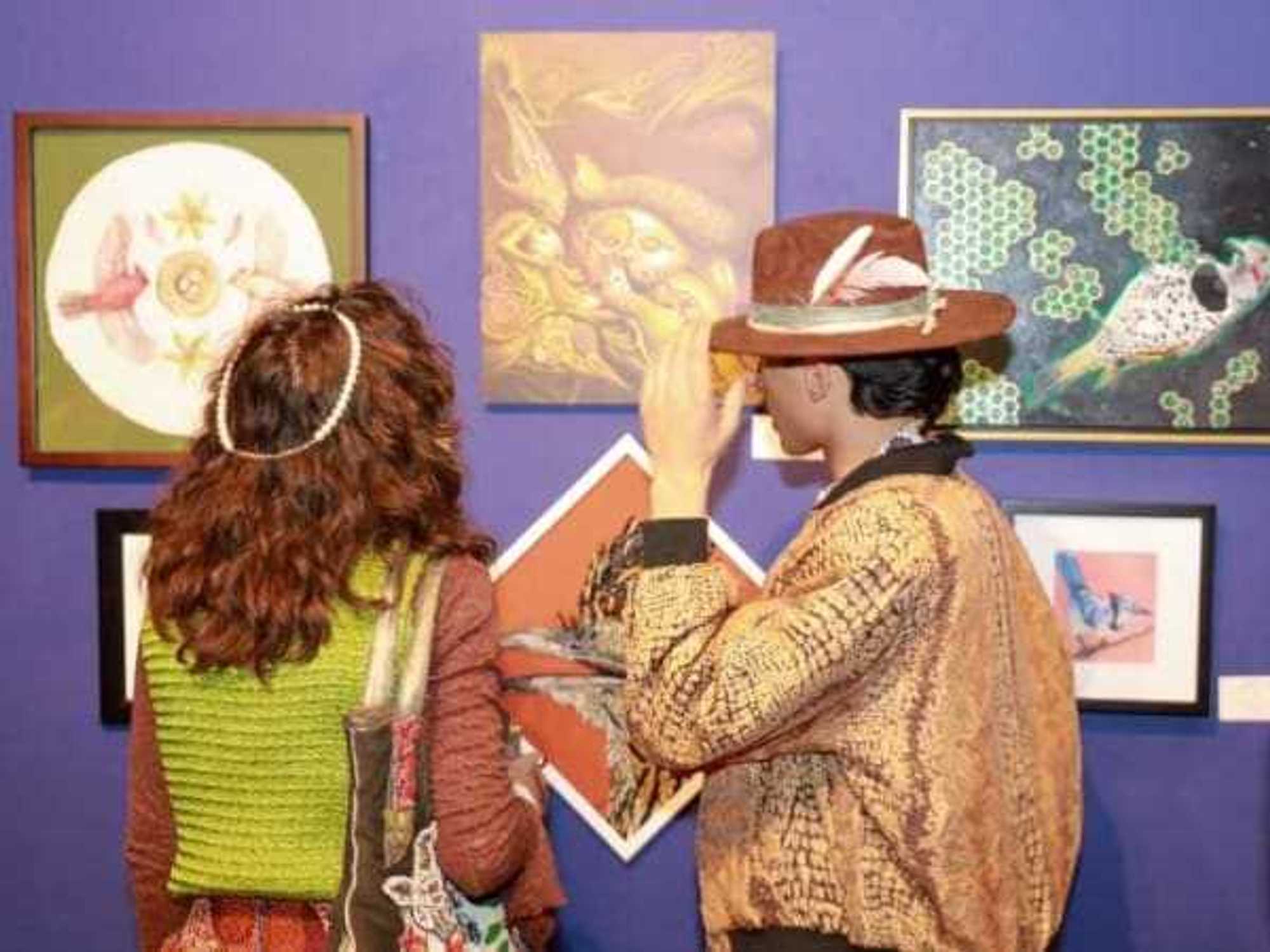
Birding Man is a group exhibition honoring the avian world through its symbolic, ecological, and imaginative meanings, presenting birds as messengers, guardians, and bridges between natural and spiritual realms. Rooted in ArtUs Co’s commitment to nature-inspired, consciousness-expanding work, this show invites visitors into a deeper connection with the more-than-human world.