CultureMap Austin and the Long Center for the Performing Arts are joining forces to create a unique, fun and intimate experience perfect for those looking to get a little more out of their cultural outtings. On January 10th, opening night of Robert Dubac's Free Range Thinking, CultureMap will debut the CultureMap Lounge at the Long Center.
The private CultureMap Lounge will allow people to meet and mingle with other like-minded art lovers over light bites and specialty cocktails before the show. CultureMap Lounge ticket holders will experience the show together with opportunities to reconnect in the lounge during intermission, sharing their thoughts over a few more drinks.
Following the show guests of the CultureMap Lounge can discuss the performance with their new friends over coffee and dessert. There is bound to be lots to discuss after Free Range Thinking.
According to the Long Center's website, Playwright/Actor Rober Dubac will take us on a "comic trek through all the hypocrisies and half-truths that have left America deeply divid." His performance is expected to be fast, funny and full of satiric commentary on contemporary culture. It's been described as both "provacative and smart," the perfect combination for the inaugural CultureMap Lounge.
The CultureMap Lounge will be available for various shows throughout the year. The next lounge will be held in February featuring Les Ballets Trockadero de Monte Carlo.
---
Tickets to the CultureMap Lounge include food, beverages, and more. The CultureMap Lounge experience can be purchased at the Long Center Box Office or online. Use code: LOUNGE.
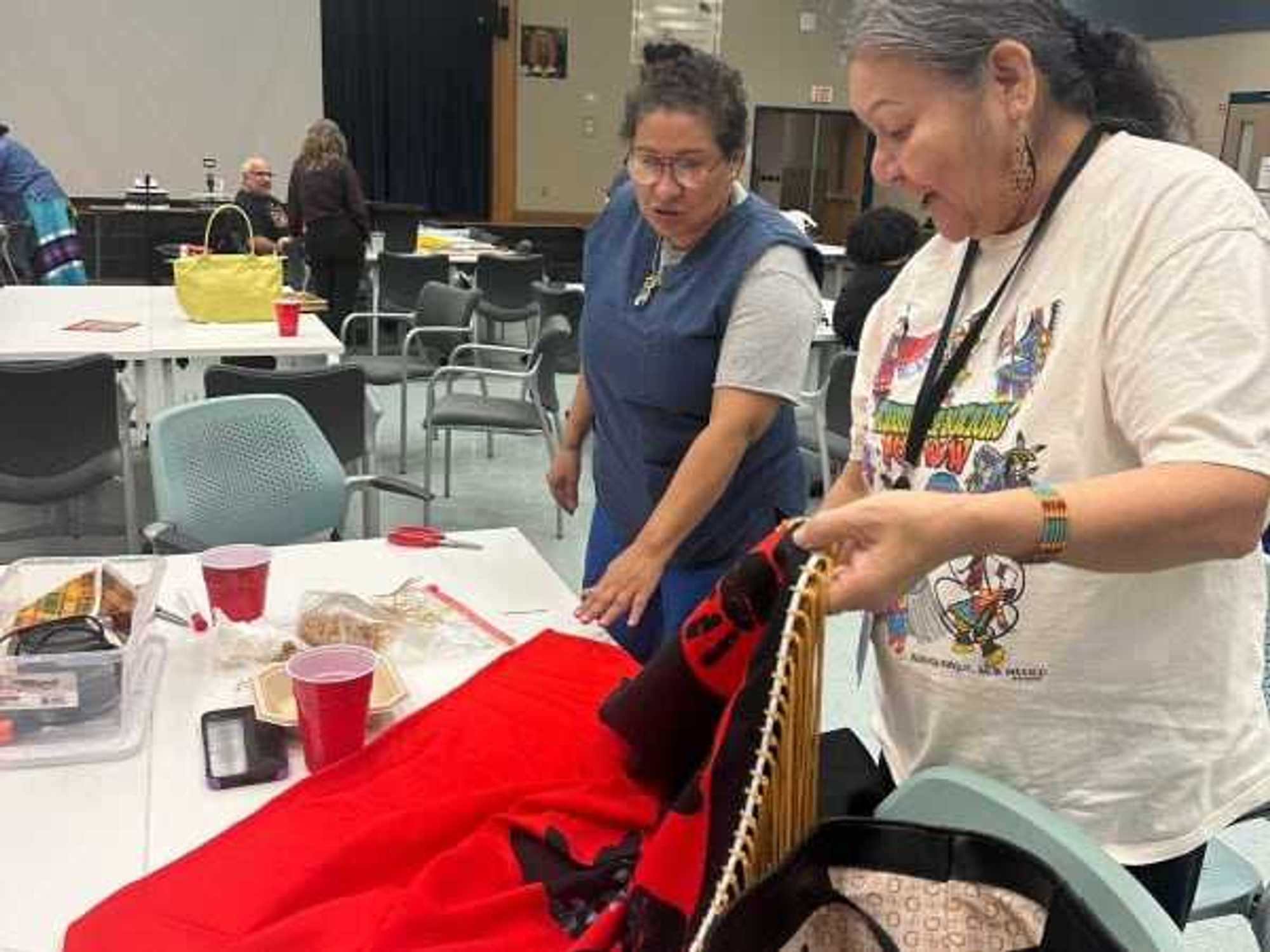
Skye King, right, works on a red fringed shawl for the Austin Powwow during Sew Indigenous at the former Metz Elementary in East Austin.
On a Wednesday night in November, Skye King and about three dozen others gathered at the former Metz Elementary in East Austin — now the Native American Cultural Center — to sew regalia for the Austin Powwow. The festival runs from 9 am to 9 pm Saturday, November 21, at the Travis County Exposition Center (7311 Decker Ln.).
The Native American Cultural Center moved to the former Metz campus this spring after the sale of its previous home at Brooke Elementary. The nonprofit is already looking for more room. It hosts regular luncheons for elders in a portable classroom without a kitchen, Austin Vida reported.
In May, Austin City Council voted 9-0 to create the Native American and Indigenous Quality of Life Commission. The commission advises the council on cultural preservation, economic development, education, health, and wellness. Its duties also include advising on the cultural center’s operations and development.
Council Member José Velásquez, who led the effort, told Austin Vida that Native and Indigenous residents had long been underrepresented in city policymaking.
Who Austinites dance for
As she sewed a red fringed shawl, King talked about a close friend’s daughter who went missing and still hasn’t been found. King believes she was taken. Her account touches on a broader crisis: The Bureau of Indian Affairs says Native American and Alaska Native communities have faced high rates of abduction and other violence for decades.
“So I’m going to dance for her, King says. "I’m going to dance for her.”
The group meets for Sew Indigenous, a weekly workshop at the center. Beginners and experienced makers work on ribbon skirts, beadwork, and other projects, sharing techniques as they go. The center encourages people to bring their own supplies if they can and keeps a few sewing machines on hand to share.
The center also puts on the Austin Powwow and Native American Heritage Festival, which dates to 1991. Organizers say the gathering draws more than 15,000 attendees and more than 300 dancers from different tribes and regions. The number of participating Native food vendors, artists, and craftspeople also surpasses 100.
Visiting the Austin Powwow
The market at the Austin Powwow opens at 9 am, the Gourd Dance begins at 10:30 am, and dancers enter the arena for the Grand Entry at noon. This year’s host drum groups are the Wild Band of Comanches and Meskwaki Nation. Competitions include jingle, grass, and fancy dancing, with divisions for dancers as young as 6 and a Golden Age division for dancers 50 and older.
At the outdoor Heritage Stage in the vendor market, Maxochitl starts the program at 10 am with children’s stories and poetry, followed by a potato dance competition at 11 am. The stage pauses for the Grand Entry and resumes at 1:30 pm with Jackie Salgado’s jingle dress showcase. Later performances include:
music by PHNX.WAV at 2:30 pm
the Hula Kalau Kaeepa Polynesian Dancers at 3:30 pm
danza led by Kalpulli Ayolopaktzin at 4:30 pm
flute and storytelling by Ryan Harjo at 6 pm
Organizers ask visitors to stand and remove their hats during the Grand Entry, flag songs, and honor songs. The dance arena is sacred space, and guests should enter only if invited. Attendees are told to ask dancers for permission before taking their photos or touching their regalia, beadwork, or feathers. Families can check strollers at the gate, since strollers are barred from upper-level seating.
Parking is free, and children 12 and under get in free. Online tickets cost $13.91 for ages 13 and up and $11.85 for military veterans, including fees.