
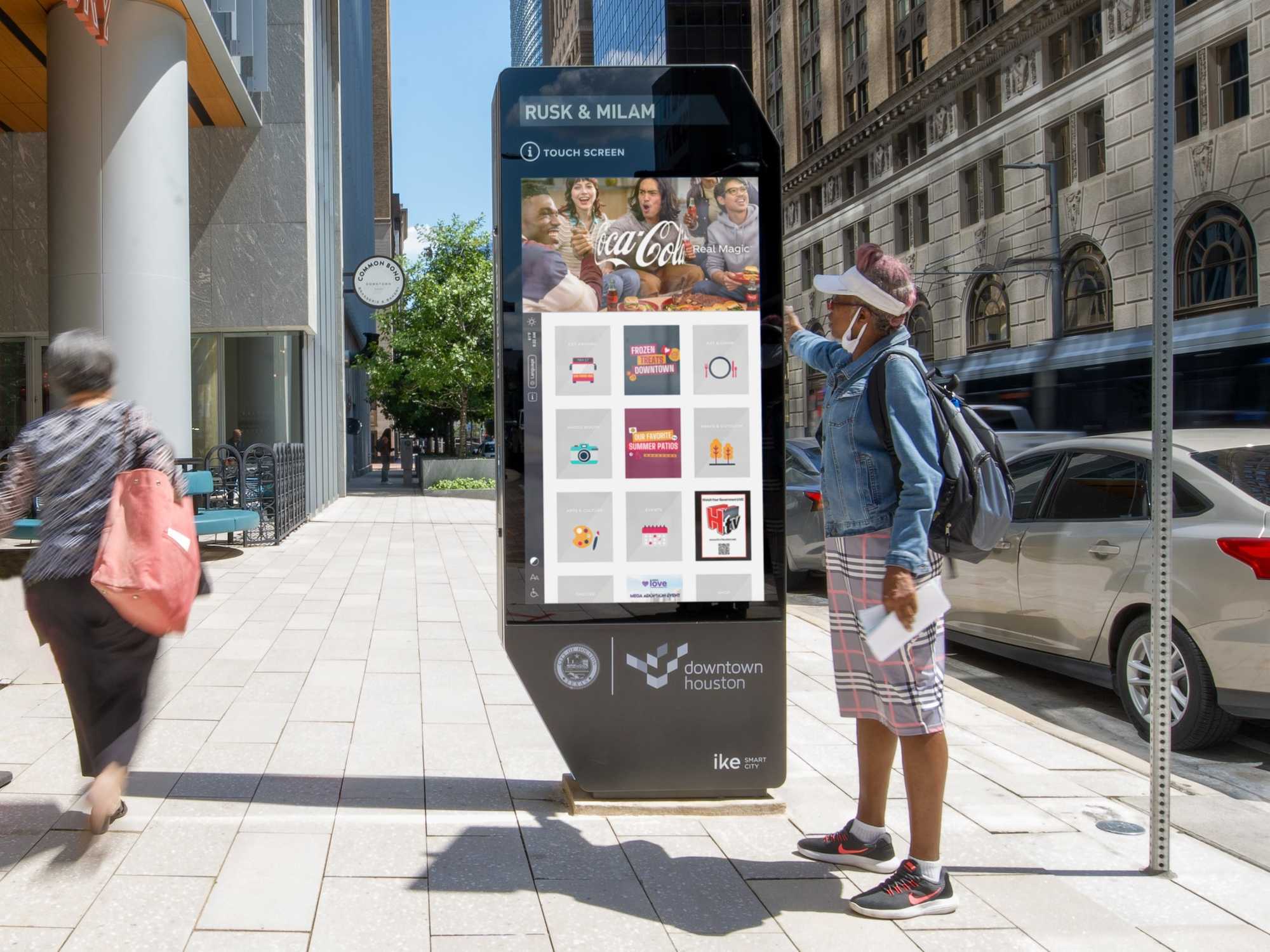
Austin is a great place to touch grass, but locals and visitors will be seeing a few more screens downtown thanks to a newly approved initiative to install digital kiosks. Like the digital information boards people might see at a mall or festival, these kiosks will serve as compact information centers for transit tips, small business advertising, and more. Austin Economic Development is leading the initiative.
City Council approved the idea at its March 26 meeting (the same one that saw the approval of a resolution supporting front yard businesses — an impactful day at City Hall). In this case, the city is advancing an ordinance that amends City Code Chapter 25-10 to allow the kiosks.
According to a city newsletter, the kiosks will offer the following information and services:
- Transit routes and schedules that update in real time
- Small business directory that businesses do not pay to be included in
- Discounted advertising for small, local businesses
- Other tools for navigating the city
- Local event listings and other cultural happenings
- Civic information and emergency messaging
- Wi-Fi access
- Option to send information to users' phones
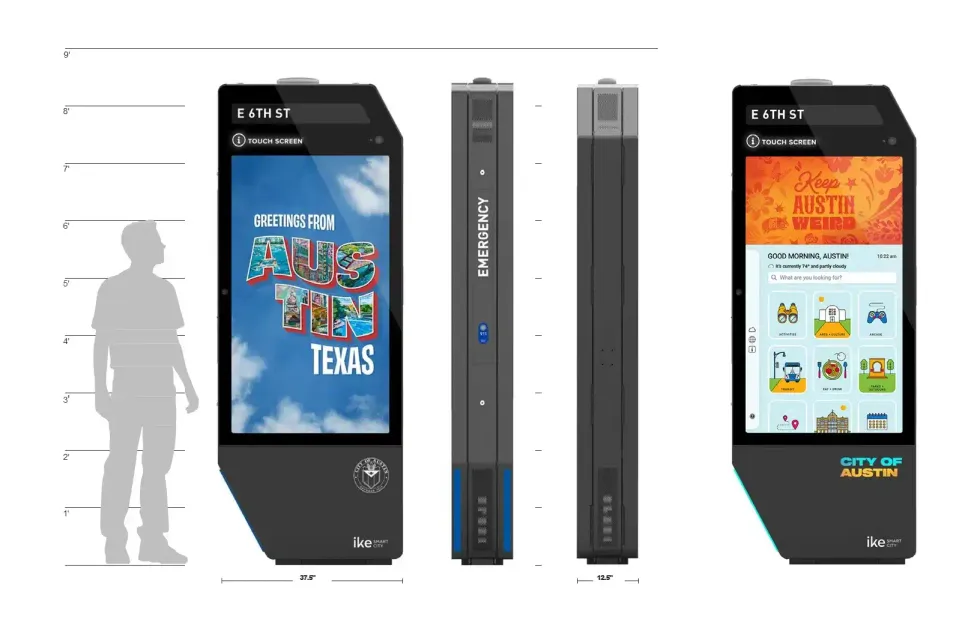 The city provided this mockup showing the scale of the machine and possible displays.Graphic courtesy of IKE Smart City via the City of Austin
The kiosks will be found in "high-activity areas" that aren't limited to downtown; locations haven't been finalized yet. The machines will adhere to ADA and federal accessibility standards, enabling users to adjust the screen height, view high-contrast and large-text configurations, and reach the interactive elements.
The city gets ahead of a few possible concerns, saying the kiosks won't be too obstructive in the space they take or the light they emit. These details will be overseen by Transportation and Public Works. It also says the kiosks "will not include cameras and are not designed to collect personal information from users."
Further, it emphasizes that the kiosks come at no cost to taxpayers. The machines are made by IKE Smart City, LLC, a Delaware company that has already installed similar models in other cities, including Houston and San Antonio. Advertising will generate revenue, which the city and IKE will share. The city's portion "can support public priorities, services, and community-serving initiatives," the newsletter says.
The city's next steps are to develop criteria for where the kiosks will be installed, engage the community, and ultimately settle on a phased deployment. The newsletter does not give a timeline for the project.


 Breakfast offerings at Tiny Grocer Café include brioche French toast, omelettes, egg dishes, and other all-day favorites.photo by Luisa Pineda, courtesy of Tiny Grocer
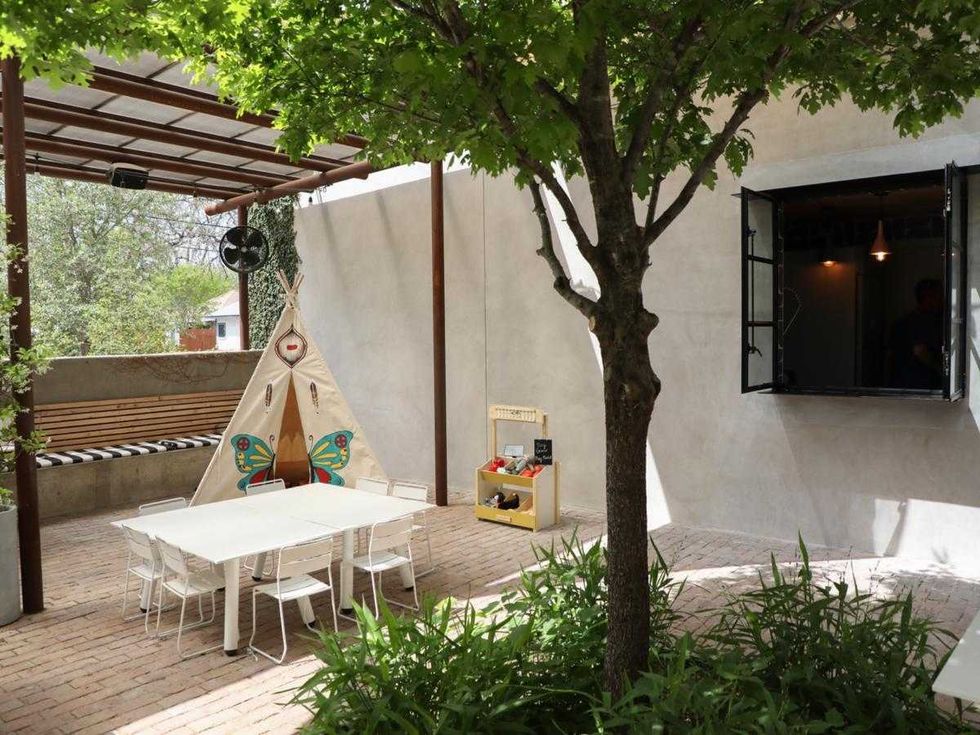 Tiny Grocer Café’s updated Hyde Park patio includes a play area for children and shaded outdoor seating.Courtesy of Tiny Grocer / photo by Luisa Pineda