Jelly Ellington and Curtis Lee performed at UnDía in May 2025. Both are back on the lineup for the C-Boy's follow-up.
Photo by Jennifer Greene
A unique musical showcase returning to South Congress music venue C-Boy's Heart & Soul at the end of this month. Un Dia 2025: Unity Through Music, a follow-up from a May showcase of the same name at Antone's, will present more than 20 artists performing their most recent singles on October 30.
Un Día, like many Austin festivals and showcases, hopes to show the diversity of the city's music scene — and based on this lineup, it's passing with flying colors. Attendees at this show will see blues guitarist Eve Monsees alongside "eastern soul" artist Nagavalli (combining East-Indian traditional and popular American styles) and rapper Evita, indie rock singer-songwriter Elijah Delgado, neo-soul artist Lew Apollo, and more.
Attendees may notice a bit of a bias toward soul, but hey, that's what you get at C-Boy's.
In addition to the far-ranging lineup, this showcase is unique because it functions almost like an open-mic. Performers will each only play two songs. To minimize friction from one performer to the next, they'll play with the house band or DJ Crash.
"It’s a question befitting the times: What is Austin music to you?" said KUTX radio host Laurie Gallardo, as quoted in a press release. KUTX is an event partner. "Folx from different generations / communities / perspectives will give you an endless variety of answers, and rightly so. That’s the idea behind (Un Día's) celebration of the diversity, history, community and culture of Austin music."
The full lineup for Un Día at C-Boy's is as follows:
Nagavalli
Tomar Williams
Adi Rao
Estani Frizzell
Elijah Delgado
Curtis Lee
Chief Cleopatra
Alesia Lani
Jelly Ellington
Eve Monsees
Lew Apollo
Tee Double
Traygod Tha MC
Balkchyl
J Soulja
Sertified
Evita
DJ Crash
Les Fisher
Cole Gramling
Jonas Saks
AJ Vallejo
Special guests
Guests can also expect face painting, a raffle, and "community-building vibes," according to the release. The event will benefit Pawliska Rescue and Reunite, a nonprofit led by Summer Pavliska, a dog rescuer in Round Rock. Pawliska gets the dogs the veterinary care they need and places them with foster families or new permanent homes.
Tickets ($10 in advance, $15 day-of) are available via Eventbrite.
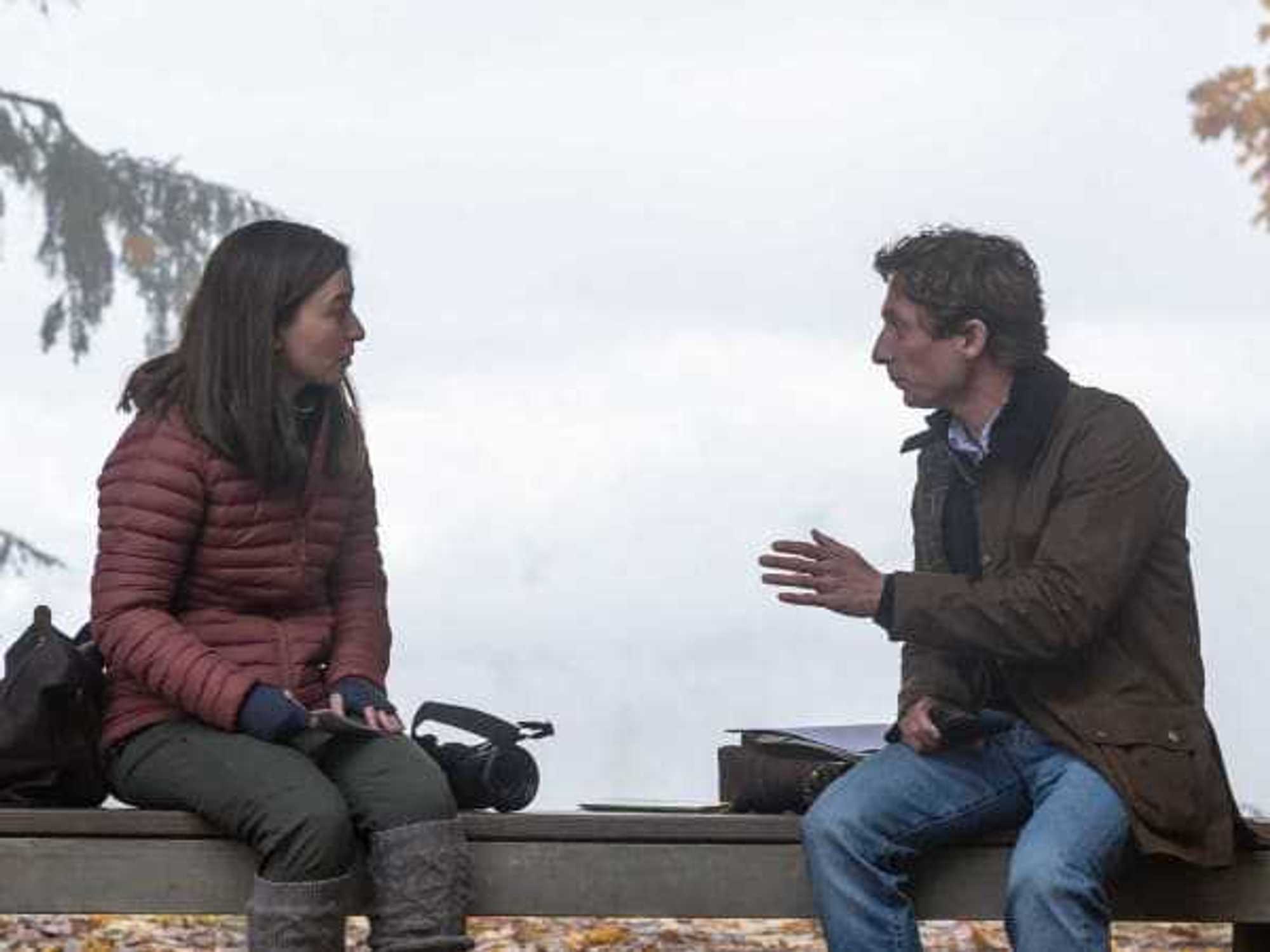
You Can Color Outside the Lines director Joe Salinas and producer Andrew Leeper at Sound Unseen Festival.
A new documentary tells the story of one of Austin's most beloved early punk bands. Music fans got to see You Can Color Outside the Lines: The Story of the Big Boys, which originally premiered in June, at Austin's Sound Unseen Festival on August 8 at AFS Cinema, with director Joe Salinas and producer Andrew Leeper on hand for the screening. It's built for people who already know the punk world, but even for viewers who don't, it offers something worth watching: a real look at how weird this city used to be.
The Big Boys, formed in the late ‘70s, blended ska and funk in a way that was much ahead of their time. Though they may be obscure among mainstream artists, they achieved a level of niche success that was foundational for skate punk and the wider hardcore scene.
Famous faces show up early to sing the band's praises, including actor and musician Fred Armisen, Pearl Jam's Jeff Ament, X's Exene Cervenka, and skateboarding legend Tony Alva. But the film doesn't bother identifying most of its interview subjects until much later. It assumes viewers already know who's who.
That sort of inside baseball holds true throughout. The film moves fast through bands, labels, people, and scenes from the late '70s and early '80s without much explanation for anyone new to the subject. Anyone hoping for a beginner's guide to the scene should look elsewhere.
The doc follows the Big Boys' trajectory from beginning to end. The band started as a group of five skateboarding friends in Central Texas, long before they got on stage together. It was almost as an afterthought that the crew — who all happened to be gifted musicians as well as skaters — threw together a show one night. Tim Kerr would end up on guitar, Chris Gates on bass, Randy "Biscuit" Turner on vocals, Nathan Gates on trombone, and Steve Collier was the original drummer.
"If it was not for skating, this band would have never happened," guitarist Tim Kerr says in the film.
That skate crew found its way to Raul's, a grungy club in Austin that became ground zero for the city's punk scene after the Sex Pistols played San Antonio in 1978. The film traces how the band became regulars at Raul's, and how the venue turned into a haven for what the narrator calls "Austin weirdos."
Fronted by the wild, unpredictable Randy "Biscuit" Turner, the Big Boys quickly built a local reputation on blurring the line between the stage and the crowd. Fans regularly climbed up to perform alongside the band. The group drew from punk, funk, and swing, and it featured women on backing vocals, something almost unheard of in punk at the time.
Although documentary doesn’t hold the hands of punk newbies, a wider audience might enjoy its ream of archival photos and footage of Old Austin: Raul's, the Ritz, kids skating in ditches, shows that spilled off the stage and into the crowd. Watching it, this doesn't look like the Austin anyone knows today. Ian MacKaye of Minor Threat, one of many big names interviewed, describes arriving in the city like "coming to Oz or something, in the middle of Texas."
Even viewers who've never heard of the Big Boys or don't know a single other band mentioned in this film will walk away with that message. Austin was a genuine safe haven for freaks, misfits, and anyone who didn't fit the mold, and somewhere between then and now, it feels like the city has smoothed itself out. This film is a reminder of what got lost along the way.
That old Austin scene wasn't just about the music, either. As the film points out, "punk" was a sort of catch-all for anything outside the mainstream, including the city's LGBTQ community. Meanwhile, there was animosity from both hippies and UT fraternities toward the punks, and Raul's sat surrounded by frat houses, right in the middle of a culture war playing out along the drag.
The doc largely avoids band members' personal or emotional lives until about three-quarters of the way through, when it touches on Turner's sexuality. A huge clash occurred between Big Boys and band Bad Brains when they learned he was gay. In one strange moment, a member of Bad Brains appears ready to apologize on camera, decades later, before the film abruptly cuts away.
The denouement details the end of the Big Boys, culminating in their final show in 1983 at Liberty Lunch. At that point, exhaustion, money troubles, and one too many blowups quietly ended the band. Turner died in 2005 at age 55, and the film closes as a sort of tribute to him, built from the fond, sometimes regretful memories of the bandmates he never fully made peace with.
For anyone who already loves the Big Boys or came up in that scene, the film plays like a reunion, full of names and details only the initiated will catch. But it's just as worthwhile for longtime Austinites who remember, or wish they'd caught, the city before it changed.