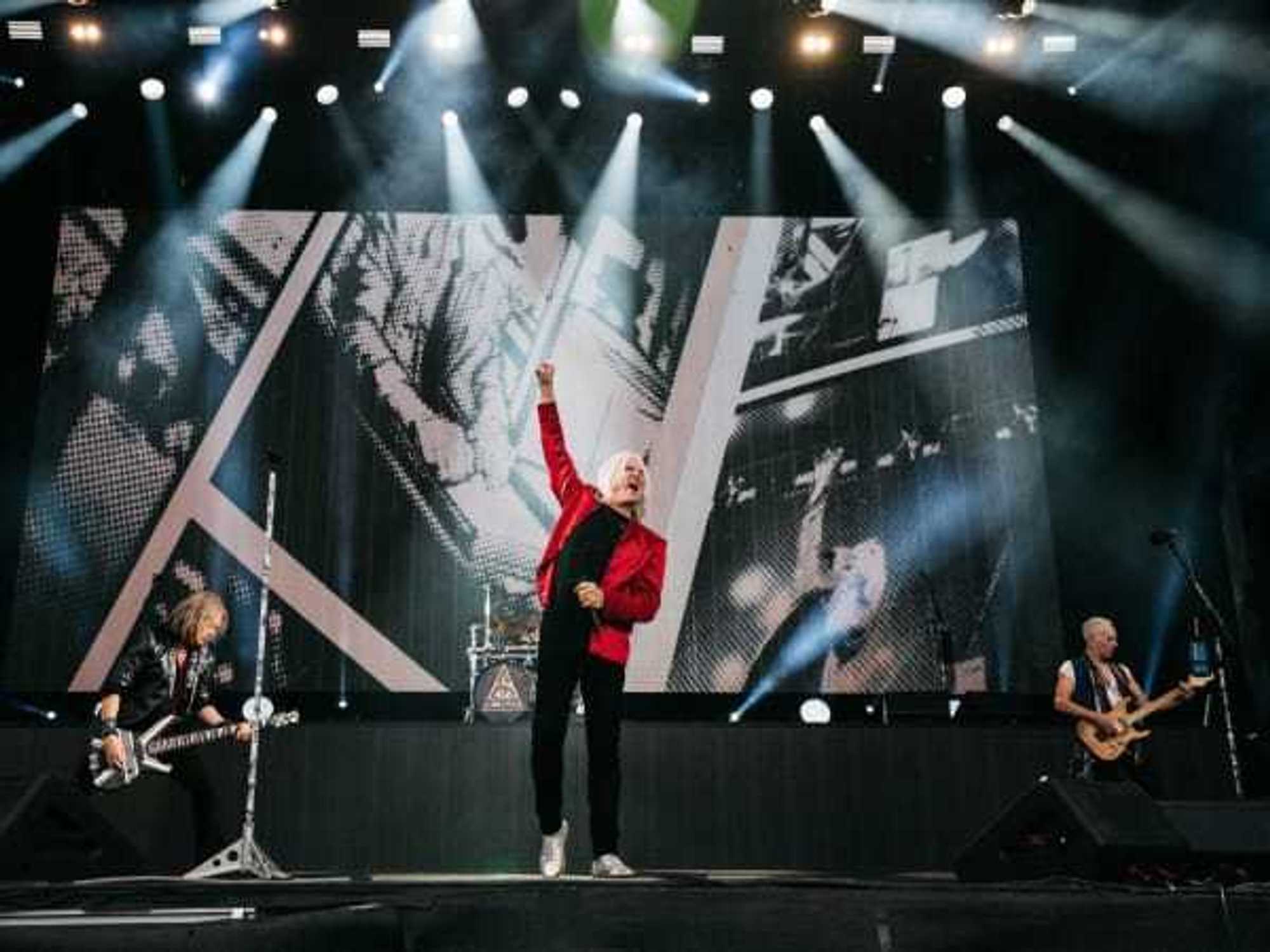
It will be a rockin' good time when Rock and Roll Hall of Famers Def Leppard and Goo Goo Dolls team up for a co-headlining tour in 2027, which will include a stop at Austin's Moody Center on April 13.
The two bands, along with special guests The Struts, will set out on a 45-city journey through the U.S. and Canada, starting on March 2 in Allentown, Pennsylvania.
In addition to Austin, the tour will stop in Fort Worth on April 18, San Antonio on May 29, and Houston on June 1.
Def Leppard are celebrating their 50th anniversary as a band, having been founded in 1976 in Sheffield, England. They released their debut album, On Through the Night, in 1980.
They went on to become one of the most successful bands of the '80s and '90s, scoring No. 1 albums with Hysteria and Adrenalize, and notching hits like "Pour Some Sugar on Me," "Love Bites," and "Let's Get Rocked."
They were inducted into the Rock and Roll Hall of Fame in 2019.
Goo Goo Dolls started releasing albums in the late '80s, but didn't break out out until their 1995 album, A Boy Named Goo, which featured the hit song, "Name."
They became iconic with hits like "Iris" and "Slide" off of their 1998 album, Dizzy Up the Girl, going on to release a string of top 10 albums.
Def Leppard's most recent release of new songs was Diamond Star Halos in 2022. Goo Goo Dolls put out their most recent album, Chaos in Bloom, the same year.
Tickets will be available starting with an Artist Fan Club presale beginning on Monday, October 12, at 10 am, followed by a Citi and Verizon presale for the U.S. dates on Monday, October 12, at noon.
Additional presales will run ahead of the general on-sale, which begins on Friday, October 16, at 10 am at Livenation.com.
For every ticket sold, $1 will be donated to City of Hope, one of the largest and most advanced cancer research and treatment organizations in the United States, helping advance groundbreaking research and innovative treatments for people facing cancer.
DEF LEPPARD + GOO GOO DOLLS 2027 TOUR
- March 2, 2027: Allentown, PA - PPL Center
- March 5, 2027: Montreal, QC - Bell Centre
- March 7, 2027: Detroit, MI - Little Caesars Arena
- March 9, 2027: Toronto, ON - Scotiabank Arena
- March 11, 2027: Quebec City, QC - Centre Vidéotron
- March 13, 2027: Newark, NJ - Prudential Center
- March 17, 2027: Boston, MA - TD Garden
- March 19, 2027: Nashville, TN - Bridgestone Arena
- March 21, 2027: Washington, DC - Capital One Arena
- March 23, 2027: Pittsburgh, PA - PPG Paints Arena
- March 25, 2027: Chicago, IL - United Center
- March 27, 2027: Minneapolis, MN - Target Center
- March 29, 2027: Denver, CO - Ball Arena
- March 31, 2027: Salt Lake City, UT - Delta Center
- April 13, 2027: Austin, TX - Moody Center
- April 16, 2027: North Little Rock, AR - Simmons Bank Arena
- April 18, 2027: Fort Worth, TX - Dickies Arena
- April 20, 2027: Mobile, AL - Regions Arena
- April 22, 2027: Wichita, KS - INTRUST Bank Arena
- April 24, 2027: Lincoln, NE - Pinnacle Bank Arena
- April 26, 2027: Kansas City, MO - T-Mobile Center
- April 29, 2027: Glendale, AZ - Desert Diamond Arena
- May 1, 2027: Los Angeles, CA - Hollywood Bowl
- May 5, 2027: San Francisco, CA - Chase Center
- May 7, 2027: Sacramento, CA - Golden 1 Center
- May 9, 2027: Seattle, WA - Climate Pledge Arena
- May 11, 2027: Spokane, WA - Numerica Veterans Arena
- May 14, 2027: Vancouver, BC - Rogers Arena
- May 16, 2027: Edmonton, AB - Rogers Place
- May 29, 2027: San Antonio, TX - Frost Bank Center
- June 1, 2027: Houston, TX - Toyota Center
- June 3, 2027: Oklahoma City, OK - Paycom Center
- June 5, 2027: Milwaukee, WI - Fiserv Forum
- June 7, 2027: St. Louis, MO - Enterprise Center
- June 9, 2027: Louisville, KY - KFC Yum! Center
- June 11, 2027: Savannah, GA - Enmarket Arena
- June 13, 2027: Tampa, FL - Benchmark International Arena
- June 17, 2027: Atlanta, GA - State Farm Arena
- June 19, 2027: Columbus, OH - Schottenstein Center
- June 21, 2027: Cleveland, OH - Rocket Arena
- June 23, 2027: New York, NY - Madison Square Garden
- June 25, 2027: Uncasville, CT - Mohegan Sun Arena
- June 27, 2027: Philadelphia, PA - Xfinity Mobile Arena
- June 30, 2027: Charlotte, NC - Spectrum Center
- July 2, 2027: Indianapolis, IN - Gainbridge Fieldhouse