
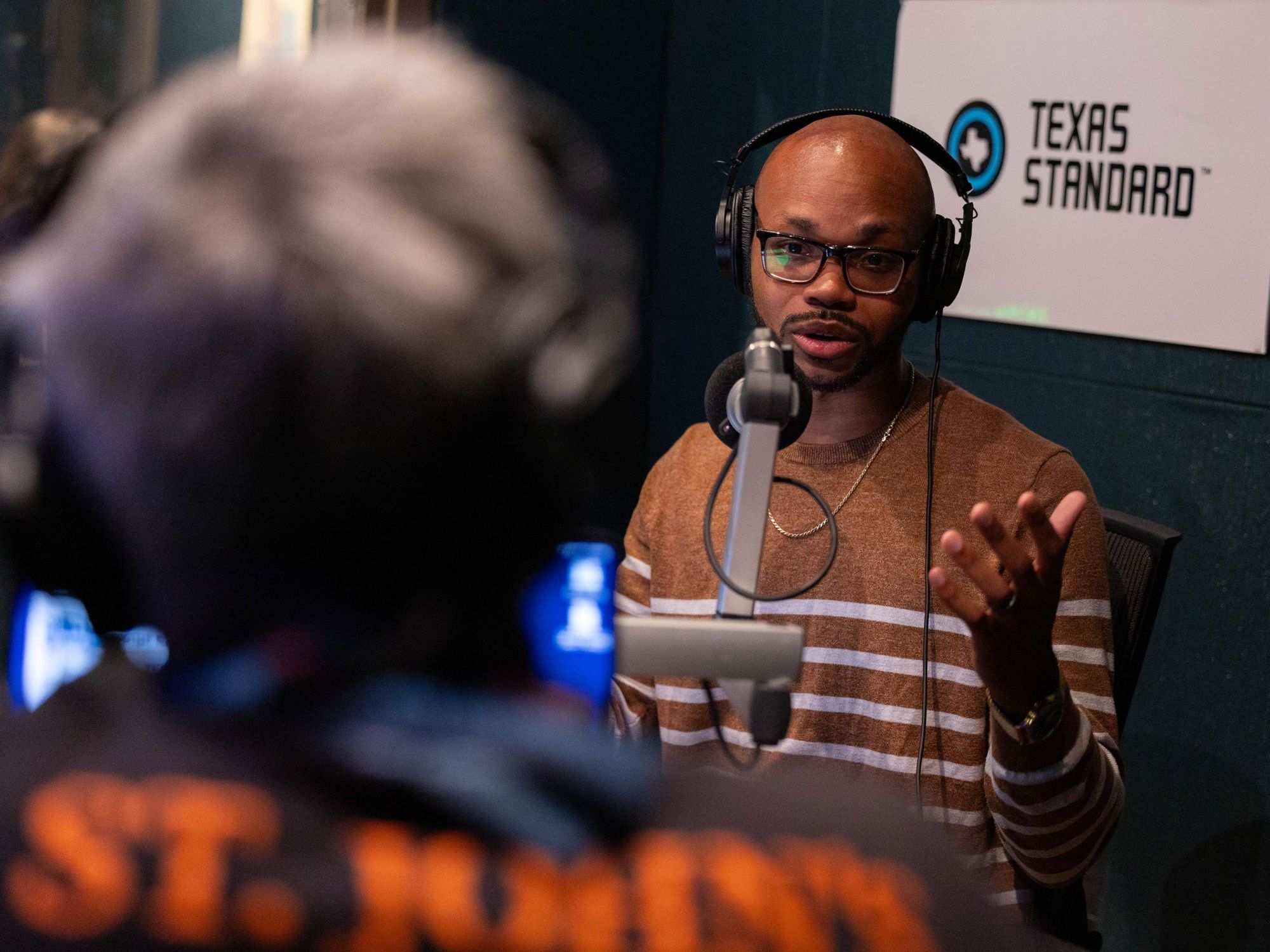
Although the Corporation for Public Broadcasting — which supported NPR and PBS with federal funds — has lost funding and is shutting down, all is not lost for the public media outlets. In Austin, NPR and PBS continue to retain most of their overall funding, and have plans to fill the gap going forward.
On July 24, President Trump officially signed a rescissions package including the cancellation of about $9 billion that had previously been approved for public broadcasting, as well as foreign aid. This wasn't exactly a surprise, since in early June the White House formally requested the funds from Congress; and by July 17 the Senate approved the bill, which all but told Americans it would go through.
According to PBS, the bulk of this $9 billion was going to foreign assistance programs: things like International Disaster Assistance and Migration and Refugee Assistance. But roughly $1.1 billion was allotted for the Corporation for Public Broadcasting (CPB), which finances over 1,500 local public radio and television stations around the country, including Austin's KUT and Austin PBS.
"As soon as the money left [CPB], their budget basically went away," says Austin PBS president and CEO Luis Patiño. He refers to a bill approved by the Senate Appropriations Committee on July 31: "It was sort of a foregone conclusion — especially once they had another shot at Appropriations — and Appropriations came back and also zeroed out public media."
"Then it was inevitable they would have to shut their doors and start winding down, so it wasn't a surprise to people on the inside," says Patiño.
As far as how this will effect Austin PBS, Patiño says typically federal funding makes up about $2.7 million annually for this local station, which he says is about 12 percent of the operating budget.
"It's not insignificant," Patiño says. But he wants to assure locals that Austin PBS has made a commitment to defend the services and content they produce, and have not made any plans to scale back on content or education in the community.
"ACL will continue with Season 51 as planned, and we've been really fortunate to see an outpouring of support from the community," he says, adding that Austin PBS is one of the luckier stations.
"The people who are going to end up paying the most are going to be some of these rural communities. We have 10 PBS stations in Texas. There's about four of them that are in jeopardy because anywhere from 30 to 40 percent of their funding came from the Federal funding," he says. Ultimately Austin PBS hopes to be in a position to help these smaller stations.
 An ATXplained Live show in 2020. ATXplained is just one of many programs put on by KUT.Photo courtesy of KUT Public Media
Austin's NPR stations, KUT for news and KUTX for music, have been partially funded by the CPB. Now that this source of funding is going away, KUT marketing manager Erin Geisler reports that these cuts — representing about 6 percent of the combined budget — will have a "direct impact on programming from paying for music rights, to reporter salaries, to technology infrastructure and more." Geisler adds that KUT will have to save costs by "not filling open positions, cutting travel budgets, and looking for additional cost savings and efficiencies.
"Next year's Corporation for Public Broadcasting funding has been rescinded," Geisler says. "This is a loss of roughly $1.2 million for us." She explains that since funding is approved two years at a time, that funding had already been promised. Further, because CPB is shut down, that loss is permanent.
Both PBS and KUT will need more support from the community than ever going forward. Every year these stations host annual pledge drives, but this year, Patiño says PBS will be framing things a little differently.
"We're trying to increase our sustaining members — people who have for years supported us with, you know, $5 or $10," he says, "trying to get them to increase to maybe $20, or $25, or $100 a month."
Aside from individuals, PBS is talking to major philanthropic donors including families, foundations, and individuals, as well as foundations that specifically support public media like Media Impact Funders and Press Forward.
Similarly, Geisler says that KUT News and KUTX will need "significant community support" in order keep providing Austin with the music and news it deserves. They're seeking support from members with monthly donations, funding from major donors, and sponsorship from local businesses. They're also exploring other revenue options, like events.
"We’re heading into some challenging financial situations, but we’re not lying down for it," Geisler says.
Austinites who want to hear more from the people leading the charge are invited to watch a discussion, both in person and online, moderated by the Texas Tribune. "Charting the Future of Texas Public Media" will take place at the Texas Tribune's Studio 919 on Tuesday, August 26, at 9 am. So far, confirmed speakers include Luis Patiño and Corrie MacLaggan, the newly appointed executive editor at KUT News and The Texas Newsroom.
Whether attending in-person or online, guests can RSVP to guarantee a spot.
--
Some quotes have been updated post-publication for clarity.

 The Knuckle Sandwich packs a punch (of flavor). Photo by Chris Praetzel