River Restoration
New film shows how Texans are restoring the Guadalupe after July 4 flood
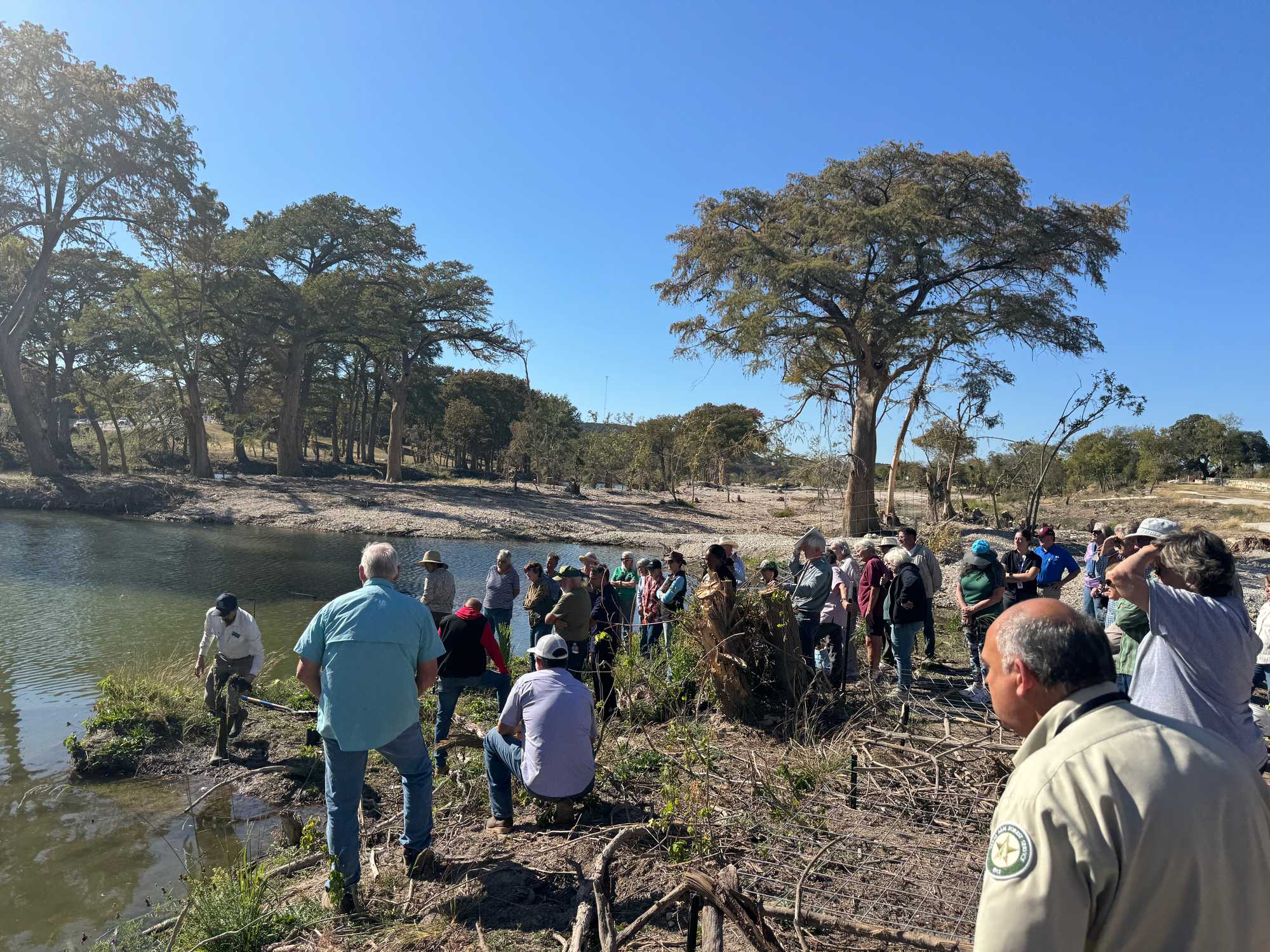
The Hill Country Alliance is one of the organizations featured in the film. Here, it hosts a workshop for landowners to learn how to plant new vegetation.
As Central Texas approaches the one-year mark after the destructive July 4 floods in 2025, the disaster has moved into a new phase of remembering and restructuring. A new documentary called Hope for the Guadalupe combines the two, collecting perspectives from the people who lived it and looking at the work Texans are doing now to revitalize the land.
The film will debut in a series of screenings that start in Austin at the sold-out 11th Annual Water, Texas Film Festival on May 12 and continue throughout Texas. After the community screenings, it will be picked up by Alamo Drafthouse for more showings from May 31 through June 2. These theater showings will be part of a double feature with another, more general conservation documentary called Deep In The Heart: A Texas Wildlife Story. Tickets are on sale now.
Other screenings with post-film Q&As will take place in the following cities:
- Kerrville – Thursday, May 14 | Arcadia Live Theatre
- San Antonio – Friday, May 15 | San Antonio Botanical Garden
- Dallas – Tuesday, May 19 | Angelika Film Center & Café
- Houston – Thursday, May 21 | River Oaks Theatre
- Wimberley — Sunday, May 31 | 7A Ranch Opera House
The flooding is still primarily referred to by date only. It mostly affected the Guadalupe River, which runs through New Braunfels and separates Austin and San Antonio, but floods also caused significant damage north of Austin. During the worst of the flash flooding, the Guadalupe rose more than 37 in just hours, a press release about the film recounts. It shares an estimate that 52 percent of riparian vegetation — basically, the plants that create a buffer between land and river — was lost in Kerr County.
Director Ben Masters and producer Josh Winkler gathered their findings by talking to various community members and organizations about the ecology of the region and what they're doing about it now. According to the release, that means hearing from biologists, landowners, and conservationists doing things like planting native species and looking at the area's longterm needs.
The organizations looking after these longterm needs are now part of a coalition supported by the Community Foundation of the Texas Hill Country. Some of the individual organizations include the Hill Country Alliance, San Antonio Botanical Garden, Kerr County River Foundation, and the Hunt Preservation Society. The film will show some of their projects in progress.
“The goal was to tell this story with honesty and respect for the people and the place,” said Ben Masters, director of Hope for the Guadalupe. “What we saw was not just devastation, but a community coming together to restore something deeply meaningful. That’s what this film is about.”
The Community Foundation of the Texas Hill Country is one of several supporters of the film. The Community Foundation is also supporting fundraising efforts through its Hope for the Guadalupe Fund, which supports long-term river restoration, planting of native trees, seeds, and grasses, and stewardship efforts across the region. Many of those efforts are spotlighted in the film.
“The Guadalupe River is one of Texas’ great natural and cultural resources,” said Community Foundation of the Hill Country CEO Austin Dickson in the release. “This film documents both the devastating impact of the floods and the extraordinary work underway to restore the river corridor and surrounding communities. Long-term recovery means caring for the land, the watershed and the people who depend on them for generations to come.”