There's another reason to get excited for the completion of the Moody Center in 2022: The Weeknd has just announced he's bringing his After Hours tour to Austin as part of the grand opening festivities.
Tickets will go on sale Monday, February 8, via Ticketmaster for the concert, which is scheduled for April 18, 2022.
The upcoming Super Bowl halftime show star will be part of a concert series celebrating the new sports and events area at The University of Texas at Austin.
With its ability to seat 15,000-plus people, the Moody Center is expected to be one of the finest arenas in the country. And it'd better be, since it was funded by one of the largest private gifts ever made to a college for a new area, to the tune of $130 million from the Moody Foundation.
First announced in 2019, the Moody Center will replace the Erwin Center and host UT men's and women's basketball games in addition to concerts, graduations, and other university, high school, and community events.
The Moody name isn't exactly new to the UT campus, or Austin for that matter. In 2013, the foundation donated $50 million to support the Moody College of Communication.
And in 2019, it donated $20 million to fund a new pavilion at the Blanton Museum of Art — a structure that will serve as the capstone of downtown's Texas Capitol Complex Master Plan, and brings the Moody Foundation's donations to UT to more than $200 million.
In recent years, the Galveston-based organization has also donated millions to both the Barton Springs and Pease Park conservancies.
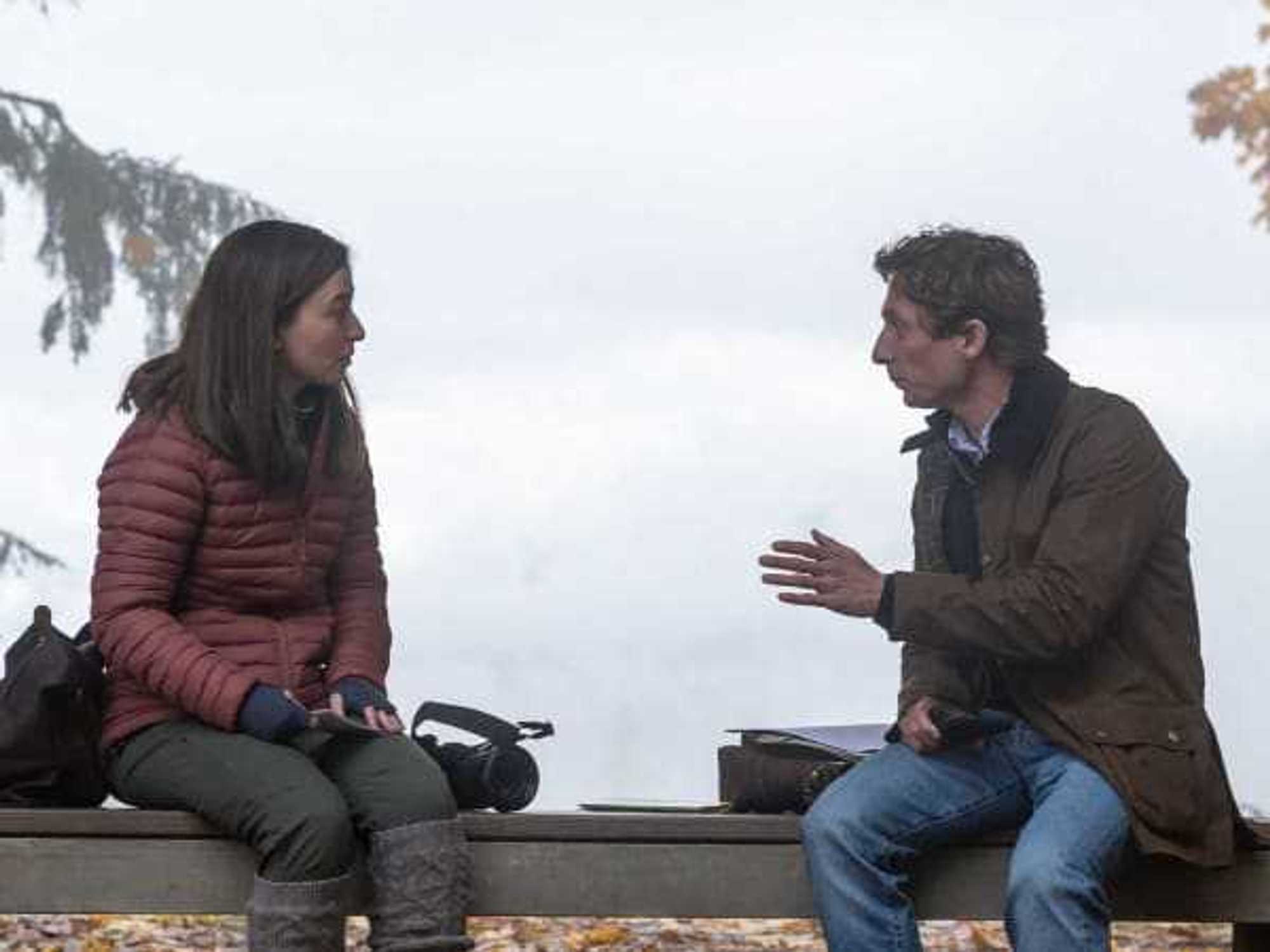
Mikey Madison and Jeremy Allen White in The Social Reckoning.
The 2010 film The Social Network — about the early years of Facebook after Mark Zuckerberg created the social media site — was a landmark movie in many ways. But given the time it was made, just four years after it went public beyond colleges, the impact Facebook had on society was minimal compared to what it is today. (The film’s tagline references 500 million users on Facebook; there are now more than 3 billion).
All of which is to say that there's plenty of fertile material for a follow-up film to explore, which writer/director Aaron Sorkin does quite well in The Social Reckoning. Zuckerberg (played this time by Jeremy Strong) is an important but supporting character in this story, which focuses on Wall Street Journal investigative reporter Jeff Horwitz (Jeremy Allen White). Horwitz is in pursuit of anyone willing to spill dirt on the inner workings of Facebook, which leads him to Frances Haugen (Mikey Madison), who works on the Civic Integrity team at the now-giant company.
At first reluctant to disclose much, Haugen gradually gives Horwitz access to internal files that show that Facebook engaged in behind-the-scenes work to boost engagement on the site with little regard for how it would affect the well-being of its users. Their story, which takes place over the course of two years between 2019 and 2021, is intercut with scenes in which Zuckerberg is being prepped for testimony before Congress by Raya (Wunmi Mosaku), Charlie (Bill Burr), and others.
The key to Sorkin’s success in Hollywood has always been his fast-paced, overlapping dialogue, and there’s much of it to enjoy in this film. Most of the film is just people talking in rooms, so the script needs to have Sorkin’s signature style to keep the story compelling. He achieves that goal through lines that indicate the righteous indignation, quirks, and sense of humor of the characters, feelings that easily translate over to the audience.
Sorkin is clearly on one side in his storytelling, and it’s not the side that doesn’t seem to care that its users are being harmed by its product. Sorkin gilds the lily multiple times throughout the film in big and small ways, and your enjoyment of the movie may lie in your ability to roll with his choices instead of nitpicking details (like the fact that Zuckerberg didn’t testify before Congress in the crucial year depicted in the film).
Still, there’s the unshakeable feeling that the movie is too little, too late. Even though it’s set just 5-7 years ago, the advances in technology and the division of the country in the time since make it feel like a completely different world. The Social Network had the advantage of showing things that most viewers didn’t know well. The basics of this film played out in headlines around the world, and the issues the characters debate in it seem positively quaint compared to what’s happening now.
White has been hit-and-miss as a movie actor, but he’s in his sweet spot in this film, rattling off lines with ease and making Horwitz alternately cocky and empathetic. Madison does well in her first film since winning an Oscar for Anora, playing on Haugen’s passion and eccentricities effectively. Strong plays Zuckerberg as literally stiff — his neck and body movements are almost mechanical — a choice that works for the most part.
The Social Reckoning is not as good as The Social Network, but it manages to be gripping in its own way. Through Sorkin’s writing, better directing than he has delivered in other films, and committed performances by all of the actors, it becomes a story worth telling, even if its ideas have become antiquated.
---
The Social Reckoning opens in theaters on October 9.