After experiencing its lowest total attendance numbers in seven years in 2025, the State Fair of Texas bounced back in 2026, welcoming nearly 2.1 million visitors, according to an official release.
That represents a slight bump up from the 2,020,064 that came through the gates in 2025. Both numbers are still down significantly from the highs of 2019 and 2022, when more than 2.5 million people attended the State Fair.
The uptick in attendance could be attributed to the concerted effort to make the Fair more affordable this year, including lowering ticket prices, making games and rides cheaper, expanding days for free student tickets, and offering a free day of parking.
As usual, the busiest day of the State Fair was Saturday, October 10, the date of the annual Texas-Oklahoma football game, with more than 203,000 fairgoers in attendance, including the 92,100 fans in the Cotton Bowl.
The average attendance for the other 23 days of the fair was around 82,500.
“We are grateful to every fairgoer who joined us this year, as well as the team members, vendors, and volunteers who worked tirelessly to make this season possible," said State Fair of Texas President Mitchell Glieber in a statement. "As a nonprofit organization, a successful Fair helps fuel our work throughout the year, and we are proud of the impact we continue to make through agriculture, education, and community.”
Other notable numbers from the 2026 State Fair of Texas include:
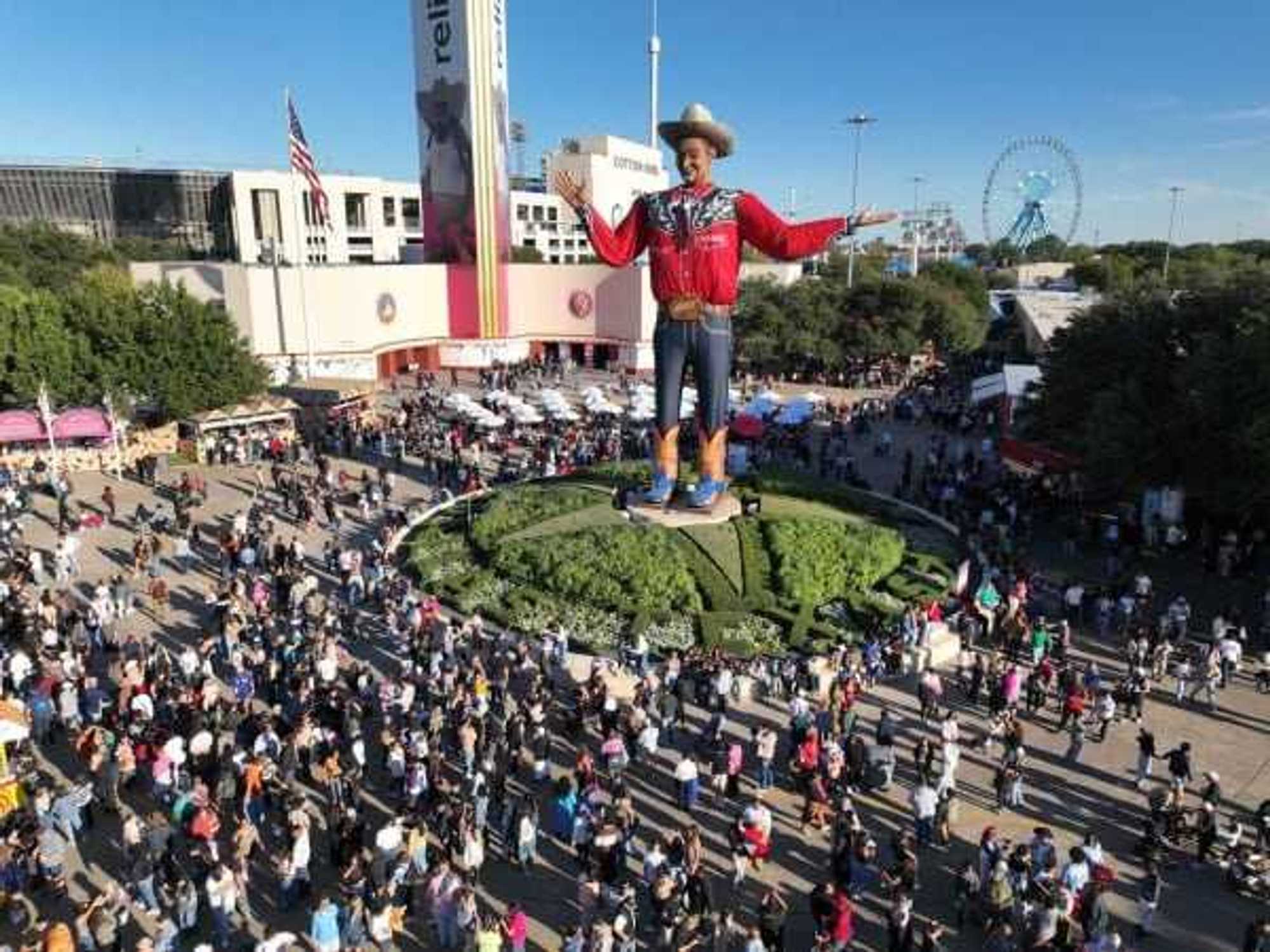
- An all-new look for Big Tex, standing 55 feet tall, sporting a 95-gallon Resistol cowboy hat, a Cavender’s shirt measuring 245 by 192 inches, Levi’s 501 jeans measuring 380 inches wide by 290 inches long, size 96 Lucchese boots, and a Shiner belt buckle.
- The unveiling of an official State of Texas Historical Marker from the Texas Historical Commission for Big Tex, honoring his enduring legacy as a beloved Texas icon and symbol of State Fair tradition.
- An estimated 110,655 pounds of food were collected and donated to the North Texas Food Bank.
- More than 28,600 members of the military and their families visited the Fair over 24 days, utilizing the special discount offer in gratitude for their service.
- Approximately 500,000 prizes, valued at an estimated $1.8 million, were won at the State Fair Midway, enough stuffed animals and prizes to fill approximately 90 semi-trucks.
- Approximately 450,000 Fletcher’s Original Corny Dogs were enjoyed by fairgoers.
- The State Fair of Texas is estimated to generate more than $600 million in economic activity each year, serving as one of the most impactful annual events in the Dallas-Fort Worth region.