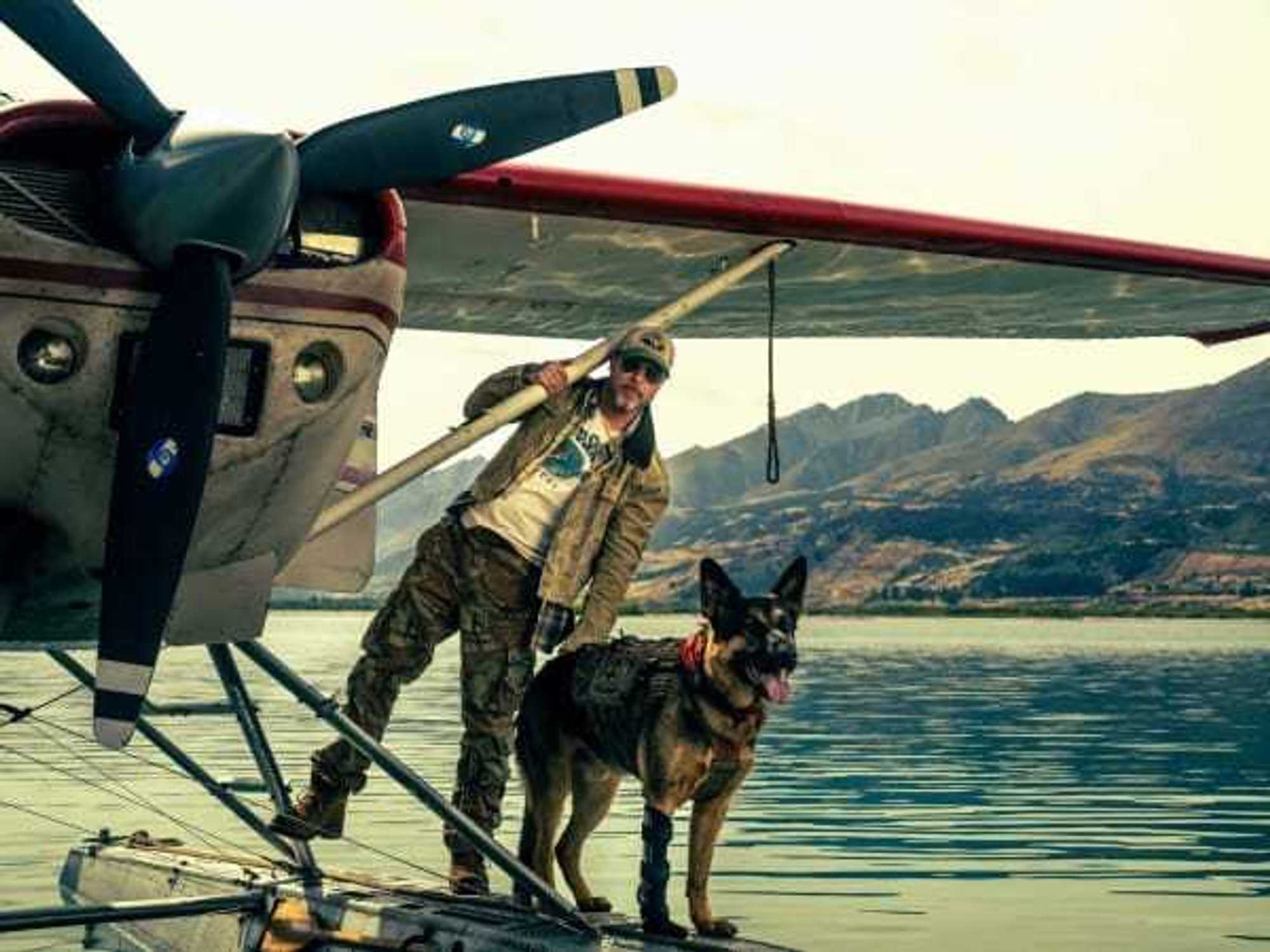
Austin has lost a local music legend. Jimmy LaFave passed away Sunday, May 21, at the age of 61. His family shared the news via a statement from LaFave's label, Music Road Records.
"The LaFave Family regrets to inform Jimmy's friends and fans across the world that the Austin-based singer/songwriter passed from this world, surrounded by loved ones in his home on May 21, 2017, after a courageous battle with cancer," reads the announcement.
LaFave was diagnosed with sarcoma, a rare form of cancer, he told the Austin Chronicle in April. The prolific performer refused to quit playing music; he hosted the sold-out Songwriter Rendezvous at the Paramount Theater on Thursday, May 18.
The Texas-born musician grew up in Oklahoma, but called Austin home for nearly three decades. LaFave is credited with spearheading the "red dirt" music movement and furthering the legacy of folk icon Woody Guthrie.
Accolades include recognition from the Texas Music Office and several Austin Music Awards, from Best Singer-Songwriter to a place in the Hall of Fame. LaFave will also be posthumously inducted into the Oklahoma Music Hall of Fame on June 14.
"At the time of his death, Jimmy had recorded numerous new songs at his studio in South Austin and had also begun work on a book featuring a collection of his photography," the statement continues. "In lieu of flowers, the family asks that you make a donation to the pet charity of your choice or perform an act of unsolicited kindness."
LaFave is survived by his son, Jackson LaFave; ex-wife, Barbara Fox; father, G.G. "Frenchy" LaFave; and several siblings.
The Mandalorian (Pedro Pascal) and Grogu in The Mandalorian and Grogu.
At one point in the 2010s, there were plans to release a different Star Wars movie every year, with an “Episode” film (like The Rise of Skywalker) alternating with anthology movies like Rogue One. But when 2018’s Solo underperformed, those plans changed, and the pandemic made any Star Wars movie less appealing, with Lucasfilm shifting heavily toward TV shows like The Mandalorian.
The popularity of that show in particular has led to the return of Star Wars to the theaters in the form of Star Wars: The Mandalorian and Grogu. The film follows the bounty hunter (Pedro Pascal) and his Force-sensitive adopted child as they travel around the universe, hunting down the remaining members of the Galactic Empire. (The film, like the series, is set in the years following The Return of the Jedi).
The main thrust of the film has the duo, at the behest of Colonel Ward (Sigourney Weaver) of the New Republic, trying to track down Rotta the Hutt (voiced by Jeremy Allen White), the son of the late Jabba the Hutt, who’s supposedly been kidnapped. The discovery of the ultra-buff Rotta sets them down a different path than they thought, one that puts Mando and Grogu in the crosshairs of Rotta’s twin cousins.
Directed by Jon Favreau and written by Favreau, Dave Filoni, and Noah Kloor, the film is perfectly fine if you consider it to be an extended Mandalorian episode, but at no point does it rise to the level of a great movie experience.
The film, like the show, is defined by the Mandalorian’s unflappable nature and strict code, as well as Grogu’s mischievousness and unquenchable appetite. Right from the start, the Mandalorian has a “take no prisoners” approach, laying waste to all comers in a PG-13 sort of way. Grogu is mostly along for the ride, occasionally breaking out the Force to help out, but mostly serving as the comic sidekick. Their relationship keeps the film watchable, but only just barely.
The biggest issue, one which was starting to affect the Disney+ show as well, is that the story never seems to go anywhere despite the fact that its two main characters are constantly on the move. No matter how big or ferocious the opponent they face, the overall stakes are so low as to almost be nonexistent. If Favreau and Filoni (who has a small part in the film) are trying to build toward some larger story, it doesn’t come through on screen.
The film’s action fits in well with sequences that have been put forth in previous Star Wars films, but to call them “cinematic” would be stretching things. There are all manner of monstrous creatures that the duo comes across in their adventures, but only a few of them are memorable. The most interesting sequence features a snake-dragon hybrid that Mando fights in a watery pit that is reminiscent of the trash compactor scene in the original Star Wars. Much of the rest of the film blends together in a mish-mash of uninteresting opponents.
For a live action film, there are precious few actors who actually show their faces. The Mandalorian removes his helmet exactly once, making it clear that Pascal is merely providing the voice for the character. White affects a tough voice for Rotta that may be canon, but frankly sounds ridiculous coming from the character’s body and in no way resembles White’s actual voice, which negates his casting altogether. Weaver is close to a non-factor in her small role, but Martin Scorsese is kind of fun voicing a four-armed fry cook/informant.
The cachet of Star Wars and the fun of The Mandalorian series may be enough for many to enjoy the inoffensive lark that is The Mandalorian and Grogu. But the film does not come close to reaching the heights of the best Star Wars movies, and does nothing to indicate what to expect from the valuable intellectual property going forward.
---
Star Wars: The Mandalorian and Grogu opens in theaters on May 22.