
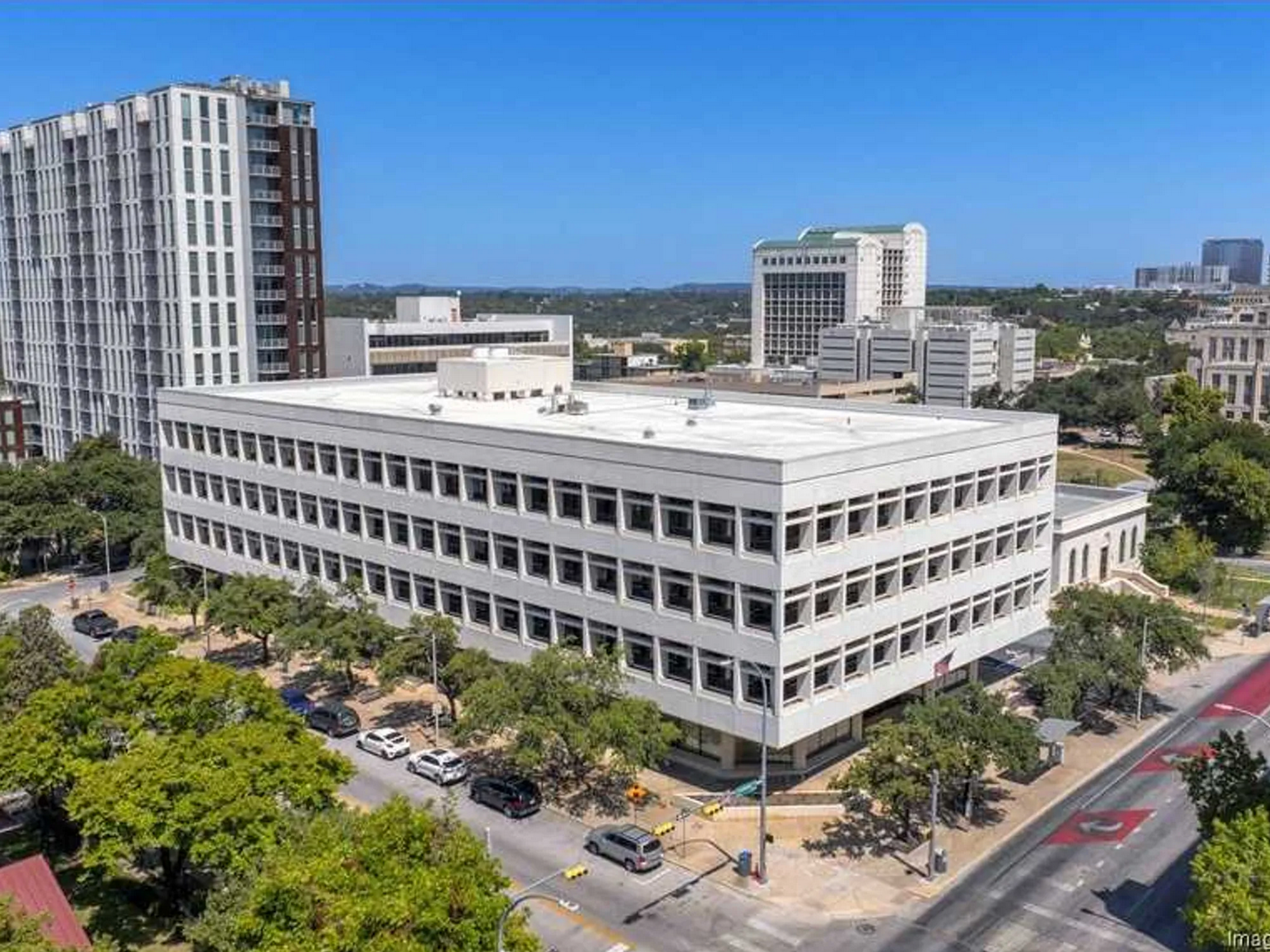
An Austin institution preserving old library materials has officially moved into its new space. The Austin History Center, which has been closed since February 2025 in order to move its collection, reopened in early December at the John Henry Faulk Library next door, ending a years-long vacant stretch.
To prepare the Faulk space, city leaders decided to carve $14.5 million out of the city's 2018 bond funds. The six-story building will serve as both a work space for the library system and a large-scale, climate-controlled space for the city's growing archives.
Austin's library history
Before Austin's current Central Library started glistening on César Chávez Street in 2017, there were two more that claimed the "main library" title in succession. First there was the Italian Revival Renaissance-style building at 810 Guadalupe Street, starting in 1933; then there was the Faulk Library at 800 Guadalupe, starting in 1979 and lasting almost 40 years.
It was that transitional year — 1979 — that the Austin History Center Association formed, helping the History Center take over the original library building to preserve it and its contents. The general circulation materials (i.e. things on loan to the public) moved to the larger space at the Faulk, and historical archives remained at the original central library. However, the History Center and its collection have outgrown the nearly 100-year-old space.
Now, general collections are at the current Central Library and historic collections will be housed at John Henry Faulk. Eventually, the Austin Public Library system plans to reuse the space in the 1933 building, making this a bit of a full-circle evolution. The pair of buildings on Guadalupe may eventually become a two-campus downtown history mecca for the city.
The new Austin History Center, unveiled
The city hosted an official ribbon-cutting for the revamped Faulk facility on December 7. Bond funds have reworked the first floor of the building for public access and historic exhibits. After asbestos abatement and electrical upgrades, the second and third floors were upgraded to serve as climate-controlled archives. Upper floor space will be used for workrooms and offices.
For now, the city is doing a phased rollout of the building. The Reading Room and the Unboxing the Archive exhibit are now open noon to 5 pm Thursdays, Fridays, and Saturdays, with the building closed Sundays through Wednesdays. Limited reference and reproduction services are also available.
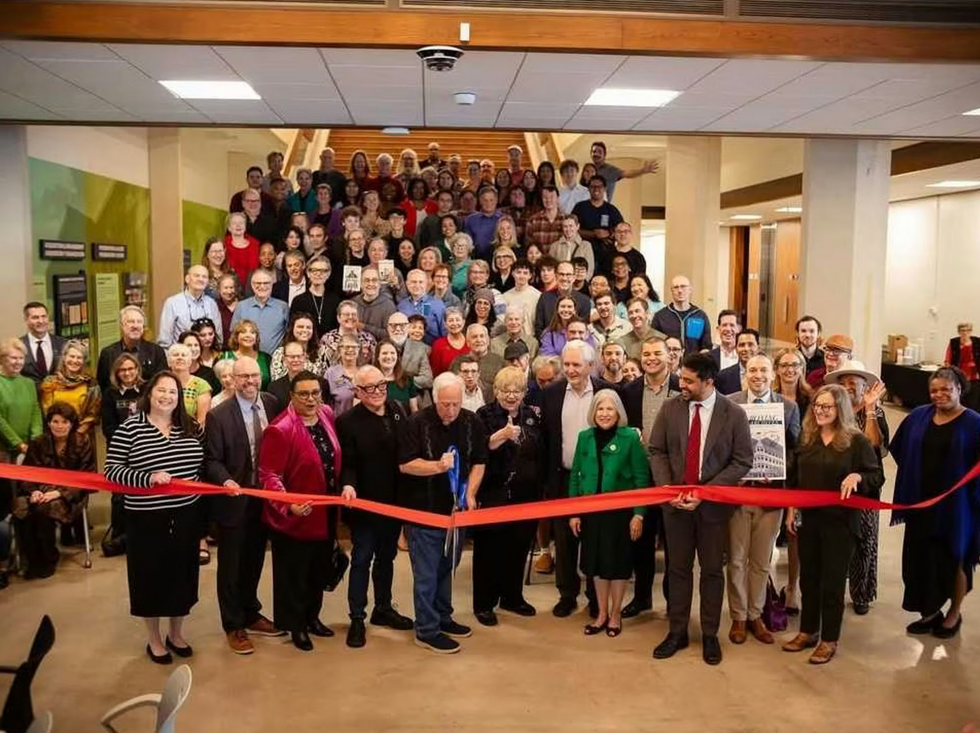 Mayor Kirk Watson, library officials, and community members cut the ribbon on the "new" Austin History Center on December 7.Photo courtesy of the Austin History Center Association
At the Austin History Center, visitors can explore:
- Austin City Directories (1870s–1920s): Early directories tracing residents, businesses, and neighborhoods over time, digitized and searchable via the Portal to Texas History.
- O. Henry Collection: A nationally significant archive of writings, letters, photographs, and ephemera connected to author William Sydney Porter, who wrote under the name O. Henry.
- Photograph Collection: More than one million images documenting Austin’s people, neighborhoods, landmarks, and changing landscape from the mid-19th century to today.
- Oral Histories and Recollections: Over 400 recorded interviews capturing the voices of longtime residents, artists, activists, and public figures, with many transcripts available for research.
- Austin Music Network Archives: Video and audio recordings of live performances filmed in Austin clubs and venues beginning in the 1990s, preserving a key chapter of the city’s music history.
In the long term, the History Center will operate out of both the Faulk Building and the 1933 original central library building, creating a small campus. City officials have begun vision planning with Steinberg Hart and M. Goodwin Museum Planning Inc. to guide future investments.
More public-facing features — including a rooftop garden, gallery space, and plaza café — are proposed as part of a $54.8 million second phase, which would require voter approval in a future bond election.
 Our wildcard category this year will crown Best Sandwich.