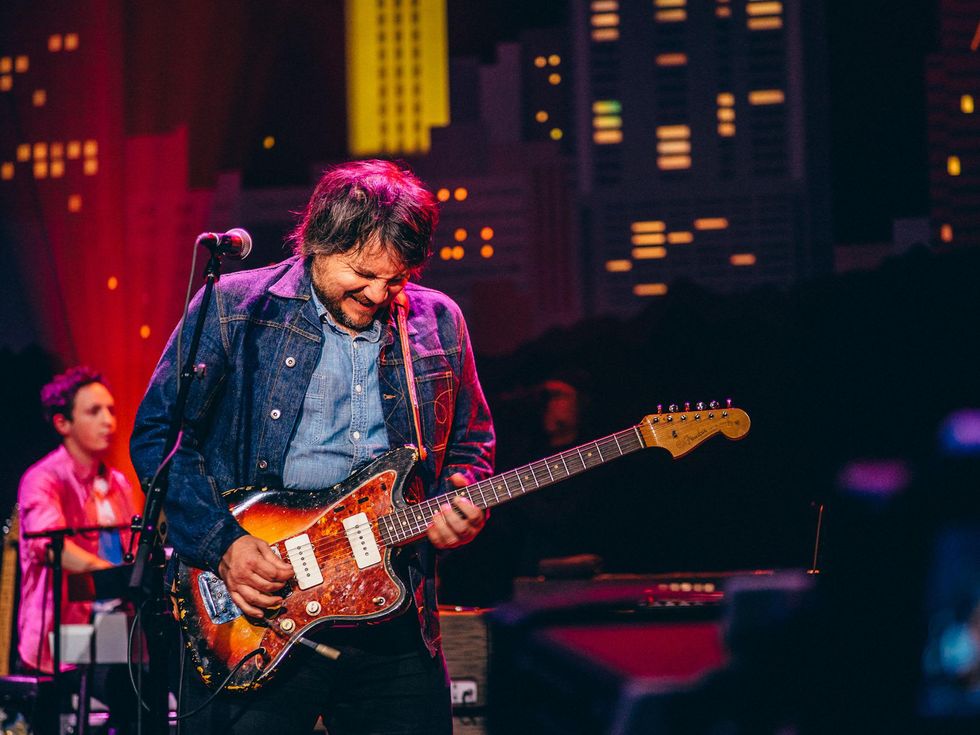
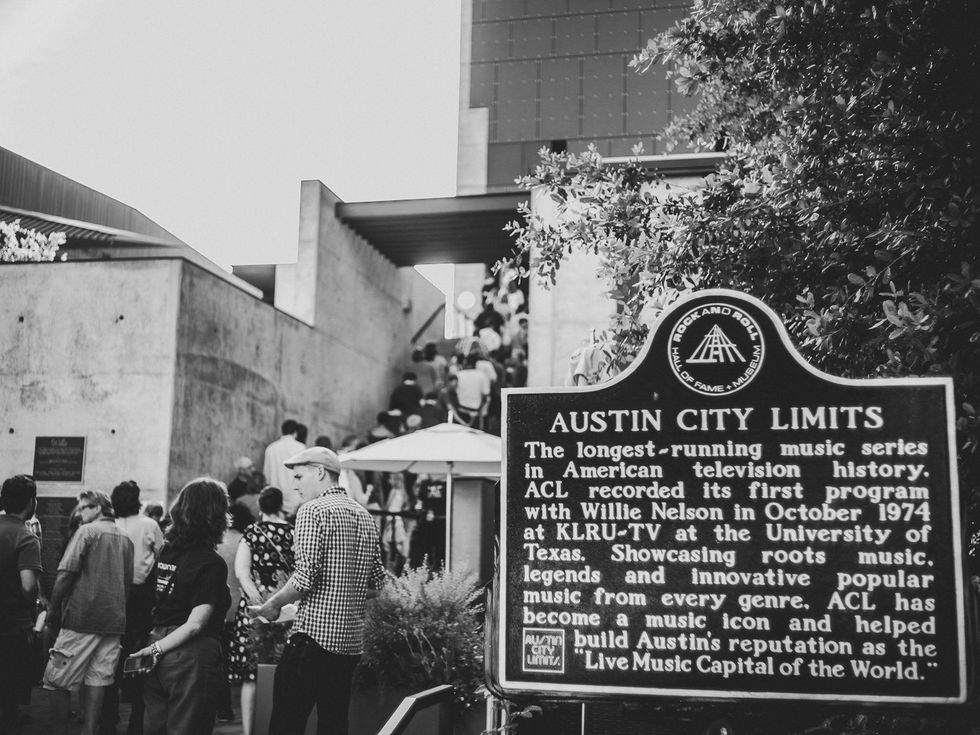
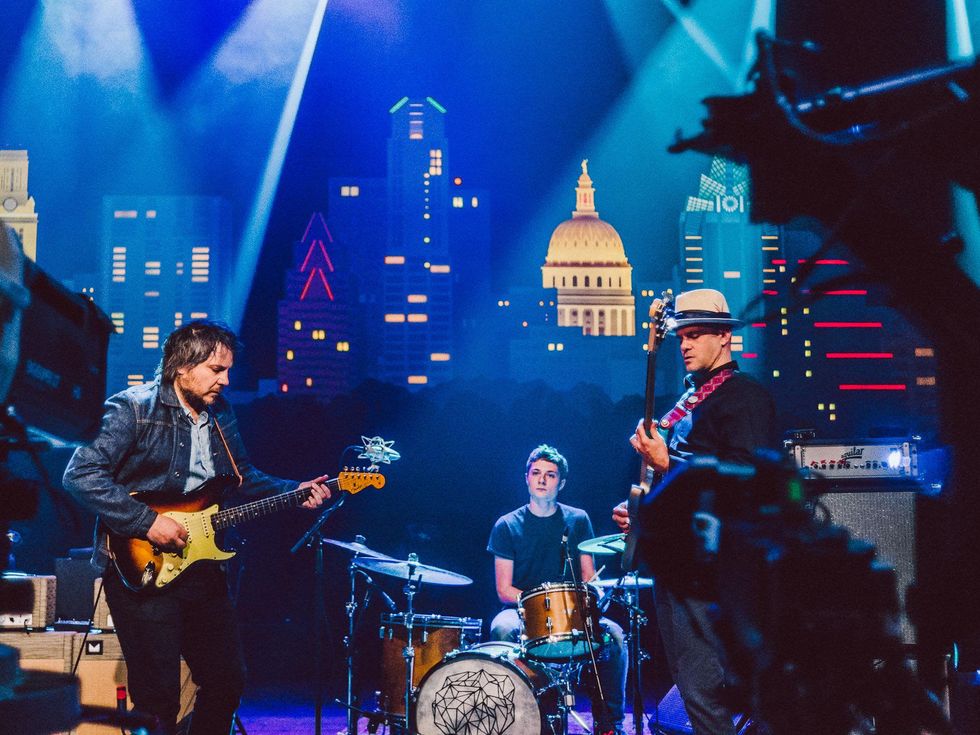
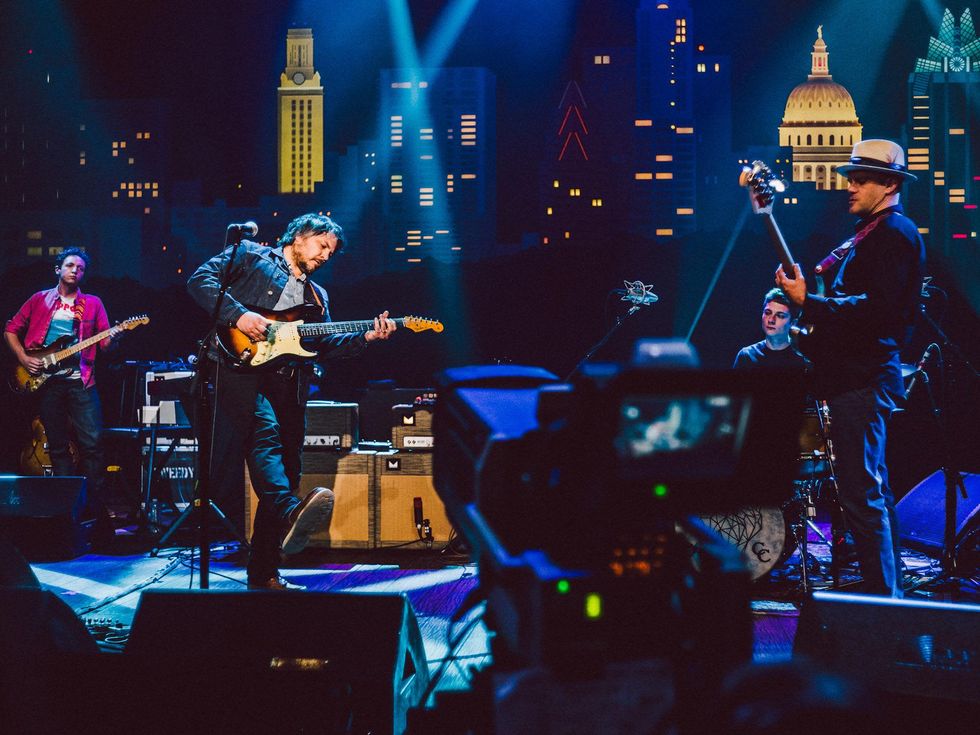
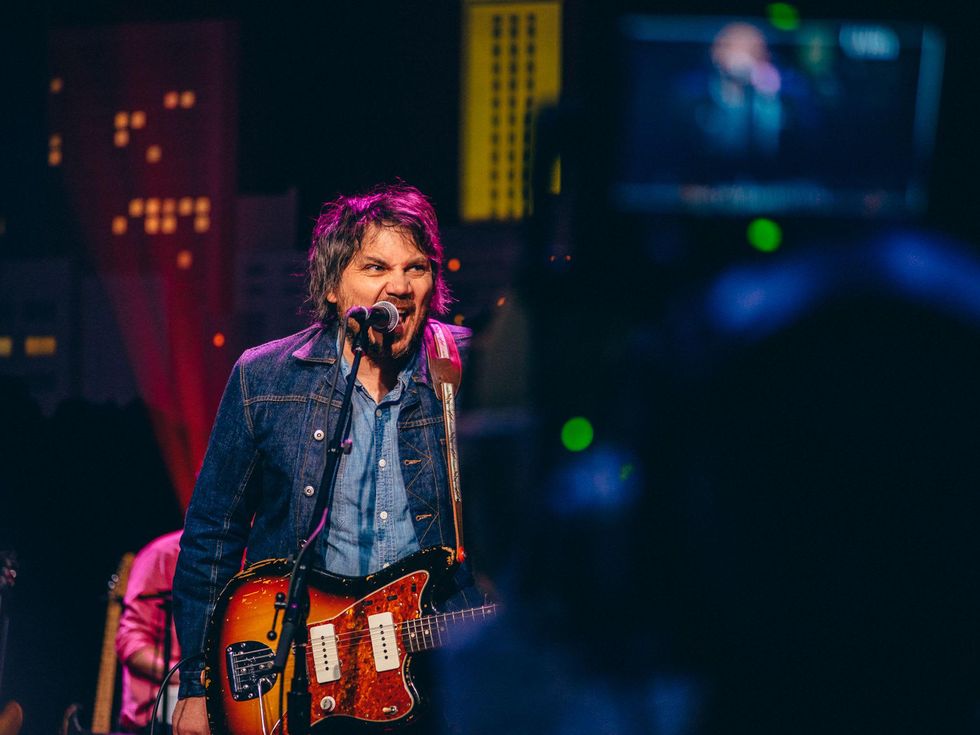
Jeff Tweedy performs for an Austin City Limits taping.
Photo by Chad Wadsworth
For a town that claims Wilco as a second son, Austin has enjoyed its fair share of time spent with Jeff Tweedy and company. Friday night though, the man in denim gave us two firsts, an Austin City Limits taping without the backing of his Wilco band mates and an introduction to material from his forthcoming album Sukierae, played by a new troupe simply named, “Tweedy,” featuring his son Spencer on drums and childhood friend, bassist Darin Gray.
The evening’s 27-song set was neatly split between well-received tunes from the new album with lush background vocals, care of guests Jess Wolfe and Holly Laessig of Lucius, and well-worn Wilco and Uncle Tupelo favorites that Mr. Tweedy delivered mostly solo. Watching Mr. Tweedy work the raucous Austin crowd, you wonder if the man could just have easily enjoyed success as a stand-up comedian. Commenting on why it took him more than 30 years to write a solo album, Tweedy quipped, “It took me 18 years to grow a drummer.”
Jeff Tweedy performs for an Austin City Limits taping.
Photo by Chad Wadsworth
Jeff Tweedy performs for an Austin City Limits taping.
Writer and director Paul Greengrass made his name with a cinéma vérité style of filmmaking that brought immediacy and depth to three Jason Bourne films, United 93, Captain Phillips, and more. In The Uprising, he uses those skills to tell the story of the so-called Peasants’ Revolt in 14th century England.
Greengrass wastes no time starting the main plot as Ploughman (Andrew Garfield) and his fellow villagers object to onerous taxes put on them by the country’s nobility, led by the young King Richard II (Woody Norman), to fund an ongoing war. Ploughman initiates a violent response over the tone-deaf — and unseemly — way the king’s guard go about their business, and the rebellion soon starts to spread across the countryside, with the citizens looking for a degree of autonomy.
The ever-expanding group makes their way toward London to try to make their case to the king himself. Meanwhile, the king’s top advisors, including Archbishop Sudbury (Stephen Dillane) and Treasurer Hales (Tom Hollander), try to usurp power from the inexperienced monarch even as the king’s mother (Katherine Waterston) tries to get him to be more assertive.
The history of the English monarchy is long and lurid, as Shakespeare detailed in multiple plays, including Richard II. Though the events in the film took place almost 650 years ago, it’s easy to see parallels between what the peasants were fighting for and modern-day politics. Greengrass’ storytelling intent is solid, and the righteous anger the citizens feel is initially relatable and palpable.
But the populism theme of the story soon gets bogged down in drudgery and minutiae that is difficult to understand, especially when the details are lost in the thick regional English accents. The leaders of the rebels — including John Ball (Jamie Bell), Wat Tyler (Cosmo Jarvis), and Alyce (Thomasin McKenzie) — are shown doing a lot of planning, but the strong feelings they have about their quest don’t come across well, leaving the audience as passive observers.
When there is action, Greengrass and his team employ a frenetic style that is not great for comprehension. While the gist of what is happening and what side is winning is legible, individual moments go by so quickly so as to be nearly meaningless. Save for Ploughman, any connection that has been made with various characters proves futile, as Greengrass doesn’t seem to have any time for emotion. Scenes that should feel thrilling or heartbreaking instead come off as empty.
Garfield is a two-time Oscar nominee who has done great work across multiple genres. He’s fine in this role, but whether it’s the story, the filmmaking, or something else, he’s not as captivating as usual. The same goes for other strong actors like Bell, McKenzie, Dillane, Hollander, and Waterston, who each seem to be giving their all to their performances but are somehow muted in the process.
Done right, The Uprising could have been a rip-roaring account of people standing up against their oppressors. What Greengrass has made, though, is a film that can’t translate its medieval story for a modern audience and concentrates too much on unexciting elements and too little on thrilling ones.