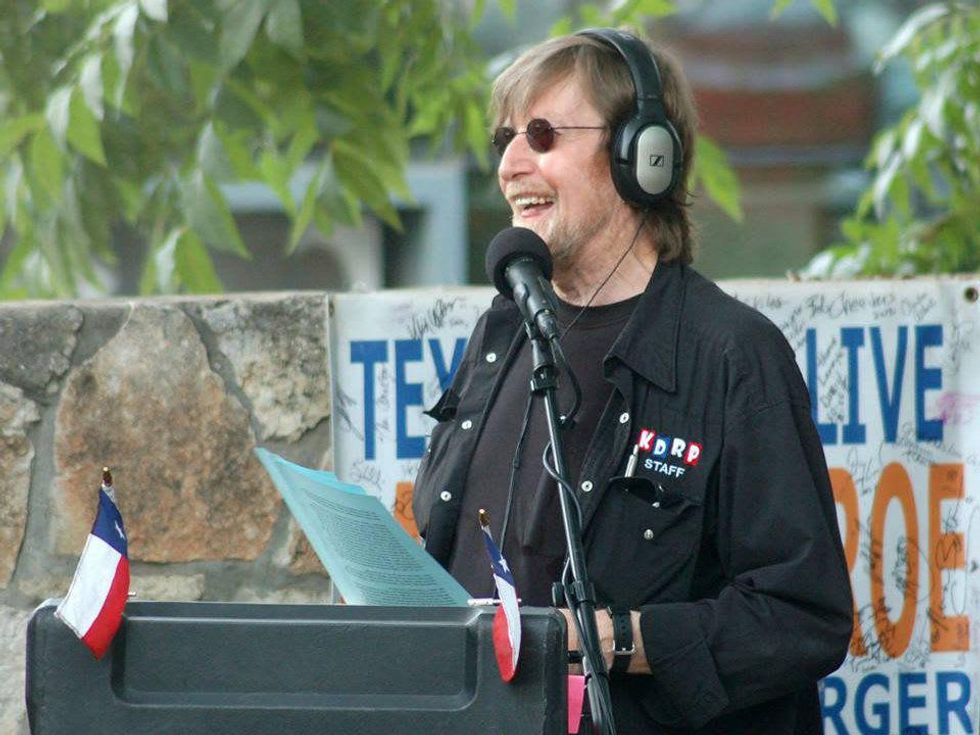
A new project is in the works to celebrate the life and legacy of Austin radio personality Larry Monroe. Family, friends and fans are banding together to create the Larry Monroe Forever Bridge in commemoration of his 30-plus years on local airwaves.
The project will turn a charming Travis Heights bridge into a mosaic masterpiece honoring the champion of Austin music, who passed away in January 2014. A longtime DJ on KUT and later KDRP Sun Radio, Monroe was the mastermind behind such highly regarded programs as Blue Monday, Phil Music and Texas Radio Live. He was described by KDRP as "a pillar of both the Austin and music worlds — a renowned on-air personality, a musician’s advocate, and a dear friend to all of us."
In December, the City of Austin and Austin Arts Commission unanimously approved the project, which will be located on Eastside Drive near Monroe's former home. Since January, Monroe's partner Ave Bonar and mosaic artist Stefanie Distefano have led volunteers (including Monroe's grandchildren) in creating ceramic tiles for the mosaic.
Tiles will include musical instruments, radios, cassette tapes and more. Featured in the mosaic will be a 22-foot long musical score of some of Townes Van Zandt’s lyrics, says the group's Facebook page. Other local songwriters like Blaze Foley, Butch Hancock, Joe Ely and Mandy Mercier will also be included.
A Crowdrise campaign for the project is well on its way to reaching a $20,000 goal. Proceeds from the fundraiser will go directly to Distefano, and anyone who donates by March 1 will be offered a tile with their name on it.
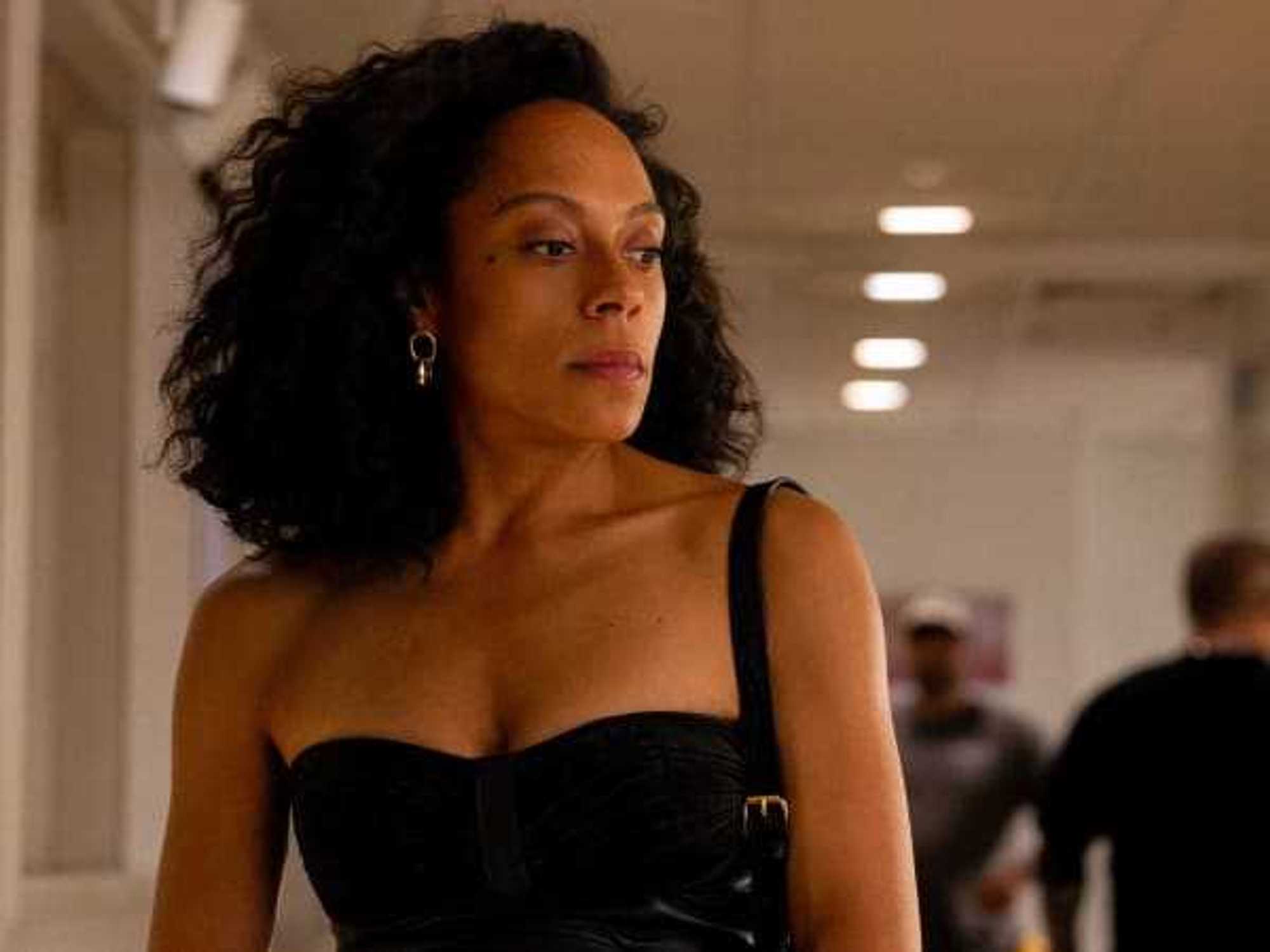
Callum Turner and Monica Barbaro in One Night Only.
Coming up with new ways to tell a romantic story is difficult, which is part of the reason why the genre has mostly retreated to streamers, where originality doesn’t matter much. The new film One Night Only borrows liberally from both previous romantic movies and other sources, but at least it’s trying to give moviegoers something they haven’t seen before.
That something is the high-concept premise of the story taking place in a world where, due to a draconian law passed by U.S. legislators, all single people are only allowed to have sex one night a year (yes, The Purge, but for sex). As the “night” (really a 12-hour period from 7 am-7 pm that includes daylight on both sides) begins, Owen (Callum Turner) is attempting to have a romantic evening with his girlfriend, Malika (Maya Hawke), while Allie (Monica Barbaro) is prepping for a fun time with her friend, Jacinta (King Princess).
When Malika says she wants to sleep with someone else and Jacinta quickly finds a person to hook up with, both Owen and Allie are left to their own devices. As each of them wanders around New York City in halfhearted attempts at finding their own partner, fate has them run into each other on multiple occasions. As disaster after disaster befalls each of them, they start to realize that they might belong together.
Directed by Will Gluck and written by Travis Braun, the film is about as unsubtle as you can get, by design. With nearly everybody on screen either having or trying to have sex, that leaves little room for nuance or romance. Consequently, every joke told in the movie is on the nose without an ounce of cleverness. What little ingenuity exists in the film is on the signage the characters pass, which detail the dos and don’ts for single people every other day of the year, as well as many ads for brands trying to capitalize on the event.
The situations that Owen and Allie find themselves in get increasingly ridiculous as the night goes along, with none of them rising above chuckleworthy. For an R-rated film that could conceivably get as crazy as it wanted, most of the scenarios are relatively tame, with little outrageous or lewd behavior. Most of the time, the end of a particular scene can be seen coming a mile away, so there are no surprises to be had.
What’s most interesting about the film is the road it doesn’t take. It’s explained in bits and pieces why the government has restricted sex to such a degree (basically Puritanical views held by conservatives), and it’s hard not to think that the filmmakers are making a commentary about the current administration. But they don’t ever make that viewpoint overt, even in a funny way, and so the thread is left dangling, never to be fully addressed.
Both Turner (The Boys in the Boat) and Barbaro (an Oscar nominee for A Complete Unknown) are rising stars, but neither of them are great comic actors. Each of their characters is supposed to be relatively awkward, a trait that is masked by their objective attractiveness. The film has a slew of cameos, including Molly Ringwald, LeVar Burton, and Julia Fox, but there’s barely time for any of them to make an impact. Images of Glen Powell and Sydney Sweeney, who starred in Gluck’s Anyone But You, pop up in a fun way.
There were a lot of directions that One Night Only could have gone in, but the version chosen by Gluck and Braun is close to the worst one. A film that could have been uproaringly funny or super sexy or very romantic winds up being none of those things, with each element getting the basic treatment and nothing more.