It's nearly time for the Formula 1 U.S. Grand Prix at Circuit of the Americas (COTA), which can only mean one thing: F1 teams and partners are flocking to Austin for exhilarating race-themed events, pop-ups, and more.
CultureMap has rounded up nearly a dozen of these events to help locals and visitors find their way around town, and to explore the best of what F1 brings to the city. We'll add more as we hear more.
Pop-ups and fan hubs
Atlassian Williams F1 Team Austin Fan Zone
October 19-24, various times, 800 Congress Ave.
The Atlassian Williams F1 Team is taking over a downtown Austin event venue for its free Fan Zone pop-up featuring driver experiences, a show car, special edition merchandise, racing simulators, and more. Visitors also have a chance to catch live Q&As with driver Alex Albon and team principal James Vowles, purchase the newly released Austin edition of the Williams x Marvel comic, and test objects in a wind tunnel. The Fan Zone will be open from 11 am to 7 pm Monday through Wednesday, and from 10 am to 7 pm Thursday through Saturday.
Lando's Original Service Dept. in downtown Austin
October 21-25, various times, 1500 San Jacinto Blvd.
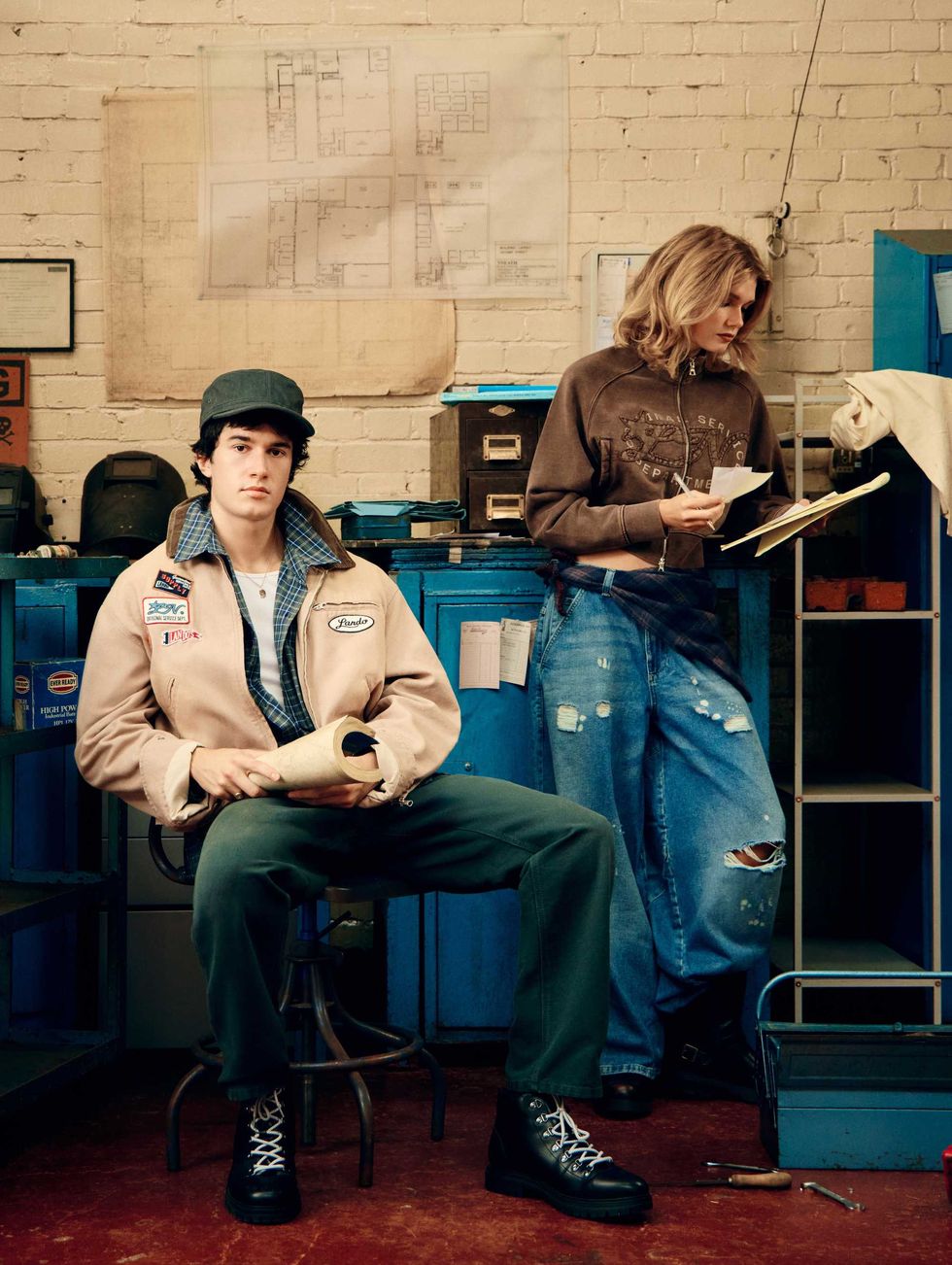
A vintage gas station in downtown Austin is getting a major 70's-style makeover for race week. Starting Wednesday, Lando Norris fans can shop for exclusive apparel and accessories at Lando's Original Service Dept. and explore custom postcard and patch-making stations in partnership with Google Gemini. The pop-up will be open from noon to 7 pm Wednesday, and from 9 am to 7 pm Thursday through Sunday.
 Lando's Original Service Dept. is inspired by 70's-style American shop garages.Photo courtesy of the Lando Norris Store
Mercedes F1 Team Fan Hub
October 22-25, various times, 400 Congress Ave.
F1 fans can test their speed as a pit stop mechanic, race in cutting-edge F1 simulators, and participate in F1-themed tailgates at the Mercedes F1 Team's free fan hub. The fan hub also promises daily giveaways, official team merchandise, local music performances, and Texas food vendors. The hub will be open from noon to 8:30 pm Thursday through Friday, from 1:30-9 pm Saturday, and from 10:30 am to 7 pm Sunday.
Enchanté x Ford Racing at Distribution Hall
October 22-25, various times, 1500 E. 4th St.
Australian former F1 driver Daniel Ricciardo and his clothing brand Enchanté are racing into East Austin with an all American-themed pop-up at Distribution Hall in collaboration with Ford Racing. Details are sparse, but the website hints at a new collection and "a few surprises along the way." The pop-up will be open Thursday through Saturday from 11 am to 7 pm, and from 11 am to 5 pm Sunday.
Events
Road to the Race: Austin’s Official Prelude to the USGP
October 21 from 5-9:30 pm, 701 W. Riverside Dr.
In collaboration with Circuit of the Americas and the Exotics Network, the fourth annual Road to the Race supercar showcase returns to the Long Center for an evening of live entertainment, immersive experiences, and much more. Motorsport fans can expect to see over 100 hypercars and supercars spread across the Long Center grounds, plus racing simulators, food and drink vendors, and a C-130J military flyover. A live charity auction benefiting the Long Center and Dell Children's Medical Center will close out the evening. VIP admission is waitlisted, but general admission tickets are still available for $10 per person online.
Pink Paddock Club x Aston Martin Aramco F1 Team at The Bungalow
October 21, VIP hour from 6-7 pm, general admission entry from 7-11 pm, 83 Rainey St.
Sorry boys, this event is for the girls. Formula 1 podcast Pink Paddock Club is hosting a free girls night at The Bungalow with a live podcast recording with a special guest during a VIP hour from 6-7 pm. Attendees can get a swag bag and participate in a charm bar with local organization Craft and Yap to customize a race-themed keepsake. Visitors who sign up to attend the meetup will be entered into a VIP raffle to gain early entry to the event, but general entry will start at 7 pm.
Esses Bazaar ATX at Inn Cahoots
Thursday, October 22 starting at 3 pm, 1221 E. 6th St.
Motorsport and culture publication Esses Magazine is returning to Austin for its second annual Esses Bazaar event highlighting local vendors, Tejano music from DJ Helios, and a performance from Selena Quintanilla tribute band Bidi Bidi Banda. Other activities include flash tattoos, glam stations, local food vendors, western wear shops, and cocktails. Attendees can also snap a photo with a Visa Cash App Racing Bulls (VCARB) showcar. A lineup of country music performances will start at 7 pm, including the musical debut of VCARB driver Liam Lawson. RSVPs are limited, but interested attendees can join the waitlist for an RSVP drop on October 19.
Black & White Kickoff Party at Central Machine Works
October 22 from 6-10 pm, 4824 E. Cesar Chavez St.
Austin car show organizer Manual Focus is partnering with Audi to start the race weekend celebrations early with a free art and car showcase and live music from DJ Vegan Leather and Jonathan Terrell. Attendees are encouraged to dress in their best black-and-white attire — it can be vintage streetwear, cocktail attire, or a simple black t-shirt. Specially commissioned works from Karl Ruckgaber, Jules Doty, Eric Mack, Laurie Carswell, and Mario Christou will be on display and available for purchase, and Audi will have "a handpicked mix of classic European icons and the next generation of Audi performance." RSVP via Eventbrite.
Courts Club x Padel39: The Padel Grand Prix
October 23-24, 4716 E. 5th St.
Padel39 East, an upscale sports club, is transforming into a dedicated F1 venue with a two-day, pre-race celebration party featuring competitive padel matches, live F1 streams in the viewing lounge, brand activations, cocktails, DJ sets, and more. Guests may spot Ferrari on-site as well as Giesen alcohol-removed New Zealand wines. RSVP via therumor.com.
Sports Illustrated Circuit Series afterparty
October 24, doors open at 8:30 pm, 304 E. 3rd St.
Canadian DJ Blond:ish will headline Sports Illustrated's iconic Circuit Series afterparty at 304 E. 3rd St. on Saturday night, with supporting performances from DJ UnKommon and Markos. Early entry general admission (before 10 pm) is $43 per person, and general admission is $78.01 per person. Tickets can be purchased via dice.fm.
Packages and deals
Atlassian Williams F1 Team Grandstand Package
A limited number of seats are still available for the Atlassian Williams F1 Team's exclusive package that guarantees premium grandstand views at Turn 4 over all three days of the race weekend. Additional perks include complimentary team merch (a New Era cap and official team flag), a 25 percent discount at the team Fan Zone in downtown Austin, and an entry into a prize draw for a driver meet and greet at the Fan Zone. Ticket prices for the Williams F1 Team Package are $747 per person and can be ordered via Ticketmaster.

 Lando's Original Service Dept. is inspired by 70's-style American shop garages.Photo courtesy of the Lando Norris Store